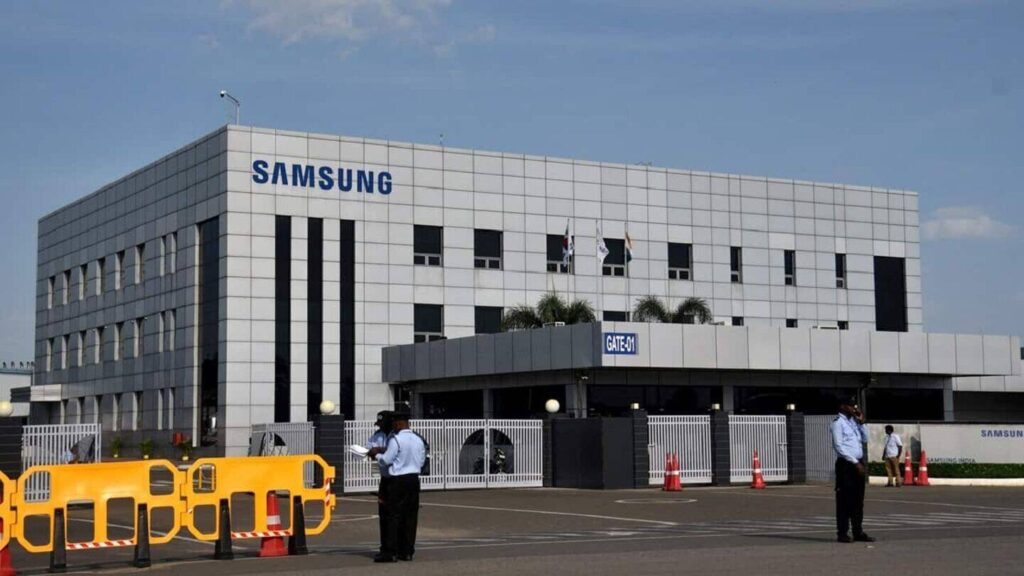
Samsung Electronics has managed to avoid what could have become one of the biggest labour crises in its recent history, but the company’s controversial new pay agreement is already creating mixed reactions among employees. After tense negotiations with its union, Samsung reached a last-minute deal that temporarily suspended a planned 18-day strike involving nearly 48,000 domestic workers. Investors clearly welcomed the development immediately, with Samsung shares surging more than 8% to record highs after news of the agreement broke.
The dispute mainly revolved around how the company planned to distribute profits generated during the ongoing AI boom, especially inside its semiconductor division. Workers had reportedly grown increasingly frustrated after seeing rival SK Hynix reward employees with even larger bonuses while benefiting heavily from supplying advanced AI memory chips to NVIDIA. Many Samsung workers believed they deserved similar treatment, especially as the company’s chip business also rides the massive global AI wave right now.
Under the new agreement, all Samsung chip employees will reportedly receive regular cash bonuses worth around 50% of their annual salary. On top of that, the company will also distribute additional performance rewards tied to operating profits. However, unlike SK Hynix, Samsung plans to pay most of those special bonuses in company stock instead of direct cash. For some workers, especially those inside the profitable memory chip division, the payouts could still become enormous. Reports suggest certain memory employees may receive total bonuses worth nearly 626 million won, or roughly $416,000 this year.
Samsung Found A Cheaper Way To Calm Workers
Despite the eye-catching bonus figures, analysts believe Samsung actually negotiated a far more cost-controlled deal compared to its rival SK Hynix. Industry observers pointed out that Samsung’s compensation structure contains several built-in conditions that reduce immediate cash pressure on the company. Most notably, the long-term special bonuses are linked directly to future profit targets and will remain spread across a 10-year structure rather than arriving instantly.
That difference matters because SK Hynix reportedly allows workers to choose between stock or direct cash payments without attaching the same level of restrictions. Analysts say Samsung’s approach helps the company preserve cash flow while also supporting its own share price through stock-based compensation. In simple terms, Samsung found a way to reward employees without immediately draining billions in cash reserves during an unpredictable AI-driven market cycle.
At the same time though, not everybody inside the company is happy with the outcome. Workers from divisions outside Samsung’s booming memory chip business reportedly feel left behind by the deal. Employees involved in foundry and non-memory operations are expected to receive significantly smaller rewards even though they also contribute to the company’s broader semiconductor ecosystem. Some workers privately admitted frustration that the agreement appears heavily designed around protecting top-performing AI-related divisions while others receive much less despite facing the same demanding work culture.
The AI Boom Is Creating New Tensions Inside Tech Companies
The situation at Samsung Electronics honestly reflects a much larger problem spreading across the global technology industry right now. AI-related businesses are suddenly generating massive profits, but companies are struggling to decide how those gains should actually be distributed internally. Workers connected directly to AI hardware, advanced memory chips, and data center infrastructure are now becoming far more valuable than teams working in slower-growing divisions.
That imbalance is especially visible in South Korea because Samsung remains deeply tied to the country’s economy. The company accounts for roughly a quarter of South Korean exports, meaning a prolonged strike inside its semiconductor business could have caused serious economic disruptions not just domestically, but across global chip supply chains too. That fear likely increased pressure on both Samsung and the union to reach a compromise before operations became unstable.
Even after the strike suspension, tensions still appear far from fully resolved. A small group of shareholders has reportedly threatened legal action against parts of the agreement, arguing that some bonus arrangements should require separate shareholder approval before implementation. Meanwhile, some engineers inside Samsung’s non-memory divisions are reportedly already considering leaving the company altogether because of growing frustration over unequal compensation.
For now, the agreement has bought Samsung some breathing room and avoided a damaging strike during one of the most important periods in the global AI hardware race. But the entire situation also exposed something bigger — inside the AI economy, not everybody benefits equally, even within the same company.