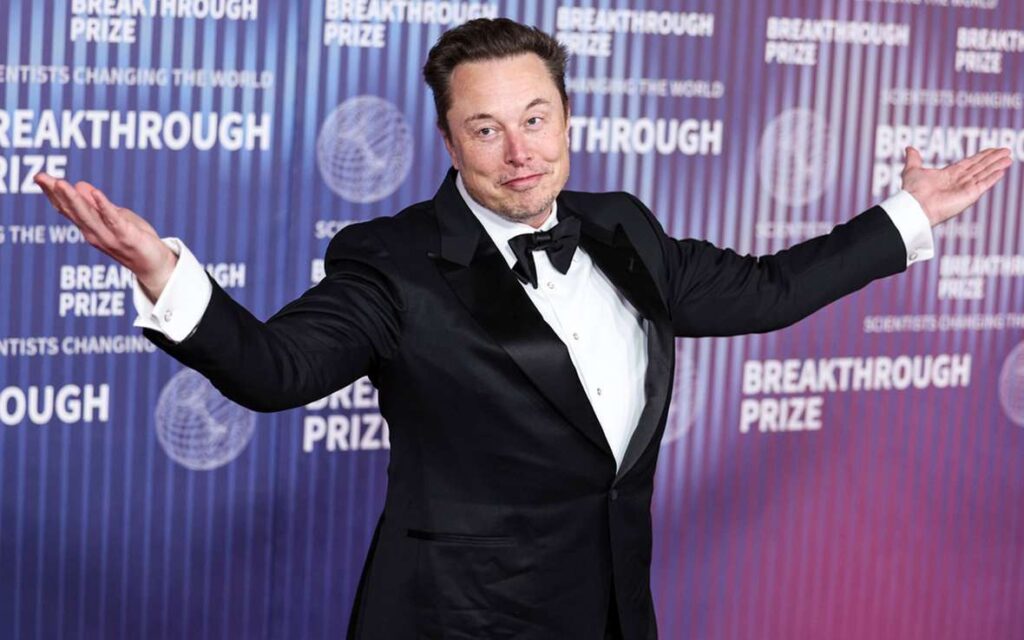
For years, Elon Musk has occupied a space where businessman, celebrity, internet personality, and political lightning rod collide. Love him or loathe him, it’s nearly impossible to ignore him. Now, the man behind Tesla, SpaceX, X, Neuralink and a string of other ventures has crossed a milestone that once sounded more like science fiction than financial reality.
Elon Musk has officially become the world’s first trillionaire.
The historic leap comes after SpaceX’s blockbuster initial public offering, a move that not only shattered records but further cemented Musk’s position as arguably the most influential and polarizing business figure of the modern era. For supporters, it’s proof that relentless ambition can reshape industries. For critics, it’s another example of how wealth and influence have become concentrated in the hands of a few powerful individuals.
Either way, the numbers are staggering.
The SpaceX IPO That Changed Everything
The final push past the trillion-dollar threshold came after SpaceX raised a record-breaking $75 billion through its initial public offering on Thursday. The massive debut sent shockwaves through financial markets and dramatically boosted the value of Musk’s holdings.
Before the IPO, Forbes estimated Musk’s net worth at roughly $780 billion. Reuters calculations based on company filings now place his fortune at more than $1.1 trillion once SpaceX stock begins trading.
To understand the scale of that achievement, it’s worth putting it into perspective.
For years, names like Jeff Bezos, Bernard Arnault, and Warren Buffett defined the upper limits of wealth. Even when Musk previously topped rich lists, the gap separating him from other billionaires wasn’t this dramatic. Today, that gap has become a chasm.
“The second richest person has been hovering around $300 billion, so about less than one-third of what Musk can potentially be worth tomorrow,” Matt Durot, deputy editor at Forbes Wealth, told Reuters. “And only one other person, (Oracle founder) Larry Ellison, has ever been worth $400 billion.”
Most of Musk’s wealth now stems from SpaceX itself, where his stake is estimated to be worth approximately $866 billion. Combined with his ownership interests in Tesla and his other companies, the entrepreneur’s fortune has entered territory never before reached.
From Electric Cars to Rockets and Social Media
Musk’s rise didn’t happen overnight.
Born in Pretoria, South Africa, to a Canadian mother and South African father, Musk later attended the University of Pennsylvania, graduating in 1997 before launching what would become one of the most extraordinary entrepreneurial careers in modern history.
He became a household name through Tesla, where he took over as CEO in 2008. At a time when electric vehicles were often dismissed as impractical niche products, Musk bet that consumers would embrace cars built around software, performance, and sustainability.
Many industry veterans laughed at the idea.
Today, Tesla remains one of the most valuable automakers in the world and helped accelerate the global shift toward electric transportation.
“He renewed the world’s respect for American ingenuity in automotive engineering,” said Bob Lutz, former General Motors vice chairman.
But Tesla was only the beginning.
SpaceX revolutionized private spaceflight and satellite deployment. Musk later acquired Twitter in a controversial $44 billion deal before rebranding the platform into X. Alongside those ventures, he co-founded Neuralink, which focuses on brain-computer interfaces, and The Boring Company, which explores underground transportation systems.
The result is a business empire that stretches across industries few entrepreneurs have managed to dominate simultaneously.
The ‘Elon Premium’ Is Bigger Than Traditional Valuation
For many investors, Musk himself has become part of the product.
Analysts have increasingly referred to the valuation boost attached to his companies as the “Elon premium” — the idea that investors aren’t simply betting on revenue forecasts or financial statements. They’re betting on Musk’s ability to disrupt entire industries.
That enthusiasm helps explain why SpaceX commands extraordinary valuations despite many of its most ambitious technologies still being years away from full commercial realization.
“Much like Tesla, SpaceX is a bet on Elon Musk,” Matt Kennedy, senior strategist at Renaissance Capital, said.
“A market cap of $1.5 trillion-$2 trillion would certainly throw all traditional valuation methodologies out the window, and is instead best characterized as the ‘Elon Musk premium.'”
It’s a phenomenon that doesn’t fit neatly into conventional investing models.
Traditional analysts often struggle to reconcile Musk-led companies with standard financial metrics because belief in future possibilities frequently outweighs present-day realities.
For supporters, that optimism has been repeatedly rewarded.
For skeptics, it remains one of the biggest risks in modern markets.
Admiration and Controversy Continue to Follow Him
As Musk’s wealth has expanded, so too has the debate surrounding his influence.
Critics argue that no individual should wield such extraordinary power across multiple sectors simultaneously. Questions surrounding corporate governance, conflicts of interest, and executive oversight have shadowed his companies for years.
Tesla itself has faced shareholder concerns and legal battles, particularly surrounding Musk’s massive 2018 compensation package, which at one point was valued at approximately $56 billion.
His increasingly public political involvement has added another layer of complexity.
Musk’s alliance with President Donald Trump initially positioned him as one of the administration’s most powerful corporate allies through the Department of Government Efficiency initiative. The relationship later deteriorated amid disagreements over spending and policy, eventually spilling into public view before both sides adopted a more conciliatory tone.
The episode highlighted how difficult it has become to separate Musk’s business interests from his political influence.
Meanwhile, Tesla experienced protests and consumer boycotts in several international markets during 2025 as backlash intensified around his public positions.
Despite the criticism, investor confidence has remained remarkably resilient.
From Feuds to Praise: Jamie Dimon’s Unexpected Turnaround
One of the more surprising developments in Musk’s story has been the evolution of his relationship with JPMorgan Chase CEO Jamie Dimon.
The two businessmen were once adversaries involved in a lengthy legal dispute. Today, Dimon sounds more like an admirer.
“Elon is the Edison of our time,” Dimon said during a recent conversation with Musk.
Dimon later told CNBC that the pair had “hugged it out” following their previous clashes.
He didn’t stop there.
The banking executive also referred to Musk as “our Einstein,” a striking endorsement from one of Wall Street’s most influential figures.
It reflects the unusual duality surrounding Musk’s reputation.
Even among critics of his methods, there is often acknowledgment of his extraordinary ability to execute ideas others deemed impossible.
The World’s First Trillionaire Is Still a Divisive Figure
Becoming the first trillionaire doesn’t settle the arguments surrounding Elon Musk.
To some, he represents innovation at its most fearless — an entrepreneur willing to take enormous risks that reshape industries and push technological boundaries. To others, his wealth symbolizes a growing imbalance of power in an era already defined by economic inequality.
Perhaps that’s why Musk remains such a compelling figure.
He isn’t simply a CEO.
He’s a businessman whose influence touches how people drive, communicate, consume information, think about artificial intelligence, and even imagine humanity’s future beyond Earth.
Whether history ultimately remembers him as a visionary, disruptor, provocateur, or all three at once remains an open question.
What isn’t up for debate anymore is the scale of his achievement.
The billionaire era has officially entered a new chapter.
And Elon Musk just became its first trillionaire.