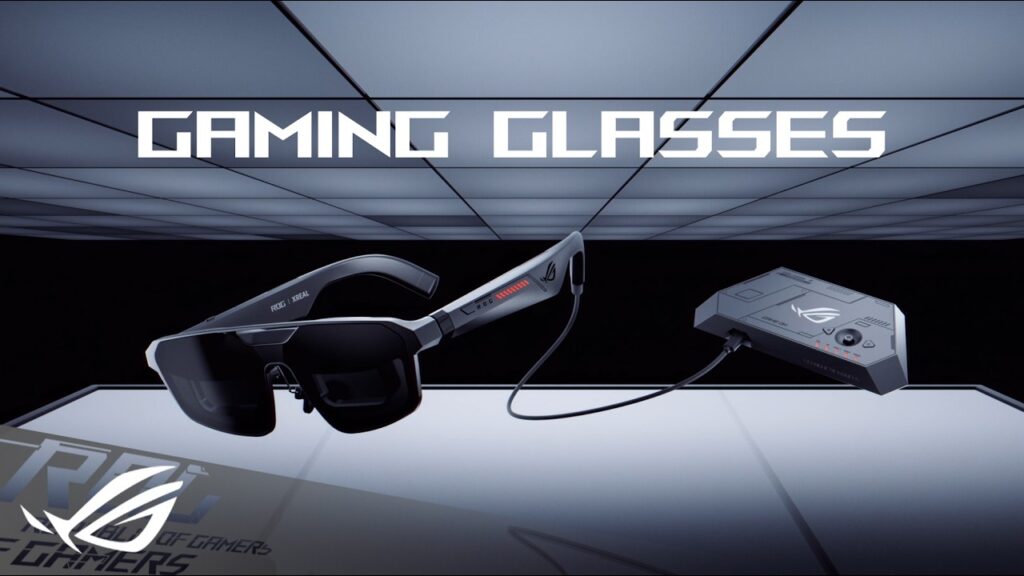
ASUS is officially pushing deeper into the wearable gaming space with the launch of the ROG Xreal R1, a premium augmented reality gaming headset developed alongside Xreal. After first grabbing attention during CES earlier this year, the futuristic-looking glasses are now finally available for pre-order, though the price may shock a lot of gamers. The device is launching at a hefty $849, instantly placing it among the more expensive consumer AR wearables currently available.
The glasses can now be pre-ordered through Best Buy, while broader availability is expected through ASUS ROG starting May 17. Even though the price is significantly higher than Xreal’s already premium offerings, the ROG version is not simply a rebranded product. ASUS is clearly positioning this as a more hardcore gaming-focused upgrade aimed at enthusiasts who want portable large-screen gaming without carrying around a bulky VR headset.
One of the biggest improvements is the upgraded 240Hz refresh rate, which is unusually high for wearable AR displays. That refresh rate makes the glasses particularly attractive for competitive gaming and fast-paced shooters where smoother motion can genuinely improve the experience. Most portable AR glasses currently focus more on media consumption and casual use, but ASUS seems to be targeting players who actually care about responsiveness and low-latency gameplay.
The headset still keeps many of the core specs from the earlier Xreal One Pro hardware. It offers a 57-degree field of view and can simulate a giant 171-inch virtual display from around four meters away. The glasses continue using 1080p micro-OLED panels, which may disappoint users hoping for 1440p or even 4K resolution at this price point. But realistically, fitting ultra-high-resolution displays into lightweight wearable hardware remains technically difficult and expensive right now.
Still, the real selling point here seems to be versatility rather than raw pixel count. The glasses are designed not only for gaming but also for watching movies, connecting to laptops, and even doing general productivity work while traveling. That flexibility is becoming one of the biggest reasons AR glasses are starting to attract more mainstream attention compared to fully immersive VR headsets.
A major addition unique to the ROG package is the included gaming dock. Earlier Xreal products often required awkward workarounds or compatibility tricks for certain gaming systems, but ASUS appears to be solving that issue directly. The dock allows users to connect multiple devices more easily, including PCs, consoles, and hardware like the Nintendo Switch 2, which traditionally can be finicky with AR and external display accessories.
That added connectivity could make the ROG Xreal R1 much more practical for serious gaming setups. At the same time, the dock also creates one of the device’s biggest trade-offs — portability. One of the main appeals of AR glasses is lightweight travel convenience, but carrying the large dock around may reduce some of that flexibility for users constantly on the move.
The launch also reflects a larger trend happening across the tech industry right now. Companies are increasingly experimenting with lightweight wearable displays as a middle ground between traditional monitors and bulky VR systems. Unlike VR headsets, AR glasses are designed to feel less isolating and more practical for everyday use. That category has slowly gained momentum after products like Apple Vision Pro sparked broader interest in spatial computing, even if those devices remain far too expensive for most consumers.
What helps Xreal stand out compared to many competitors is that the company has focused heavily on comfort and portability instead of trying to create fully immersive virtual worlds. Earlier Xreal devices gained positive attention from travelers and gamers because they allowed users to create giant virtual screens almost anywhere without carrying a monitor or giant headset.
The ROG collaboration now pushes that idea further into enthusiast gaming territory. ASUS clearly sees potential in turning AR glasses into a legitimate gaming accessory rather than just a tech novelty. The aggressive refresh rate, bundled dock, and Republic of Gamers branding all signal that this product is being aimed directly at high-performance gaming users instead of casual media viewers.
Still, the biggest challenge may simply be convincing consumers that the experience is worth nearly $850. At that price, buyers are entering territory where they could also consider premium gaming monitors, handheld PCs, or even full VR headsets. The success of the ROG Xreal R1 will likely depend on whether users value portability and private giant-screen gaming enough to justify the premium cost. For now, though, the launch shows one thing clearly — AR gaming glasses are slowly moving beyond experimental gadgets and becoming a serious category companies are willing to compete in aggressively.