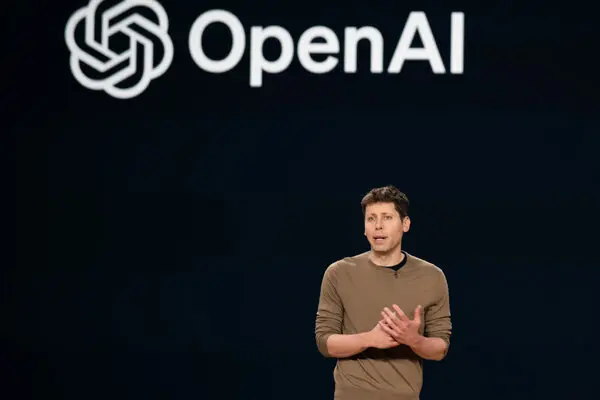
OpenAI may soon become one of the biggest technology companies to enter the public market, but the road ahead doesn’t exactly look simple. Just a week after rival Anthropic revealed its own plans to go public, the company behind ChatGPT has now confirmed that it has quietly started preparing for an initial public offering.
The announcement itself wasn’t dramatic. There was no ringing bell on Wall Street, no flashy presentation for investors. Instead, OpenAI admitted that it had confidentially submitted paperwork to US regulators, giving itself the flexibility to go public whenever the timing feels right. The move marks another major chapter for a company that has transformed from an AI research lab into one of the most valuable businesses on the planet in just a few years.
OpenAI Wants the Option, Not the Obligation
In a statement published on its website, OpenAI said it had confidentially filed an S-1 registration form with the Securities and Exchange Commission. The filing is one of the first official steps toward becoming a publicly traded company.
The company also acknowledged the reality that these filings rarely stay private for long. “We recently submitted a confidential S-1. We expect it to leak so we’re just announcing it. We have not decided on timing yet; it may be a while because there are things we want to do that are likely easier as a private company. But it’s a complicated set of tradeoffs and this gives us the option to go public sooner if that ends up being best,” OpenAI said.
For now, there is no launch date attached to the IPO. There is no share price. There isn’t even a commitment that the company will definitely move forward in the near future. What OpenAI appears to want most is flexibility. Remaining private allows it to make bold decisions without quarterly earnings pressure, while filing now gives it the freedom to act quickly if market conditions improve.
The Numbers Behind the AI Giant Are Hard to Ignore
Even without public shares, OpenAI has already reached a scale few startups ever experience.
Following its latest fundraising round, investors including NVIDIA and Amazon reportedly poured another $122 billion into the company. That funding pushed OpenAI’s valuation to an eye-watering $852 billion, placing it among the most valuable private technology companies in history.
At the same time, revenue has grown at a pace that would have sounded unbelievable just a few years ago. According to recent reports from The Information, OpenAI generated roughly $25 billion in annualized revenue by the end of February. ChatGPT subscriptions, enterprise contracts, API access, and partnerships have all contributed to that surge.
Yet huge revenue doesn’t automatically mean a healthy business.
Artificial intelligence remains one of the most expensive industries ever built. Training advanced models requires enormous computing infrastructure, thousands of specialized chips, and power consumption on a staggering scale. Reports suggest OpenAI could burn through as much as $115 billion by 2029 to cover compute demands and operating expenses.
That creates the question many future investors will inevitably ask: can OpenAI eventually become consistently profitable, or is this an industry where spending never truly slows down?
Competition Is Growing Faster Than Ever
OpenAI may have ignited the modern AI boom when ChatGPT exploded into mainstream culture in late 2022, but staying ahead has become much harder.
Anthropic has emerged as a serious challenger, particularly among enterprise customers focused on reliability and safety. Meanwhile, Google has managed something many thought impossible two years ago: catching up after appearing to fall behind.
The search giant has aggressively improved its Gemini family of models, with Gemini 3 Pro becoming one of the industry’s most talked-about releases after its launch last year. The competition has shifted from simply building chatbots to competing on reasoning ability, coding performance, multimodal understanding, pricing, and developer ecosystems.
For users, this battle has brought better products and faster innovation. For OpenAI, it means maintaining leadership will require constant reinvention and enormous investment.
The days when ChatGPT stood virtually alone at the top of the AI conversation are long gone.
Legal Challenges Could Shape the Company’s Future
Financial questions aren’t the only issues hanging over OpenAI as it prepares for public scrutiny.
The company has also found itself navigating legal and ethical controversies tied to the rapid deployment of artificial intelligence technologies. Earlier this year, the families of victims connected to the Tumbler Ridge mass shooting filed a negligence lawsuit against OpenAI. The complaint alleges that the company failed to act appropriately after warnings generated by its own automated safety systems.
OpenAI has not admitted wrongdoing, and the legal process remains ongoing. Still, cases like these highlight the kind of scrutiny that public companies face far more intensely than private ones.
Once investors gain access to regulatory filings, they’ll likely examine not just revenue growth and expenses, but also safety practices, legal exposure, governance structures, and how the company plans to manage increasingly powerful AI systems.
Those conversations may become just as important as product announcements.
OpenAI’s confidential filing doesn’t guarantee that an IPO is around the corner. It simply means the company is preparing for a future where becoming publicly traded is a real possibility. If it eventually takes that step, it could rank among the most closely watched stock market debuts the tech industry has ever seen.
But before Wall Street gets its chance to judge OpenAI’s numbers, the company still has something to prove. Building groundbreaking AI products captured the world’s attention. Demonstrating that those innovations can translate into a sustainable, responsible, and profitable business may turn out to be an even bigger challenge.