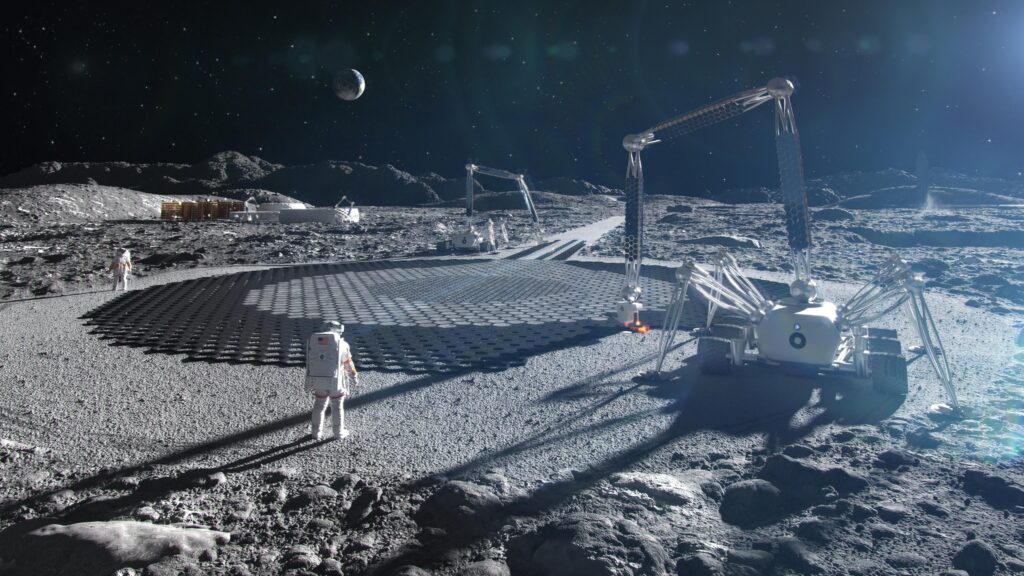
NASA is preparing for what could become the most ambitious space construction project ever attempted by humans. The agency has now revealed deeper details about its long-term plan to establish a massive human presence on the Moon, with operations expected to expand heavily through the 2030s. Unlike older lunar mission concepts that focused on brief visits, this new vision is centered around semi-permanent living, large exploration zones, and infrastructure spread across huge parts of the lunar surface.
The announcement came shortly after the growing momentum of the Artemis program, which continues pushing humans closer to returning to the Moon in a much bigger way than the Apollo era ever attempted. NASA reportedly wants future astronauts not only to land there, but eventually live, work, and explore continuously. If everything stays on schedule, the agency hopes to have a semi-permanent crewed presence near the Moon’s south pole by around 2032.
What makes the entire project feel even bigger is the scale being discussed. NASA isn’t talking about one small station anymore. The proposed lunar setup could stretch across hundreds of miles because different parts of the region serve different purposes — some are better for solar energy, others for scientific research, and some contain valuable water ice deposits buried inside permanently shadowed craters.
NASA Thinks Moon Ice Could Solve One of Space Travel’s Biggest Problems
Moon’s south pole has become one of the hottest targets in modern space exploration because scientists believe it may contain large reserves of frozen water trapped beneath the surface. Reports suggest some crater regions may contain material made up of nearly 20 percent ice. That changes everything for future lunar missions because carrying water from Earth is incredibly expensive and difficult.
NASA believes this ice could eventually be converted into drinking water, breathable oxygen, and even rocket fuel for deeper missions into space. If astronauts can create resources directly on the Moon, it could dramatically reduce dependence on Earth-based supply launches. In simple terms, the Moon may become a kind of giant space gas station for future Mars missions and beyond.
Another major reason the south pole matters is sunlight. While deep craters stay in darkness almost permanently, higher crater ridges receive near-constant sunlight for long periods. That makes them perfect for solar-powered infrastructure and energy generation. Scientists think this balance of darkness and sunlight makes the region one of the most practical places for a long-term lunar settlement.
MoonFall Drones and Lunar Rovers Will Prepare the Surface Before Humans Arrive


7
Before astronauts fully settle there, NASA plans to send robotic explorers ahead to study the terrain carefully. One of the most interesting parts of the project is a group of small hopping drones called “MoonFall” drones. These machines are expected to launch in 2028 aboard a lander from Firefly Aerospace under a contract reportedly worth $75 million.
The drones will scout dangerous areas, map the terrain, and help identify where future structures and systems should be built. NASA also awarded major rover contracts to Astrolab and Lunar Outpost to develop crewed lunar vehicles capable of transporting astronauts across rough terrain. At least one rover is expected to arrive before the planned Artemis 4 crewed mission later this decade.
What’s becoming clear now is that the Artemis program is slowly evolving from a series of Moon landings into something much bigger — an attempt to build the first real off-world human infrastructure. The next few years will probably decide whether humanity’s future in space remains temporary exploration or becomes something much more permanent.