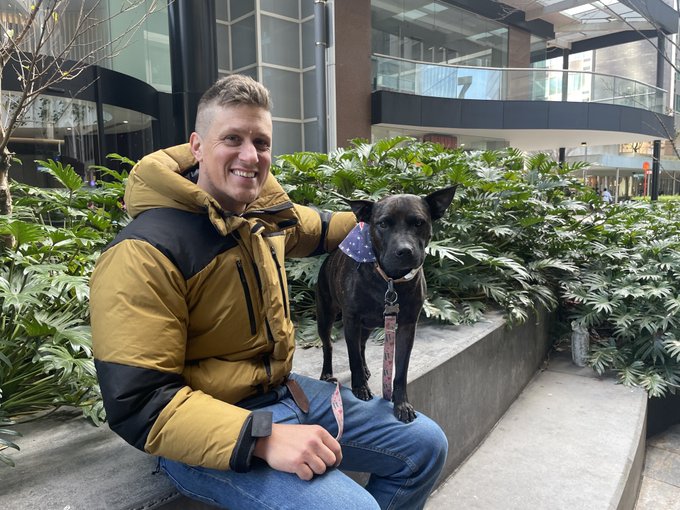
A remarkable story from Australia is highlighting the unexpected ways artificial intelligence can be used in real life. A tech professional reportedly turned to AI tools, including ChatGPT and Google DeepMind’s AlphaFold, to help design a custom vaccine for his dog after it was diagnosed with a life-threatening tumor.
The dog, named Rose, had reportedly been given only a few months to live. Determined to try everything possible, her owner Paul Conyngham decided to combine biotechnology resources with AI-powered tools to explore a potential treatment.
A Personal Mission to Save His Dog
Speaking about the experience on Australia’s Today show, Conyngham described Rose as more than just a pet. He said the dog had been by his side through several difficult moments in life, including personal challenges and stressful business situations.
Because of that bond, he felt compelled to take action when Rose was diagnosed with cancer. Instead of accepting the prognosis, he began researching whether emerging technologies could help develop a treatment.
How AI Helped Build the Vaccine Plan
According to Conyngham, he first turned to ChatGPT to help outline a potential strategy for tackling the disease. The AI system helped him map out the steps required to design a personalized treatment approach.
He then reached out to the University of New South Wales Ramaciotti Centre for Genomics, where researchers helped sequence the DNA from Rose’s tumor. Once the genetic information was extracted, the data was converted into digital form for further analysis.
Using AI tools and computational pipelines, Conyngham analyzed the tumor’s genetic mutations and searched for possible ways to target them.
He explained that ChatGPT helped guide him through much of the research process, including interpreting information and planning the workflow needed to develop a potential therapy.
Creating a Custom mRNA Vaccine
With the genetic information in hand, Conyngham used AI-powered analysis tools to process large amounts of data and identify mutations linked to the cancer.
The process eventually led to the design of a custom mRNA-based vaccine, a technology similar to the approach used in several modern vaccines.
After the vaccine blueprint was created, the treatment was administered to Rose during the Christmas period last year.
According to Conyngham, the results were encouraging. The tumor reportedly shrank by nearly half after the experimental treatment.
Bureaucracy Proved the Hardest Challenge
Interestingly, Conyngham said developing the vaccine itself was not the most difficult part of the journey. Instead, obtaining ethical approval to try the experimental treatment took the most effort.
He spent months preparing documentation and submitting applications in order to receive approval for a small-scale trial involving the dog.
In his own words, he dedicated hours every night working on a detailed document explaining the treatment plan before finally receiving clearance.
AI Leaders React to the Story
The unusual use of artificial intelligence quickly drew attention from leaders in the AI industry.
OpenAI president Greg Brockman shared the story on social media, describing it as an example of how AI tools can empower individuals to create innovative solutions. He noted that the treatment appeared to be the first personalized cancer vaccine designed specifically for a dog.
Google DeepMind CEO Demis Hassabis also responded, highlighting the role of AlphaFold and calling the development an exciting glimpse into the future of digital biology.
Meanwhile, Perplexity CEO Aravind Srinivas praised AlphaFold’s broader impact, saying breakthroughs like this show how AI-driven biological research could benefit science for generations.
Final Words
While Rose’s treatment remains an experimental case rather than a medically approved therapy, the story offers a fascinating look at how artificial intelligence could transform biotechnology and personalized medicine.
As AI tools continue to advance, cases like this suggest that individuals — not just large laboratories — may eventually play a role in developing highly personalized treatments.