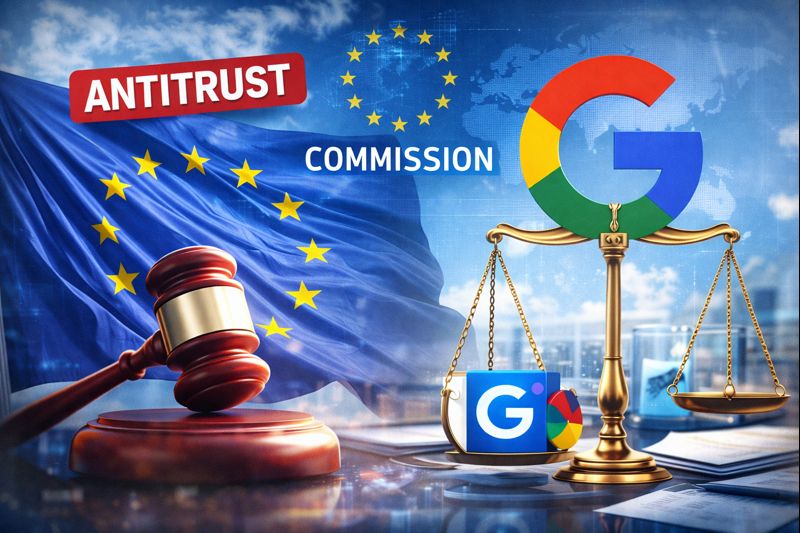
Pressure is mounting on European regulators to take decisive action against Google as a major coalition of publishers, tech firms, and startups calls for the European Commission to wrap up its ongoing antitrust investigation into the tech giant’s search practices.
In a joint letter sent to top European Union leaders, several influential industry groups urged regulators to conclude the nearly two-year probe into Google’s alleged preferential treatment of its own services in search results and impose penalties if violations are confirmed.
The investigation, launched under the European Union’s Digital Markets Act (DMA), is examining whether Google has unfairly promoted its own services over competitors in online search.
Growing Frustration Among European Companies
The letter was signed by multiple organizations representing Europe’s media and technology sectors. Among them were the European Publishers Council, the European Magazine Media Association, the European Tech Alliance, and EU Travel Tech.
Major media companies linked to the initiative include Axel Springer, News Corp, and Condé Nast.
These groups argue that the prolonged investigation is harming European businesses that rely on fair access to online search traffic. According to the letter, delays in resolving the case are putting smaller companies and startups under financial strain.
The organizations warned that the European Commission’s credibility is now at stake.
They stressed that prolonged uncertainty is weakening the ability of European companies to compete, invest, and grow in the digital marketplace.
Investigation Under the Digital Markets Act
The European Commission first launched its probe into Google on March 25, 2024, using powers granted by the Digital Markets Act — a major piece of EU legislation designed to limit the dominance of large technology platforms.
The law aims to ensure fair competition in digital markets by preventing so-called “gatekeeper” companies from abusing their market power.
Under DMA guidelines, regulators typically aim to complete investigations within about 12 months. However, the Google case has now stretched close to two years, prompting criticism from industry groups that the process is moving too slowly.
Allegations Against Google
At the center of the investigation is the claim that Google favors its own products and services in search results, potentially pushing competitors further down the page.
Critics argue that this practice gives Google an unfair advantage in sectors such as travel booking, shopping, and other online services.
Google has consistently denied these allegations. The company says its search system is designed to provide the most useful information to users rather than promote its own services.
Proposed Solutions and Industry Concerns
Since being formally charged last year, Google has reportedly proposed several adjustments to address the concerns raised by regulators and competitors.
However, rival companies argue that the proposed remedies do not go far enough.
Industry groups are now urging the European Commission to issue a formal non-compliance decision against Google’s parent company, Alphabet. They also want regulators to impose a cease-and-desist order along with a substantial financial penalty.
Such measures, they say, would help deter future violations and restore fair competition in Europe’s digital markets.
EU Responds to Industry Pressure
A spokesperson for the European Commission confirmed that regulators have received the letter and acknowledged the urgency of the situation.
The Commission stated that it aims to conclude the investigation as quickly as possible, though officials also emphasized that the case remains complex and requires careful evaluation.
Broader Tech Tensions Between the EU and US
The case highlights broader tensions between Europe and the United States over the regulation of major technology companies.
Brussels has increasingly taken an aggressive stance toward large tech firms, introducing new laws to curb their market dominance in areas such as social media, online advertising, search engines, and artificial intelligence.
These efforts have occasionally sparked friction with Washington, where many of the world’s largest tech companies are based.
Final Words
As Europe continues its push to regulate Big Tech, the outcome of the Google investigation could become one of the most significant tests of the Digital Markets Act. For publishers, startups, and tech companies across the region, the decision may shape the future balance of power in the online economy.
With industry groups demanding swift action, all eyes are now on the European Commission to see whether it will impose penalties on Google — and how strongly it will enforce Europe’s new digital competition rules.