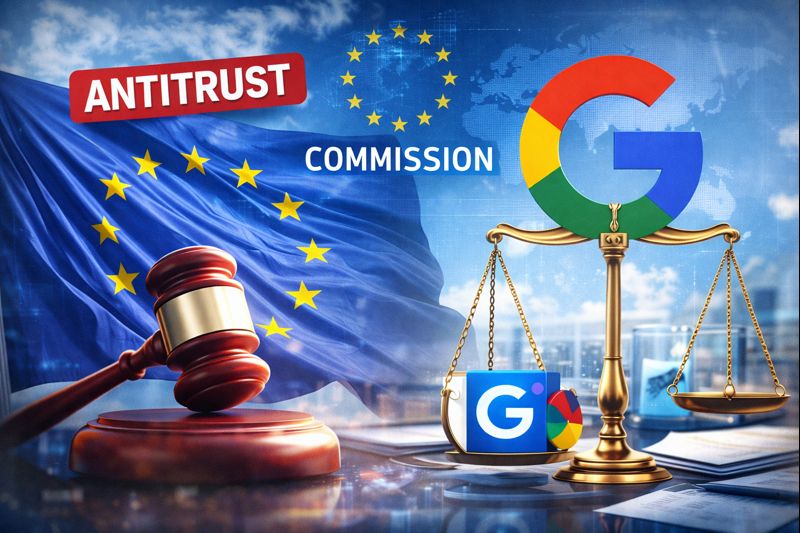
The European Union is tightening its grip on Big Tech once again — and this time, Google is firmly in the spotlight. European antitrust regulators have announced that they will issue formal guidance telling Google how it must open up its search and AI services to rivals, as part of enforcement under the EU’s sweeping Digital Markets Act (DMA).
The move is aimed at ensuring that smaller online search engines and artificial intelligence developers can compete on more equal footing with Google’s dominant platforms, including its search engine and Gemini.
What the EU Wants Google to Change
According to the European Commission, Google will be given specific instructions on how to provide third-party companies with access to key services and data that have long been controlled internally.
EU tech chief Henna Virkkunen said the proceedings under the DMA are designed to ensure that rival search engines and AI providers receive the same level of access to search data and the Android operating system as Google’s own products.
In practical terms, this means competitors should not be locked out of tools or datasets that give Google Search or Gemini an advantage in the market.
Two Key Proceedings Explained
The Commission has opened two specification proceedings, each targeting a different part of Google’s ecosystem.
- AI access: Regulators will define how Google must allow third-party AI developers to access the same features and capabilities currently reserved for Gemini and Google’s in-house AI services.
- Search data sharing: The second proceeding focuses on Google Search. The EU wants Google to share anonymised ranking, query, click, and view data with rival search engines and eligible AI chatbot providers — and to do so on fair, reasonable, and non-discriminatory terms.
Both efforts are intended to prevent Google from using its scale and data dominance to crowd out competitors.
Google Pushes Back
Google, however, has made it clear it is not fully on board with the Commission’s approach.
Responding to the announcement, Clare Kelly said the company is already compliant in key areas. She stressed that Android is “open by design” and that Google is already licensing search data to competitors under DMA requirements.
At the same time, Google warned that additional rules — especially those shaped by rival complaints — could have unintended consequences. According to the company, overregulation may threaten user privacy, security, and innovation, rather than benefit consumers.
Google continues to reject claims that it unfairly exploits its market power.
EU’s Broader Message to Big Tech
EU antitrust chief Teresa Ribera framed the action as part of a much bigger goal: making sure the AI and digital economy isn’t controlled by just a handful of dominant players.
She said the EU wants to maximise the benefits of this technological shift by keeping the playing field open — not tilted toward the largest companies.
This approach isn’t new. The Commission issued similar guidance to Apple two years ago, forcing the iPhone maker to open up parts of its closed ecosystem to rivals.
What Happens Next
The Commission has set a six-month timeline to conclude both proceedings. Once finalised, the guidance will be binding, leaving Google with little room to delay compliance.
For the broader tech industry, the case could shape how AI models, search data, and mobile platforms are shared across Europe — potentially setting a precedent for how global tech giants operate under stricter regulatory regimes.
Final Words
The EU’s message to Google is clear: dominance comes with responsibility. As AI becomes central to search, commerce, and everyday digital life, regulators want to ensure innovation isn’t locked behind proprietary walls.
Whether this leads to more competition — or sparks another round of legal and political battles between Big Tech and Brussels — is something the next six months will reveal.