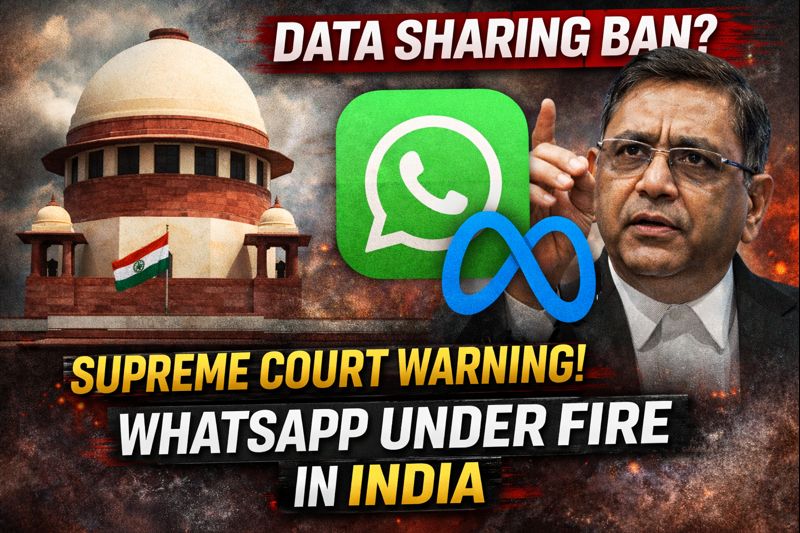
India’s Supreme Court has sent a strong warning to WhatsApp, signalling that it could reimpose restrictions on data sharing with Meta if concerns over user privacy are not addressed.
During a hearing on Tuesday, the court sharply criticised WhatsApp’s privacy policy, calling it misleading — particularly for vulnerable users — as the long-running legal battle between the messaging giant and Indian regulators continues.
Why the Supreme Court Is Stepping In
The case stems from a November 2024 ruling by India’s antitrust authority, which fined WhatsApp $25.4 million and barred it from sharing user data with other Meta entities for advertising purposes for five years.
While an appeals court later lifted the data-sharing ban, it allowed the fine to stand — prompting both WhatsApp and Indian regulators to approach the Supreme Court for clarity.
At the heart of the matter is whether WhatsApp’s privacy policy gives users a real choice.
‘Designed to Mislead Users,’ Says Chief Justice
According to lawyers present in court, Chief Justice Surya Kant took direct aim at how WhatsApp communicates its data practices. He reportedly questioned how ordinary users — especially elderly people or those from rural backgrounds — could realistically understand what they were agreeing to.
The court suggested the policy was “cleverly designed” in a way that obscures intent, raising serious concerns about informed consent. While no final ruling was issued, the judges made it clear that a fresh ban remains on the table.
WhatsApp declined to comment, citing the case being under judicial consideration.
Why India Matters So Much to Meta
India is Meta’s largest market globally, though the company does not release country-wise user data. Independent estimates suggest Facebook has over 400 million users in India, while Instagram has close to 500 million.
WhatsApp has previously warned that restrictions on data sharing could force it to pause or roll back features in India — a move that could impact both users and the company’s broader business strategy.
Not Just an India Problem
Meta’s privacy practices have faced scrutiny elsewhere too. In 2023, the company agreed to rewrite parts of its privacy policy in plain language after European regulators accused it of violating EU law by failing to clearly explain how user data was handled.
India’s antitrust ruling echoed similar concerns, noting that WhatsApp effectively forced users to accept new terms or risk losing access, without offering any meaningful opt-out option.
What Data WhatsApp Shares
Publicly, WhatsApp states that it shares limited information with Meta, including:
- Phone numbers
- Transaction data
- How users interact with businesses
- Mobile device information
Indian regulators argue this still creates an unfair imbalance — especially when users have no real alternative but to accept the terms.
What Happens Next
The Supreme Court has not delivered its verdict yet and will resume hearings next week. Depending on how the court rules, the case could reshape how global tech companies operate in India — especially when it comes to consent, transparency, and user rights.
Final Words
India’s warning to WhatsApp is more than just a legal scolding — it’s a signal. As governments worldwide push back against Big Tech’s data practices, India appears ready to draw a firm line. Whether WhatsApp adapts or faces renewed restrictions could set a precedent for how privacy is enforced in one of the world’s largest digital markets.