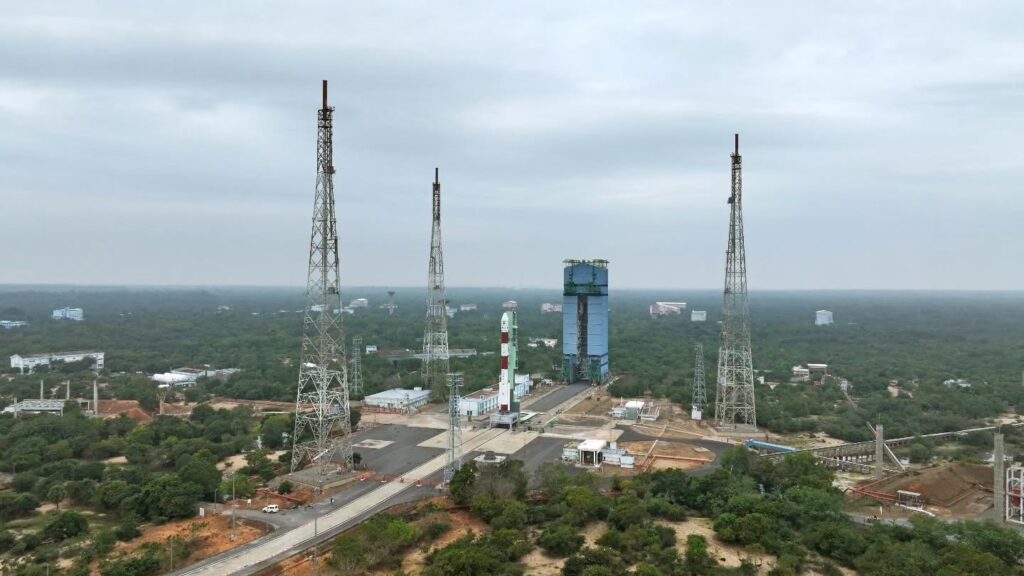
India’s space ambitions faced a moment of uncertainty on Monday as the Indian Space Research Organisation confirmed an anomaly during the final phase of the PSLV-C62 mission. The launch, which marked ISRO’s first mission of 2026, encountered unexpected disturbances toward the end of the rocket’s third stage, prompting engineers to begin a detailed investigation.
The mission lifted off from Sriharikota with high expectations, carrying the EOS-N1 earth observation satellite along with a diverse set of Indian and international payloads. While initial phases of the flight performed as planned, the issue emerged just as the vehicle was transitioning through a critical phase of its ascent.
What Went Wrong During the Flight
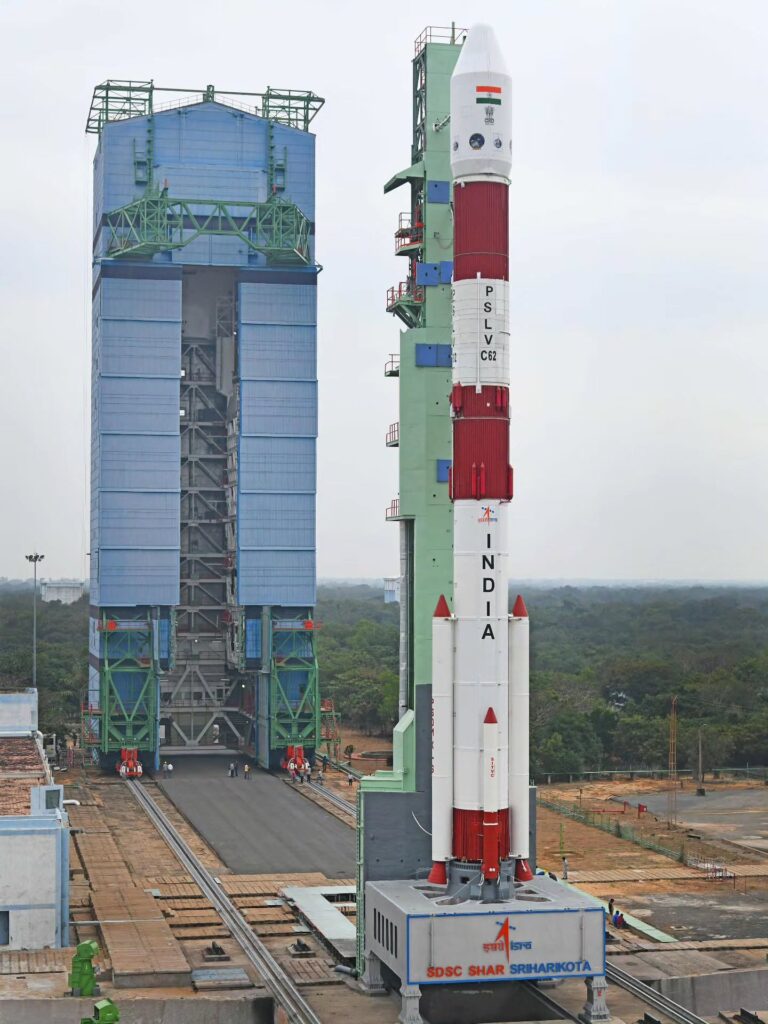
Addressing the situation shortly after the launch, ISRO Chairman V. Narayanan explained that the PSLV-C62, a four-stage launch vehicle, performed nominally through most of its mission.
“The performance of the vehicle close to the end of the third stage was as expected,” he said, adding that increased disturbances and a deviation in the flight path were observed moments later.
According to ISRO, engineers are now carefully analysing telemetry and flight data to understand the root cause. A detailed update is expected once the review is completed.
A Key Mission for ISRO in 2026
The PSLV-C62 mission was significant on several fronts. Standing 44.4 metres tall, the rocket lifted off from the Satish Dhawan Space Centre in what was a commercial mission for NewSpace India Limited (NSIL).
This launch marked:
- The 64th flight of PSLV
- The 5th mission of the PSLV-DL variant
- ISRO’s first launch of the year 2026
The mission also carried 14 co-passenger satellites and a re-entry capsule, making it one of ISRO’s more complex, multi-objective flights in recent times.
Payloads: From Earth Observation to On-Orbit Refuelling
At the heart of the mission was EOS-N1 (also known as Anvesha), a hyperspectral earth observation satellite designed for advanced surveillance, strategic monitoring, and environmental analysis.
Beyond EOS-N1, the mission featured an impressive mix of experimental and commercial payloads:
- AayulSAT, developed by Bengaluru-based startup OrbitAID Aerospace, aimed to demonstrate India’s first on-orbit satellite refuelling capability — a critical step toward satellite servicing and long-term sustainability in space.
- A KID re-entry capsule, a European technology demonstrator developed with a Spanish startup, designed to validate controlled atmospheric re-entry with a planned splashdown in the South Pacific.
- Multiple CubeSats and small satellites from Indian startups and universities, including Dhruva Space’s CGUSAT, along with international partners focusing on IoT, AI processing in orbit, radiation measurement, and agricultural data applications.
Context: A Sensitive Moment for PSLV
The anomaly comes just months after a rare setback for PSLV. In May 2025, the PSLV-C61 mission failed to place the EOS-09 satellite into orbit due to a third-stage issue — an uncommon occurrence for a rocket known for its reliability.
Following that failure, ISRO had constituted a failure analysis committee, carried out a comprehensive review, and implemented corrective measures before returning the launcher to flight. The PSLV family, with a track record spanning over three decades, has experienced only a handful of such setbacks — making each anomaly closely scrutinised.
What Happens Next
ISRO has emphasised that data analysis is currently underway, and conclusions will be drawn only after a thorough technical review. Given PSLV’s critical role in India’s commercial and scientific launch ecosystem, the findings from PSLV-C62 will likely shape upcoming missions and operational decisions.
Final Words
The PSLV-C62 mission was ambitious, packed with cutting-edge payloads and symbolising ISRO’s push toward advanced space technologies in 2026. While the anomaly during the third stage has raised questions, it also underscores the complexity and risk inherent in spaceflight.
ISRO’s transparent communication and methodical approach now come into focus, as the space agency works to understand what went wrong — and ensure future missions remain on track.