The growing tech battle between the United States and China has now reached a point where even approved business deals are getting stuck in political uncertainty. According to a Reuters report, several major Chinese companies have reportedly received approval from the US government to purchase Nvidia’s powerful H200 AI chips, but not a single shipment has actually gone through yet. The situation has now placed Nvidia CEO Jensen Huang right in the middle of one of the biggest global technology stand-offs currently unfolding.
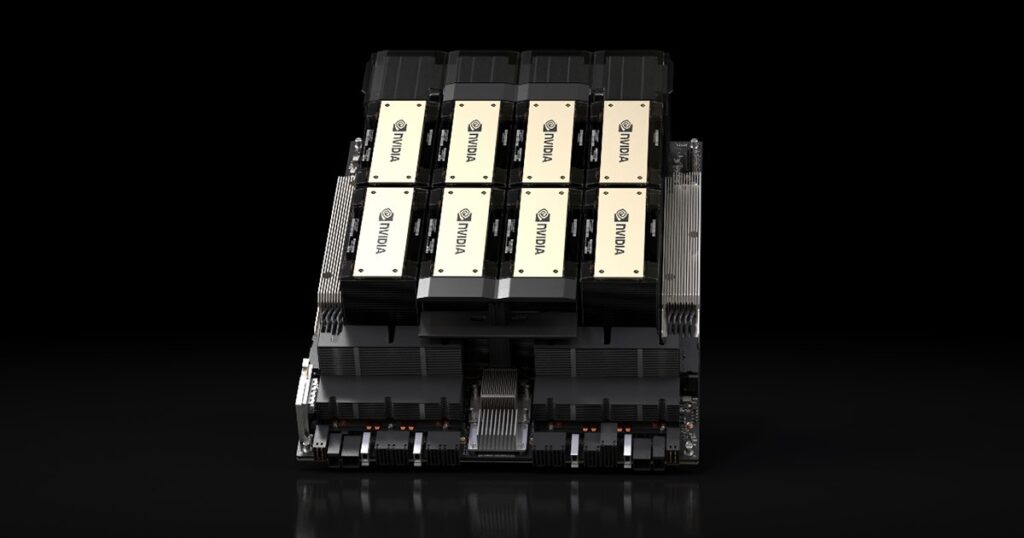
The report claims around 10 Chinese firms have already been cleared under US export licensing rules to buy Nvidia’s H200 chips, which are considered the company’s second-most-powerful artificial intelligence processors after its top-end Blackwell line. Among the reportedly approved buyers are Chinese tech giants Alibaba, Tencent, ByteDance, and JD.com.
Sources quoted in the report also stated that companies like Lenovo and Foxconn were approved as official distributors for the chips inside China. Under the current licensing structure, each approved Chinese buyer could reportedly purchase up to 75,000 chips either directly from Nvidia or through these authorised distributors. But despite all those approvals on paper, deliveries remain completely frozen.
That contradiction is exactly why this situation has suddenly become such a huge international story. Normally, once Washington approves export licenses, companies move quickly to complete orders. But this time, sources claim Beijing itself has become hesitant about allowing the purchases to move forward. Chinese authorities reportedly fear that relying heavily on foreign AI chips could weaken the country’s long-term goal of building a fully independent domestic semiconductor industry.
The timing also makes things more sensitive because China has been aggressively pushing local alternatives from companies like Huawei. In recent months, Chinese AI firms such as DeepSeek have publicly promoted their use of domestic AI hardware rather than depending on Nvidia technology. That shift has become symbolic of China’s larger strategy to reduce foreign dependence in critical technology sectors.
Meanwhile, Jensen Huang is personally trying to revive the stalled negotiations. According to the report, Huang unexpectedly joined President Donald Trump’s trip to Beijing after receiving an invitation linked to high-level US-China discussions involving Chinese President Xi Jinping. Reports say Trump even picked Huang up in Alaska while traveling toward the summit, immediately fuelling speculation that Nvidia’s China business may have become part of larger diplomatic conversations.
For Nvidia, the stakes are enormous. Before export restrictions tightened, the company reportedly controlled nearly 95 percent of China’s advanced AI chip market. China once contributed around 13 percent of Nvidia’s overall revenue, and Huang himself previously estimated that China’s AI sector alone could become a $50 billion market this year. Losing that market entirely would clearly hurt even a company as dominant as Nvidia.
But the problem now is not just American restrictions anymore. Both governments appear increasingly suspicious of each other’s technology intentions. The United States has imposed strict conditions before allowing H200 exports, including requirements that Chinese buyers prove the chips will not be used for military purposes and that security protections are properly in place. Nvidia also reportedly has to certify that enough inventory exists inside the US before shipments can proceed.
Then there is another controversial part of the arrangement that reportedly made Beijing even more uncomfortable. Reuters claims the Trump administration negotiated a system where the United States would receive 25 percent of the revenue generated from the chip sales. Because US law does not directly allow export fees in this form, the chips would reportedly need to pass through American territory before eventually reaching China. That unusual structure allegedly triggered fears inside Beijing about potential monitoring, tampering, or hidden vulnerabilities within the supply chain.
China’s own internal policy changes are also slowing things further. Recent supply chain security regulations introduced by the Chinese State Council reportedly pushed government agencies to more aggressively identify and reduce foreign technology dependencies in critical infrastructure sectors. In simple terms, China appears increasingly worried that depending too much on American AI hardware could become a long-term national security weakness.
At the same time, some hardliners inside Washington actually support the delays. Critics argue that allowing Nvidia to continue selling advanced AI chips to China could weaken America’s technological lead in artificial intelligence. Chris McGuire from the Council on Foreign Relations reportedly criticised the idea strongly, arguing that every Nvidia chip sold to China potentially reduces the United States’ advantage in the global AI race.
Honestly, the entire situation now shows how deeply politics and technology have become connected. This is no longer just about computer chips or corporate profits. AI hardware has effectively turned into a geopolitical weapon, with both superpowers trying to protect their future dominance. Nvidia may still be the world’s biggest AI chip company, but even a giant like that is discovering there are limits to business when governments begin treating semiconductors like strategic military assets. And for now, despite approvals, negotiations, and diplomatic visits, Nvidia’s H200 chips are still sitting in limbo with zero confirmed deliveries reaching China.