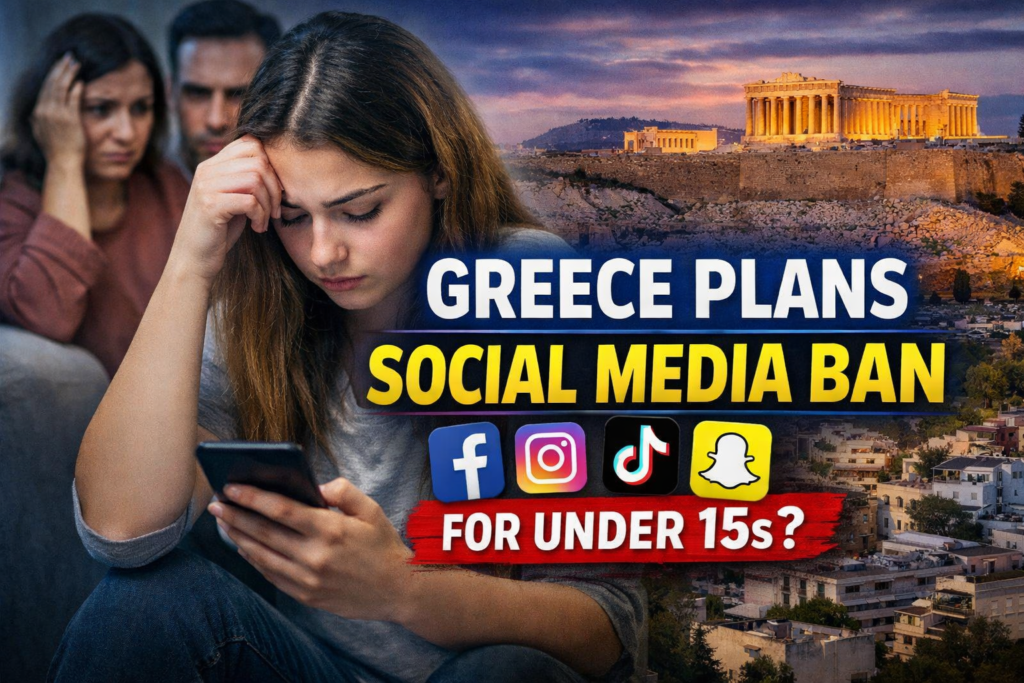
A major shift could be coming in how young people use the internet. Greece is preparing to introduce a social media ban for children under 15, a move that reflects growing global concern around digital addiction and online safety.
And this isn’t just a policy idea—it’s a response to something parents say they’re already struggling with every day.
Parents Say They’ve “Reached the Limit”
For many families, this debate isn’t theoretical.
Parents in Greece say they’re finding it harder than ever to manage their children’s screen time. Conversations, restrictions, even taking away devices—it’s often not enough.
That frustration is now translating into support for stricter measures. Surveys suggest a strong majority of people back the idea of limiting or banning social media access for younger users.
The feeling is simple: families need help.
Why the Government Is Stepping In
The proposed move follows earlier steps already taken by the government, including banning mobile phones in schools and introducing parental control tools.
Now, the focus is shifting beyond classrooms to the digital space itself.
Officials are reportedly looking at models similar to countries like Australia, where social media platforms are required to block underage users or face penalties.
If implemented, this would mark one of the stricter approaches in Europe.
Rising Concerns: Addiction, Bullying, Exposure
Experts say the numbers are worrying.
Reports from child safety helplines show a sharp increase in cases related to cyberbullying, online blackmail, and harmful content exposure. Many of these cases involve very young users—some still in primary school.
There’s also a growing concern that children simply aren’t equipped to handle these platforms safely. From misinformation to peer pressure, the risks go beyond just screen time.
Nearly half of teenagers have already reported negative effects from social media use.
Not Everyone Agrees With a Ban
Despite strong support, the idea isn’t without pushback.
Some parents believe responsibility should stay within families rather than shift to government control. Others worry about enforcement—whether kids will simply find ways around restrictions.
And then there’s the biggest reality check: for many teenagers, social media isn’t optional—it’s part of how they’ve grown up.
They don’t remember a world without it.
A Bigger Global Shift
What’s happening in Greece is part of a larger trend.
Across the world, governments are starting to question how early access to social media is affecting children—and whether stricter rules are needed to protect them.
The challenge is finding the balance.
Too much control, and it feels restrictive. Too little, and the risks keep growing.
Where This Leaves Things
If the ban moves forward, Greece could become one of the key countries testing how far regulation should go in the digital age.
But even beyond policy, the conversation has already shifted.
This is no longer just about apps or screen time—it’s about how a generation grows up in a world where being online isn’t a choice, but the default.