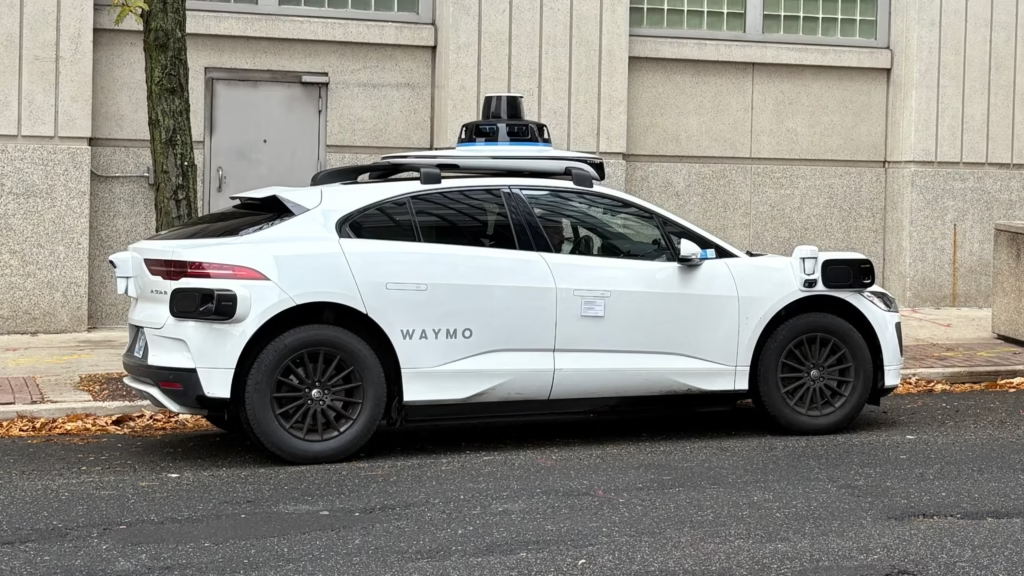
Self-driving technology has made enormous progress over the last decade, but the latest development involving Waymo serves as a reminder that even the most advanced autonomous systems still face real-world challenges. The Alphabet-owned robotaxi company has announced a recall affecting more than 3,800 autonomous vehicles after identifying a software issue that could potentially lead cars into closed freeway construction zones.
The recall comes at a time when Waymo is rapidly expanding its driverless ride-hailing operations across several US cities. While the company insists the issue is being addressed proactively, the incident has once again placed a spotlight on the safety challenges facing the autonomous vehicle industry as companies push toward wider adoption.
Why Waymo Is Recalling Thousands of Robotaxis
According to a safety notice filed with the National Highway Traffic Safety Administration (NHTSA), the software issue involves situations where Waymo vehicles could incorrectly enter freeway construction areas that have been closed to traffic. The concern is particularly serious because vehicles may approach these restricted zones at normal driving speeds rather than recognizing them as inaccessible routes.
Although regulators have outlined the potential risk, it remains unclear whether a specific incident triggered the recall. Neither the NHTSA nor Waymo has publicly confirmed any crash or injury linked to the software behavior.
In a statement addressing the situation, Waymo explained that it had already taken preventive measures before filing the recall.
“We identified an area of improvement regarding performance around freeway construction zones,” Waymo said. “We voluntarily restricted freeway operations last month while making improvements, proactively notified state and federal regulators, and decided to file a voluntary software recall with NHTSA.”
The company also emphasized that software recalls differ significantly from traditional automotive recalls. Unlike mechanical defects that require vehicles to be physically removed from service, software-related recalls are often resolved through updates deployed across the fleet.
Freeway Driving Has Been a Major Step for Waymo
Waymo’s robotaxis were not originally allowed to operate on freeways. For years, the company’s autonomous vehicles were limited primarily to city streets and lower-speed road networks while engineers refined the technology.
That changed in 2024 when Waymo expanded freeway operations in Phoenix. The rollout initially involved employees before eventually opening access to paying customers. The company even released demonstration footage showing how its self-driving system handled high-speed traffic conditions, lane changes and freeway navigation.
Freeway driving represents one of the most complex environments for autonomous systems. Vehicles must process large amounts of information at high speeds while adapting to unpredictable situations such as accidents, road closures, emergency vehicles and construction zones.
The latest recall suggests that handling temporary freeway changes remains one of the areas where further improvements are needed.
Another Recall in a Challenging Year
The newest recall is notable because it follows several other safety-related actions involving Waymo’s fleet over the past year. While the company remains one of the leaders in autonomous driving technology, regulators have continued monitoring how its vehicles behave in unusual situations.
Just last month, Waymo recalled nearly 3,800 robotaxis after an incident involving a flooded roadway in San Antonio. In that case, one of the autonomous vehicles reportedly entered an area affected by floodwaters and was eventually swept away. Fortunately, nobody was inside the vehicle at the time and no injuries were reported.
Earlier concerns involved reports that some Waymo vehicles failed to properly stop when approaching school buses displaying extended stop signs and flashing warning lights. That issue drew significant attention because school bus regulations are among the most important traffic safety rules in the United States.
While software updates were implemented to address those concerns, the incidents illustrate the ongoing challenge of teaching autonomous systems to safely interpret every possible roadway scenario.
Waymo Still Leads the Robotaxi Industry
Despite the recalls, Waymo remains one of the most advanced and widely deployed autonomous vehicle operators in the world. Unlike many competitors that are still testing their systems, Waymo already provides fully driverless ride-hailing services in multiple cities and has completed millions of autonomous trips.
The company argues that its long-term safety record remains strong. According to data published by Waymo, its autonomous vehicles have been involved in significantly fewer serious crashes compared to human drivers.
Waymo says its fleet has recorded 92 percent fewer crashes resulting in serious injury or worse outcomes. The company also claims a 92 percent reduction in pedestrian-related crashes compared with conventional driving statistics.
These figures have become a central part of Waymo’s argument that autonomous technology can eventually make roads safer than human-operated vehicles. However, each recall also highlights how difficult it is to build systems capable of handling every edge case encountered in the real world.
What Happens Next?
For now, Waymo has already limited freeway operations while engineers work on software improvements. The company is expected to deploy updates across affected vehicles as part of the recall process, though a detailed timeline has not yet been publicly disclosed.
The incident also comes at a critical moment for the broader autonomous vehicle sector. Investors, regulators and consumers are paying close attention as robotaxi services move from experimental technology into mainstream transportation. Every software update, safety report and recall is likely to receive increased scrutiny as the industry attempts to prove that driverless systems can operate safely at scale.
For Waymo, the challenge is not only fixing the construction-zone issue but also maintaining public confidence in a technology that many believe could eventually transform urban transportation. The company still holds a significant lead in the robotaxi race, but the latest recall shows that even the most advanced self-driving systems remain a work in progress.