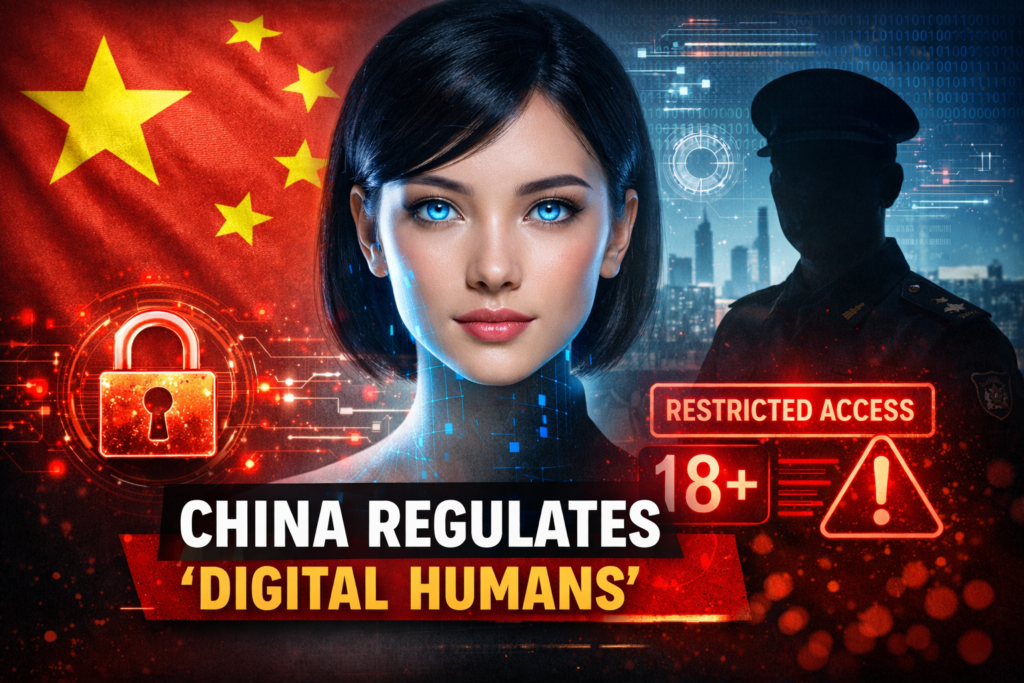
China is stepping deeper into the AI era — but with tighter control. The Cyberspace Administration of China has rolled out draft rules targeting the fast-growing world of “digital humans,” and the message is clear: innovation is welcome, but not without boundaries.
At the heart of the proposal is one simple idea — transparency.
Under the new rules, any content featuring virtual humans must be clearly labeled. No ambiguity, no confusion. The aim is to ensure users always know when they’re interacting with something artificial, especially as AI-generated personalities become increasingly realistic.
But the bigger focus is on younger users.
The regulator wants to block digital humans from offering what it calls “virtual intimate relationships” to anyone under 18. That’s a direct response to growing concerns around emotional dependency, online addiction, and the blurred lines between real and virtual interactions — issues that are becoming harder to ignore as AI companions gain popularity worldwide.
There’s also a strong privacy angle built into the draft.
Creating digital avatars using someone else’s identity without consent? Not allowed. Using AI personas to bypass identity checks? Also banned. These moves reflect a broader push by Beijing to close loopholes before they turn into large-scale risks.
Content control remains a major pillar too.
Digital humans won’t be allowed to spread material that threatens national security, promotes division, or disrupts social stability. At the same time, platforms are being nudged to actively filter out harmful content — including sexually suggestive material, violent imagery, or anything that could fuel discrimination.
Interestingly, the draft goes a step further by asking service providers to step in when users show signs of self-harm or distress. That signals a shift where platforms aren’t just content hosts anymore — they’re expected to take some level of responsibility for user well-being.
This move doesn’t come in isolation.
China has already made it clear that artificial intelligence is central to its long-term economic strategy. But alongside rapid adoption, the government is tightening oversight to ensure that the technology aligns with its broader social and political framework.
In many ways, these draft rules are about setting the ground rules early.
The digital human industry is still evolving, but China is treating it as more than just a tech trend. Officials are framing it as a matter of public interest, digital safety, and even national strategy — suggesting that how AI personalities develop online could have far-reaching consequences.
Globally, countries are still figuring out how to regulate AI in meaningful ways. China, on the other hand, is moving fast to define what’s acceptable and what’s not.
And if these rules go through after the public consultation period ends in May, they could become one of the most detailed frameworks yet for governing AI-driven virtual identities — setting a precedent others might soon have to follow.