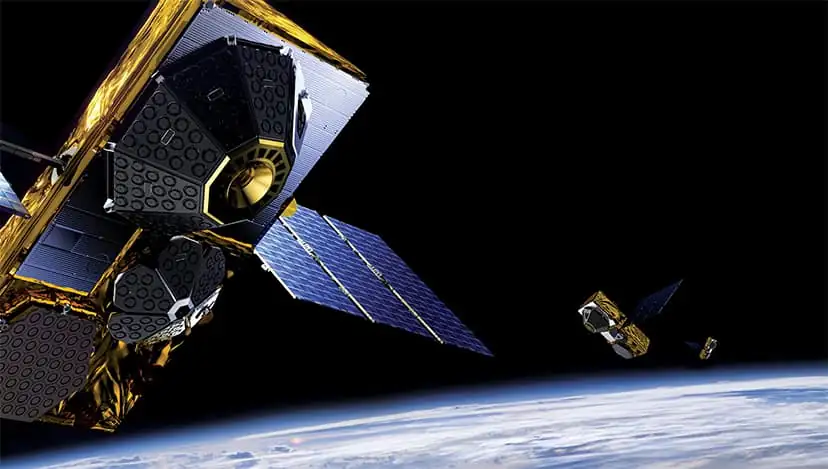
Amazon is making its boldest move yet in the satellite internet war. The company has announced an $11.57 billion acquisition of Globalstar — a deal that instantly strengthens its space ambitions, but still leaves a massive gap to close against Starlink.
A fast-track boost… but still playing catch-up
With this acquisition, Amazon adds around two dozen satellites to its growing network of over 200. It’s a meaningful upgrade — but in the bigger picture, it’s still far behind Starlink’s massive constellation of nearly 10,000 satellites already in orbit.
Amazon’s long-term plan is aggressive. Under Project Kuiper, it aims to deploy about 3,200 satellites by 2029, with a critical regulatory deadline requiring roughly half of them to be operational by mid-2026.
The company is also preparing to launch its satellite internet services later this year, stepping directly into competition with SpaceX’s well-established ecosystem.
Why Globalstar matters more than its size
On paper, Globalstar’s network looks small. But its real value isn’t scale — it’s capability.
The company specializes in Direct-to-Device (D2D) connectivity, which allows smartphones and devices to connect directly to satellites without relying on traditional mobile towers. That’s the tech behind features like emergency messaging in remote areas.
And this is where Amazon gets a strategic edge.
The deal is expected to help Amazon roll out its own D2D services by 2028 — a segment that’s quickly becoming the next big battleground in satellite communication.
Apple partnership stays intact
One key detail: this deal doesn’t disrupt Globalstar’s existing partnership with Apple.
Globalstar currently powers features like Emergency SOS and Find My on iPhones and Apple Watches. Amazon has confirmed it will continue supporting those services, maintaining a crucial relationship in the mobile ecosystem.
Apple had already invested around $1.5 billion into Globalstar in 2024, securing a stake and helping expand its satellite capabilities — a sign of how valuable this infrastructure has become.
The bigger fight: Amazon vs SpaceX
Let’s be clear — this isn’t just a business deal. It’s part of a much larger space race.
SpaceX, led by Elon Musk, has a commanding lead with Starlink, serving over 9 million users globally and launching satellites at a pace no competitor has matched.
Amazon, on the other hand, is still building its foundation.
Analysts say this acquisition helps Amazon catch up in spectrum positioning and potentially move faster in D2D deployment — but closing the overall gap will take years, not quarters.
Market reacts — and what comes next
Investors responded quickly. Globalstar shares jumped over 10%, while Amazon saw a 3% bump following the announcement. The deal also boosted companies tied to Globalstar’s future expansion, including its satellite contractors.
Under the agreement, Globalstar shareholders can choose between cash or Amazon stock, with the offer reflecting a premium of over 30% compared to earlier valuations.
The acquisition is expected to close next year, pending regulatory approvals, including clearance from the FCC.
What this deal really means
Amazon isn’t just buying satellites — it’s buying time, positioning, and a shot at relevance in a market already dominated by Starlink.
But the reality is simple.
Even after spending billions, Amazon is still chasing.
And in a race where one player already controls the sky, catching up might be the hardest part.