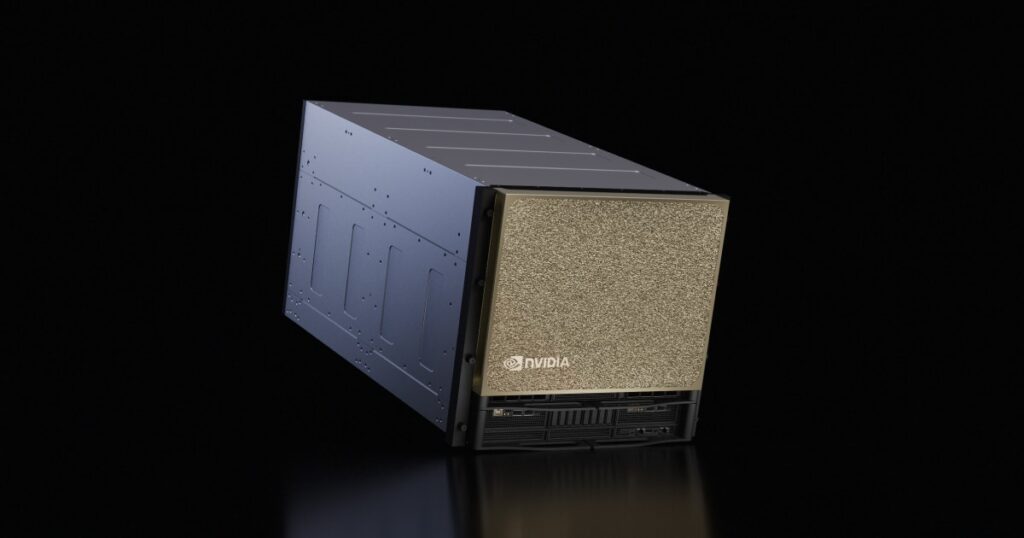
China’s AI race is becoming more expensive by the month, and Nvidia’s newest B300 servers are now selling for almost double their US price in the Chinese market. The sudden jump is being driven by a mix of exploding AI demand, tighter American export controls, and an aggressive crackdown on chip smuggling routes that many companies were quietly relying on. What used to cost around 4 million yuan only months ago is now reportedly touching nearly 7 million yuan, which is close to $1 million for a single server system.
The situation shows how desperate Chinese AI firms have become for advanced computing power. Companies across China are trying to scale their AI models rapidly as competition intensifies between domestic startups and global players. But with US sanctions limiting direct access to Nvidia’s most advanced hardware, the supply chain has turned messy, expensive, and increasingly underground. Industry insiders say many firms are now struggling just to secure enough high-end GPUs to keep training and inference systems running properly.
Nvidia’s B300 server is not just another AI machine either. The system carries eight B300 GPUs packed with massive high-bandwidth memory and extreme processing capability aimed at AI inference workloads. These are the kind of systems needed for large-scale AI assistants, coding agents, video generation, and enterprise automation tools. Because of that, demand inside China has exploded even as legal access to the hardware remains heavily restricted.
According to reports, the sharpest increase started appearing earlier this year but accelerated after authorities began tightening enforcement against illegal chip diversion networks. The black-market pipeline had become one of the few ways Chinese firms could still obtain restricted Nvidia hardware. Once scrutiny increased, supply dried up fast, creating a scarcity premium that pushed prices into absurd territory. Some buyers are reportedly now paying almost twice the US market rate simply because there are so few available units.
Interestingly, many Chinese technology firms are also being extremely cautious about how they acquire or hold Nvidia equipment. Some companies reportedly avoid listing the hardware directly on their balance sheets because of fears surrounding sanctions exposure and regulatory attention. That has created an unusual environment where demand remains incredibly strong, but ownership structures around the hardware are becoming more complicated behind closed doors.
The pressure is not limited to direct purchases either. AI infrastructure rental prices are also climbing sharply. Companies unable to afford million-dollar server purchases are now turning to short-term rental agreements just to access high-end computing power temporarily. Reports suggest one-year contracts for B300 server rentals have risen as high as 190,000 yuan per month, which shows how valuable premium AI compute has become in the current market.
Another major reason behind this frenzy is the explosive growth of Chinese AI usage itself. Morgan Stanley recently estimated that Chinese AI models increased their global token usage share from just 5% last year to around 32% by March 2026. That is a massive leap in a very short period of time. Companies like MiniMax, Zhipu, and Alibaba’s Qwen reportedly saw token usage rise several times over within only a few months as AI adoption accelerated across coding tools, assistants, and agent-based systems.
The uncertainty around Nvidia’s H200 exports has also made the B300 even more valuable. Although approvals for some exports reportedly exist, shipments into China still remain tangled in political disagreements and regulatory conditions between Washington and Beijing. Because firms cannot predict whether future shipments will arrive smoothly, many buyers are rushing to secure whatever advanced hardware they can get access to right now.
Chinese rivals are naturally trying to take advantage of the situation too. Huawei and other domestic AI chipmakers have been pushing aggressively to reduce Nvidia’s dominance in the country. Nvidia still controls a huge share of China’s AI accelerator market, but local companies see the export restrictions as a rare opportunity to close the gap. AMD is also trying to expand its presence, though Nvidia still remains the clear leader for advanced AI workloads.
What makes this story bigger than just hardware pricing is what it says about the future of AI competition globally. Compute power is slowly becoming the most important weapon in the AI industry. The companies with access to the best chips and largest data centres are gaining a massive advantage, while firms stuck behind export barriers are forced to pay extreme premiums or build local alternatives much faster than planned.
Nvidia has meanwhile maintained a strict position publicly. The company said the B300 cannot legally be sold into China and warned that unauthorized diversion of these systems could create serious operational and compliance issues.