A massive international tech controversy is now unfolding around AI hardware, export restrictions, and alleged smuggling networks stretching across Southeast Asia. According to a new report, a company reportedly connected to Thailand’s national AI initiative is suspected of helping move billions of dollars worth of advanced AI servers containing restricted Nvidia chips into China despite ongoing U.S. export controls.
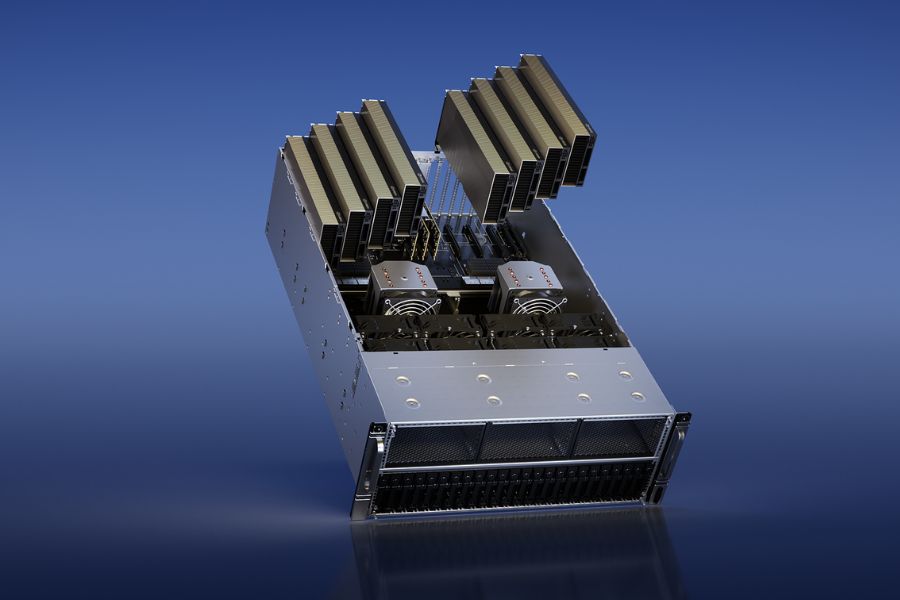
The allegations are tied to an expanding legal case involving Super Micro Computer, one of the biggest server manufacturers in the AI infrastructure market right now. Prosecutors previously accused several individuals connected to the company of secretly routing high-performance American-made AI servers through Taiwan and Southeast Asia before allegedly smuggling them into China inside unmarked packaging.
According to the latest report from Bloomberg, prosecutors referred to a Southeast Asian intermediary buyer only as “Company-1” in court documents. Sources familiar with the matter reportedly identified that company as Bangkok-based OBON Corp. The report claims the firm may have played a central role in helping route servers containing advanced Nvidia chips toward Chinese buyers.
Even more explosive is the allegation that some of those servers may have ultimately reached Alibaba Group, one of China’s biggest technology giants. However, Alibaba strongly denied any involvement in the alleged operation. In statements provided to Reuters, the company said it has no business relationship with Super Micro, OBON, or the brokers named in the legal filings. Alibaba also insisted that prohibited Nvidia chips have never been used in its data centers.
Nvidia itself also responded cautiously to the situation. A company spokesperson stated that Nvidia expects all ecosystem partners to follow strict compliance standards and said the company would continue cooperating with governments to enforce export regulations. The statement notably avoided directly addressing the specific allegations involving the servers.
The broader case already became serious back in March when the U.S. Department of Justice formally charged Super Micro co-founder Yih-Shyan Liaw, sales manager Ruei-Tsang Chang, and contractor Ting-Wei Sun. Prosecutors accused them of organizing a scheme that allegedly moved at least $2.5 billion worth of restricted AI technology into China by routing shipments through third countries.
According to investigators, servers were allegedly first sent from the United States to Taiwan before being redirected into Southeast Asia, where they were repackaged into plain boxes to conceal their contents and final destinations. Prosecutors claim more than $500 million worth of AI servers moved through the network in just a few weeks between April and mid-May 2025 alone.
At the center of the controversy are advanced Nvidia AI chips, which have become some of the most strategically important pieces of technology in the world. Since 2022, the United States has steadily tightened export restrictions on high-end AI hardware heading to China over concerns the chips could strengthen Chinese military systems, surveillance programs, and advanced artificial intelligence development.
That crackdown dramatically increased demand for workaround networks and grey-market access to powerful AI hardware. Nvidia’s GPUs are now essential for training large AI models, powering massive cloud infrastructure, and supporting advanced machine learning systems. Because of that, even restricted chips have become incredibly valuable globally.
One reason this case is drawing so much attention is because it highlights how difficult modern tech export enforcement has become. AI hardware supply chains stretch across multiple countries, manufacturers, distributors, and logistics firms. Once servers move through several regions and intermediaries, tracking final destinations becomes far more complicated. That complexity creates opportunities for alleged smuggling operations to exploit loopholes inside international trade systems.
The allegations also arrive during a period when the United States is aggressively trying to slow China’s access to cutting-edge AI capabilities. Washington increasingly views advanced semiconductors as both an economic and national security issue rather than simply a commercial technology market. That shift has turned companies like Nvidia, Super Micro, and other AI infrastructure suppliers into key players inside a much larger geopolitical struggle over artificial intelligence dominance.
Meanwhile, Super Micro is already facing pressure from multiple directions beyond the criminal investigation itself. Earlier this year, shareholders reportedly filed lawsuits accusing the company of securities fraud by allegedly concealing its exposure to sales connected to China and possible export violations. Those legal challenges could create even bigger financial and reputational problems for the company if additional evidence emerges publicly.
What makes the situation even more sensitive is the timing. Global demand for AI infrastructure has exploded over the last two years, creating enormous profits for companies involved in AI server manufacturing and chip distribution. That intense competition has also increased pressure on suppliers and distributors operating in regions affected by export restrictions.
Right now, many of the allegations remain unproven in court, and several companies connected to the reports continue denying wrongdoing. But the scale of the accusations alone — involving billions of dollars in AI hardware and some of the world’s biggest technology firms — has already made this one of the most serious AI-related export control controversies seen so far.
And as governments continue tightening restrictions around advanced AI chips, cases like this may become far more common in the growing global battle over artificial intelligence technology.