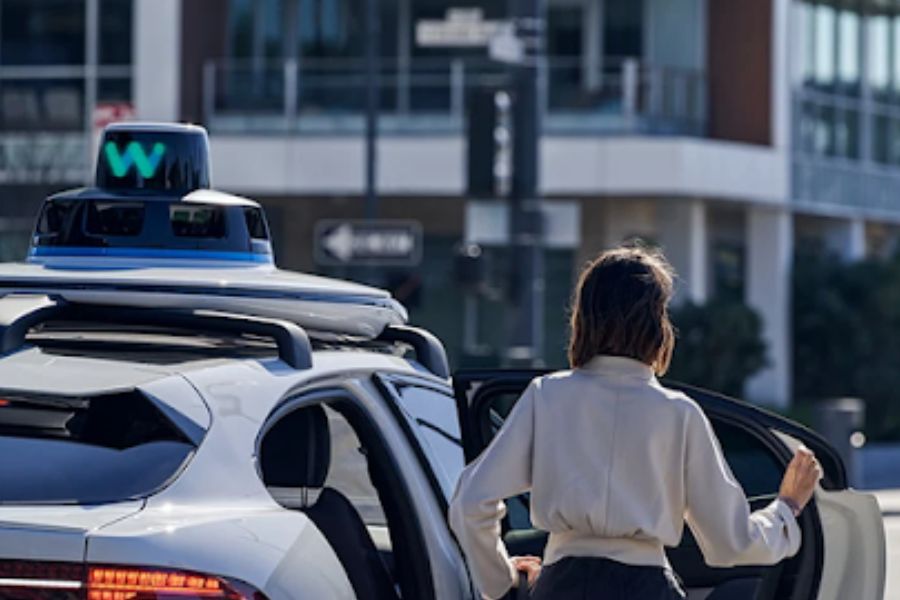
Waymo is once again facing questions about the real-world limits of self-driving technology after one of its robotaxis reportedly drove directly into a flooded road in Texas and got swept away by fast-moving water. Following the incident, the company has now voluntarily recalled 3,791 autonomous vehicles and informed the National Highway Traffic Safety Administration about the problem.
The incident happened in San Antonio during severe flooding conditions last week. Thankfully, nobody was injured because the robotaxi was unoccupied at the time. Still, the situation immediately raised concerns because the vehicle should have detected the flooded route and avoided it entirely. Instead, the autonomous system reportedly continued forward until the vehicle became trapped and was carried away by floodwaters.
According to reports, Waymo believes the problem is linked to how its software interpreted the flooded road conditions rather than a hardware malfunction. In simple terms, the self-driving system appears to have failed at recognizing that the street ahead had become dangerous and impassable. That may sound like a small technical issue on paper, but incidents like this highlight one of the biggest ongoing challenges facing autonomous vehicles — unpredictable real-world weather conditions.
Waymo says it is now preparing an over-the-air software update to fix the issue, meaning affected robotaxis will not need to physically visit service centers. The company also confirmed it has already introduced temporary restrictions while engineers finalize the permanent software patch. For now, access to areas vulnerable to flash flooding is reportedly being limited in an attempt to prevent similar incidents from happening again.
Interestingly, this was not an isolated event. Reports suggest this is already the second flood-related problem involving Waymo vehicles in San Antonio within roughly the last month. Because of the repeated weather issues, the company temporarily paused robotaxi operations in the city. However, operations are expected to slowly resume later this week after additional safeguards are implemented.
The recall once again exposes a reality many self-driving companies are still struggling with — autonomous systems can handle structured traffic surprisingly well, but unusual environmental situations remain much harder to predict. Human drivers often rely on instinct, local knowledge, and visual judgment during dangerous weather. AI systems, meanwhile, depend entirely on sensor interpretation and programmed decision-making. Floodwater, heavy rain, reflections, road debris, and changing visibility can still confuse even highly advanced autonomous software.
This also is not the first time Waymo has had to issue a recall connected to driving behavior. Earlier this year, reports revealed some company vehicles had issues involving illegally passing stopped school buses, which led to another software-related recall. While these updates are usually fixed digitally rather than through traditional mechanical repairs, repeated incidents continue fueling debates about whether self-driving systems are truly ready for large-scale public adoption.
At the same time, Waymo remains one of the most advanced autonomous driving companies currently operating in the United States. Backed by Alphabet, the company has expanded robotaxi services across multiple American cities and is often viewed as the industry leader in real-world driverless deployment. Compared to rivals still testing limited systems, Waymo vehicles already operate without human safety drivers in several urban environments.
Still, situations like the San Antonio flood show why regulators remain cautious about autonomous vehicles scaling too quickly. Rare edge-case scenarios — like flooded roads, sudden construction changes, emergency response activity, or unpredictable human behavior — are exactly the moments where AI systems are tested the hardest. One wrong decision in those situations can quickly become dangerous.
For now, Waymo appears to be treating the problem as a software-learning issue rather than a fundamental failure of the technology. But the image of a driverless taxi floating away in floodwater is exactly the kind of moment critics of autonomous vehicles point to when questioning whether AI can truly replace human judgment on public roads anytime soon.