The relationship between Washington and the artificial intelligence industry could be entering a completely new phase. OpenAI, the company behind ChatGPT, is reportedly in discussions that may eventually give the US government an ownership stake in the AI giant, a move that would have been difficult to imagine just a few years ago.
While no final agreement has been reached, reports suggest conversations between OpenAI executives and senior government officials have been taking place for months. If the talks lead to a deal, it could mark one of the most significant partnerships between the federal government and a leading AI company as the race for artificial intelligence dominance continues to intensify.
How the Discussions Started
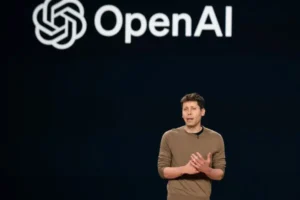
According to reports, the idea traces back to conversations that began in 2025 between OpenAI CEO Sam Altman and officials within the Trump administration. The discussions reportedly explored whether the US government could acquire an equity stake in major AI companies as part of a broader strategy to strengthen America’s position in the rapidly growing artificial intelligence sector.
One proposal being considered would involve OpenAI voluntarily offering a portion of its equity to the government. The concept appears to align with OpenAI’s previously proposed “Public Wealth Fund,” an idea the company outlined earlier this year while discussing future industrial and economic policies tied to artificial intelligence.
OpenAI argued at the time that AI could generate enormous economic value in the coming decades and suggested mechanisms that would allow ordinary citizens to benefit from that growth. The proposed fund was designed around the idea of giving the public a stake in the wealth created by advanced AI systems, although details about how such a program would work remain limited.
At this stage, there is still no information regarding the size of a potential government stake. Negotiations are reportedly ongoing, and both sides are still evaluating possible structures for any future agreement.
Government Interest in AI Continues to Grow
The reported talks come at a time when artificial intelligence has become one of the most important strategic technologies in the world. Governments across North America, Europe, and Asia are investing billions of dollars into AI research, semiconductor manufacturing, and digital infrastructure as they attempt to secure long-term technological advantages.
In the United States, policymakers have increasingly focused on balancing innovation with regulation. Concerns surrounding AI-generated misinformation, national security, workforce disruption, and model safety have pushed lawmakers to seek greater oversight of powerful AI systems.
Earlier this week, the Trump administration signed an executive order that would give federal regulators greater visibility into advanced AI models before they become publicly available. The order is part of a wider effort to establish guardrails around rapidly evolving AI technologies without completely slowing private-sector innovation.
OpenAI has publicly indicated that it intends to cooperate with the government’s review process. The company stated that regulators would be allowed to examine its latest AI models before public release, signaling a willingness to work closely with policymakers on safety and compliance matters.
What a Government Stake Could Mean for OpenAI
A government investment in OpenAI would likely spark debate across both the technology and political worlds. Supporters could argue that closer cooperation would help strengthen America’s leadership in AI development while ensuring that public interests are represented as the technology becomes more influential.
Critics, however, may raise concerns about government involvement in one of the world’s most powerful AI companies. Questions about independence, regulatory influence, competition, and the future direction of AI development would almost certainly emerge if such an arrangement moves forward.
The idea would not be entirely unprecedented. The US government previously acquired a 10 percent stake in Intel through a multibillion-dollar investment designed to support domestic semiconductor production. That deal reflected Washington’s growing willingness to directly support industries considered strategically important to national interests.
For now, the OpenAI discussions remain exploratory, and there is no guarantee that a final agreement will materialize. Still, the conversations themselves highlight how dramatically artificial intelligence has shifted from a Silicon Valley innovation story into a matter of national economic and geopolitical importance.
As governments race to understand and regulate AI, the possibility of Washington becoming a shareholder in one of the industry’s most influential companies shows just how central the technology has become to the future of the global economy.