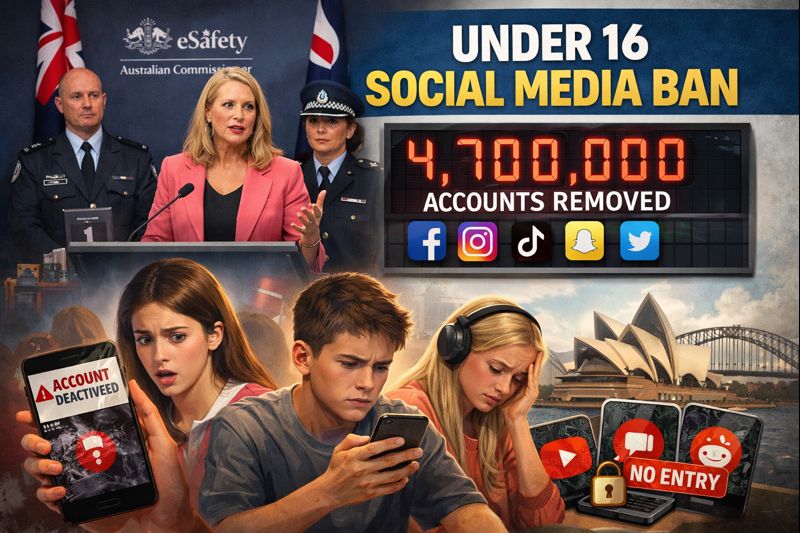
Australia’s tough new stance on teenage social media use is already reshaping the digital landscape — and the numbers are turning heads. Just weeks after a world-first ban on under-16 users kicked in, platforms have collectively shut down nearly five million accounts, marking one of the fastest regulatory crackdowns the global tech industry has seen.
According to the country’s internet watchdog, the early data suggests the law is having a swift and sweeping effect, even before full enforcement mechanisms are in place.
Millions of Teen Accounts Removed in Just One Month
New figures released this week reveal that around 4.7 million social media accounts linked to Australian users under 16 have already been deactivated since the law came into force on December 10. The data, first reported by Reuters, offers the first official snapshot of how platforms are responding to the legislation.
What makes the figure striking is its scale. Based on population estimates, it works out to more than two social media accounts per Australian aged 10 to 16, far exceeding early projections made before the ban became law.
Some companies had begun removing accounts quietly in the weeks leading up to the deadline, but the pace accelerated rapidly once the rule officially took effect.
Big Tech Faces Heavy Penalties for Non-Compliance
Under the new law, social media companies — not children or their parents — are held responsible for enforcement. Platforms that fail to comply face fines of up to A$49.5 million, making it one of the harshest penalties tied to youth online safety anywhere in the world.
Major platforms affected by the minimum-age rule include services operated by Meta, Google, TikTok, Snapchat, and X. Video and discussion platforms like YouTube and Reddit are also covered.
Meta has already acknowledged removing around 550,000 underage accounts across Instagram, Facebook, and Threads, but the regulator’s combined tally shows the total impact goes far beyond one company.
Regulator Says Early Results Are Encouraging — But Work Isn’t Done
Australia’s eSafety Commissioner Julie Inman Grant said the early results point to strong engagement from tech companies.
She noted that regulatory guidance and ongoing discussions with platforms appear to be driving meaningful change, even though full compliance has not yet been declared. Some under-16 accounts are still active, and authorities admit it is too soon to say the system is airtight.
Age-verification tools — often provided by third-party software firms — are still being refined, but feedback so far suggests the rollout has been relatively smooth. Public awareness campaigns ahead of the ban are believed to have helped ease the transition.
Smaller Apps Spike, But Teen Migration Appears Limited
In the days leading up to the ban, several smaller or lesser-known social media apps saw a noticeable spike in downloads across Australia. This raised concerns that teens might simply migrate to alternative platforms outside the regulator’s immediate focus.
However, early monitoring suggests those spikes haven’t translated into long-term usage. Authorities say they are keeping a close watch on migration trends and are prepared to respond if new loopholes emerge.
Long-Term Mental Health Impact to Be Closely Studied
Beyond enforcement, the government is also looking at the broader picture. A multi-year study involving mental health experts is being launched to assess how reduced social media access affects teen wellbeing, behaviour, and development over time.
Supporters of the ban argue it could help curb anxiety, online harassment, and addiction-like usage patterns among young people. Critics, meanwhile, question whether enforcement can truly keep pace with evolving technology.
Final Words
Australia’s under-16 social media ban is no longer theoretical — it’s already reshaping how young people interact online. With millions of accounts removed in weeks and tech giants moving quickly to comply, the country has set a bold precedent that regulators worldwide will be watching closely. Whether this leads to healthier digital habits or sparks new debates about access and enforcement will become clearer in the years ahead.