For years, the idea of data centers floating in space sounded more like a science-fiction pitch than a serious business strategy. Yet SpaceX is trying to convince investors that orbital computing could become a practical extension of the AI boom, and according to Elon Musk, the technology required to make it happen already exists.
As SpaceX moves closer to one of the most closely watched public offerings in recent history, Musk sought to calm concerns surrounding the company’s ambitious AI satellite plans. Rather than presenting orbital data centers as a futuristic breakthrough requiring entirely new inventions, the billionaire argued that the foundations have already been built through SpaceX’s existing Starlink program.
That message appears carefully designed for investors. With SpaceX reportedly preparing for an IPO that could value the company at around $1.75 trillion, the market wants reassurance that its next chapter isn’t built solely on unproven concepts. Musk’s answer was simple: SpaceX has already solved most of the difficult parts.
SpaceX Says the Building Blocks Already Exist
During a video discussion released by the company, Musk pushed back against the notion that orbital AI infrastructure represents an enormous engineering leap.
“Part of what we want to convey here is that there is not some magic that is necessary, that doesn’t exist,” Elon Musk said.
“A lot of this is technology we’ve already made for the Starlink V3 satellites. We don’t think this is a super hard problem compared to the things we already do.”
It’s a notable shift in tone from the kind of grand promises Musk often makes. Instead of portraying the initiative as a moonshot, he framed it as a logical next step built on technologies SpaceX already deploys every day.
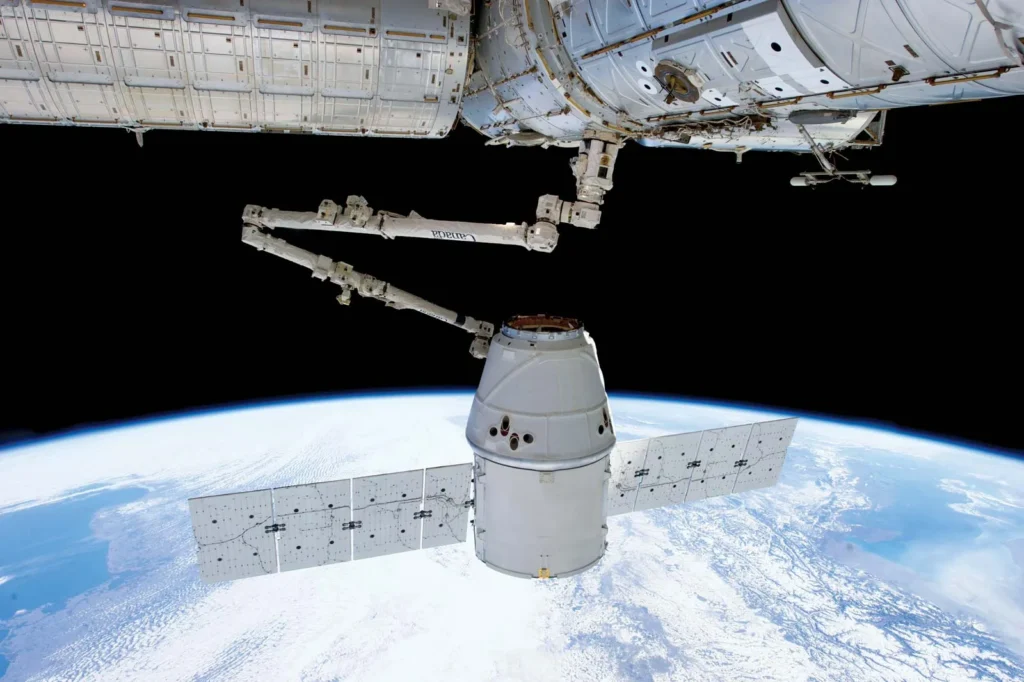
According to the company, many of the systems needed for AI satellites have already been tested through Starlink’s next-generation V3 satellites. Solar arrays capable of generating large amounts of energy are already in development. Thermal-management technologies that disperse heat in the harsh conditions of space also exist within SpaceX’s current engineering playbook.
Ian Dahl, a SpaceX engineer involved in the presentation, even suggested that the proposed AI satellites could end up being less complicated than broadband satellites. Unlike Starlink systems, orbital computing nodes wouldn’t require massive phased-array antennas designed to connect millions of users to the internet.
That distinction matters because it changes the narrative. Instead of inventing an entirely new category of spacecraft, SpaceX is effectively adapting proven hardware for a different purpose.
Why SpaceX Wants AI Data Centers in Orbit
Artificial intelligence has triggered an unprecedented race to build larger and more powerful data centers. The challenge, however, isn’t simply finding enough computer chips. It’s finding enough electricity and cooling capacity to keep those chips running efficiently.
Traditional AI facilities consume enormous amounts of power. As governments and utility providers struggle to keep up with demand, concerns are growing over whether terrestrial infrastructure can support the next wave of AI expansion.
SpaceX believes space may offer an alternative.
The company’s proposal involves deploying satellites that function as computing nodes orbiting Earth. Powered by solar energy, these satellites would use the cold vacuum of space to radiate excess heat away from their systems. In theory, this could reduce some of the energy and cooling limitations currently constraining data centers on the ground.
The first generation of these AI satellites is expected to generate approximately 150 kilowatts of peak power and deliver around 120 kilowatts of sustained compute capability.
To put those numbers into perspective, Musk compared the performance to one of Nvidia’s most advanced AI systems.
He said the satellite’s peak output would be roughly comparable to a single Nvidia GB300 AI server rack, which typically consumes around 140 kilowatts at maximum load.
That comparison helps simplify a highly technical concept. Rather than imagining a giant space station packed with thousands of computers, readers can think of the initial satellite as a powerful AI server operating above Earth’s atmosphere.
From Bastrop to Orbit: SpaceX’s Bigger Ambition
The vision doesn’t stop with a handful of experimental satellites.
SpaceX says its manufacturing facility in Bastrop, Texas, is expected to achieve meaningful production volumes by the end of next year. If those timelines hold, the company could move from demonstrations to scaling its orbital computing ambitions faster than many industry observers anticipated.
A major part of that strategy depends on Starship, SpaceX’s fully reusable rocket system. Musk has long argued that reducing launch costs is the key to unlocking entirely new industries in space. Orbital AI infrastructure could become one of the first businesses built around that philosophy.
The company believes Starship will eventually transport the enormous quantities of solar panels, radiators, processors, and supporting hardware required to create larger networks of computing satellites. Without reusable launch systems, such an undertaking would likely remain economically unrealistic.
For SpaceX, this initiative represents more than technological experimentation. It signals a deliberate effort to diversify beyond launches and internet connectivity.
The company already dominates commercial rocket launches and has transformed satellite broadband through Starlink. By positioning itself as an AI infrastructure provider, SpaceX hopes to tap into one of the fastest-growing sectors in the global economy.
Whether orbital computing ultimately proves practical at scale remains an open question. Questions around latency, maintenance, reliability, and economics still need answers. Skeptics will undoubtedly argue that Earth-based facilities remain more efficient and easier to service.
Still, the broader significance shouldn’t be overlooked. The race to build the future of artificial intelligence is no longer confined to chipmakers and cloud providers. Space companies now want a seat at the table too.
And if Musk is right that the hardest engineering problems have already been solved, then what sounds like science fiction today could soon become another battleground in the rapidly expanding AI economy.