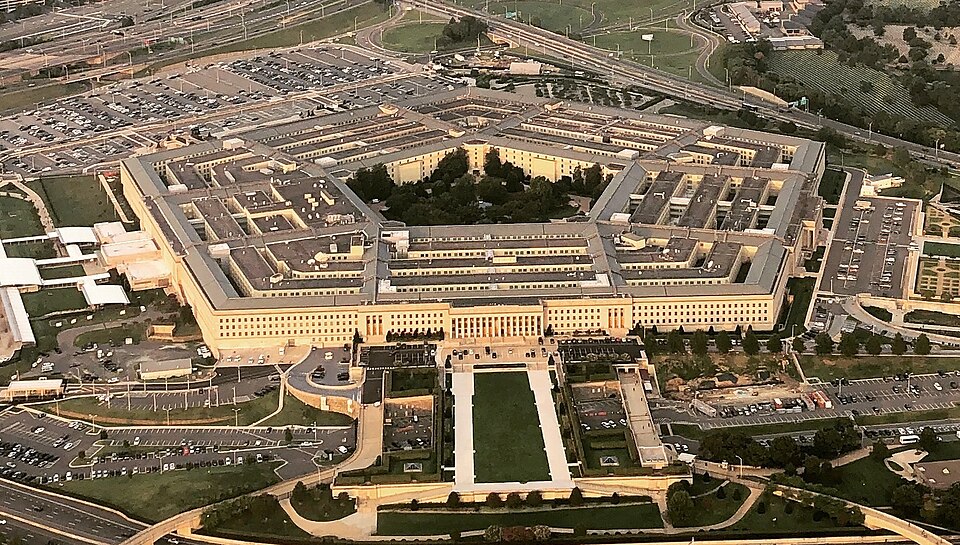
Just weeks after Washington and Beijing appeared to steady an uneasy relationship, the United States has reignited one of its biggest points of friction with China. The Pentagon has expanded its list of companies it says are linked to China’s military, pulling some of the country’s most recognizable technology and industrial giants into an already controversial designation.
The updated list now includes household names such as Alibaba, Baidu, BYD and NIO, alongside several semiconductor, robotics and biotechnology firms. While the move does not immediately impose sanctions, it carries serious long-term implications and sends a strong signal about how Washington increasingly views China’s technology ecosystem. What once seemed like disputes over individual companies is now evolving into a broader strategic contest over who controls the technologies shaping the future.
The Pentagon’s Updated List Signals a Wider Tech Battle
The U.S. Defense Department released the revised list on Monday under a provision commonly known as the “1260H” or Chinese Military Companies list. The designation identifies firms that the Pentagon believes are operating in the United States while contributing to Beijing’s military modernization efforts.
Among the biggest additions are e-commerce and cloud giant Alibaba, search and artificial intelligence leader Baidu, electric vehicle makers BYD and NIO, memory chip manufacturers CXMT and YMTC, robotics firms Unitree and RoboSense, and pharmaceutical services company WuXi AppTec. Several other Chinese firms involved in batteries, telecommunications equipment, displays and renewable energy technologies also appeared on the list for the first time.
The timing is difficult to ignore. The update arrives less than a month after U.S. President Donald Trump met Chinese President Xi Jinping in Beijing, where both leaders attempted to preserve a fragile truce in an ongoing trade conflict. Any hopes that the meeting signaled a meaningful thaw may now face renewed pressure as Washington widens its scrutiny of Chinese corporate influence.
China reacted swiftly to the decision. Foreign Ministry spokesperson Lin Jian criticized the designation and described it as discriminatory.
“China will take necessary measures to firmly safeguard the legitimate rights and interests of Chinese enterprises,” Lin Jian told reporters during a regular press briefing. He also urged the United States to “correct its mistaken practices.”
Chinese Companies Push Back and Prepare Legal Challenges
Nearly every major company named in the latest update rejected the Pentagon’s characterization and vowed to challenge the designation.
Alibaba said there was “no basis” for its inclusion and stressed that it had no involvement in military activities.
“Alibaba is not a Chinese military company nor part of any military-civil fusion strategy. We will take all available legal action against attempts to misrepresent our company,” the company said.
Baidu also strongly rejected the Pentagon’s position.
“The suggestion that Baidu is a military company is entirely baseless. We will not hesitate to use all options available to us to have the company removed from the list,” the search and AI giant stated.
BYD, currently the world’s largest seller of electric vehicles by volume, argued that the decision unfairly damaged its reputation and business interests.
The company told Reuters it firmly opposed the designation and would pursue all “feasible administrative and legal means” to protect its rights and interests. It added that the move harmed “its development achievements in the United States.”
WuXi AppTec described the listing as “incorrect” and said it would “take immediate actions to challenge and correct this erroneous designation.”
Some of the newly listed firms, including chipmakers CXMT and YMTC, as well as robotics companies Unitree and RoboSense, did not publicly comment following the announcement.
The inclusion of Unitree has attracted particular attention because Nvidia recently announced plans to collaborate with the robotics company on research initiatives involving next-generation robots. That connection highlights the increasingly complicated web of partnerships linking American and Chinese technology firms even as geopolitical rivalry intensifies.
Why This Matters for the Future of Global Technology
The Pentagon’s list does not function as a traditional sanctions program. Companies can still operate and, in many cases, continue doing business internationally. However, the practical consequences are becoming much more significant.
Under recently enacted U.S. legislation, the Defense Department will soon be barred from signing direct contracts with companies appearing on the list. Restrictions will expand further beginning in 2027, preventing the military from purchasing products or services from these firms through third-party intermediaries.
For some businesses, the immediate financial impact may be limited. NIO stated in regulatory filings that the restrictions would not materially affect its operations. Alibaba similarly said the designation would not alter its ability “to conduct business as usual in the U.S. or anywhere in the world.”
Even so, the reputational effect can be substantial. Being identified by the Pentagon as a company linked to China’s military could influence procurement decisions across federal agencies and private contractors that work closely with the U.S. government. It may also complicate partnerships, investment decisions and expansion strategies in Western markets.
Importantly, removal from the list remains possible. Companies are allowed to petition the Pentagon and challenge their designation. In some previous cases, firms were removed because they no longer maintained operations in the United States or because their corporate structures changed.
Observers say the broader message extends beyond the companies themselves. Craig Singleton, a China expert at the Foundation for Defense of Democracies, argued that Washington is increasingly viewing China’s entire technology infrastructure through a national security lens.
“Washington is no longer treating these as isolated companies. It is treating the entire technology stack as strategically contested,” Singleton said.
That shift may prove to be the real story behind the latest update. From electric vehicles and artificial intelligence to semiconductors and robotics, the competition between the world’s two largest economies is no longer confined to tariffs and trade balances. It is becoming a struggle over technological leadership, supply chain influence and national security priorities.
As both nations continue to defend their economic and strategic interests, businesses operating across global markets could find themselves navigating an increasingly uncertain landscape. The Pentagon’s expanded list is another reminder that in the race to dominate the technologies of tomorrow, corporate boardrooms are now as entangled in geopolitics as government negotiating tables.