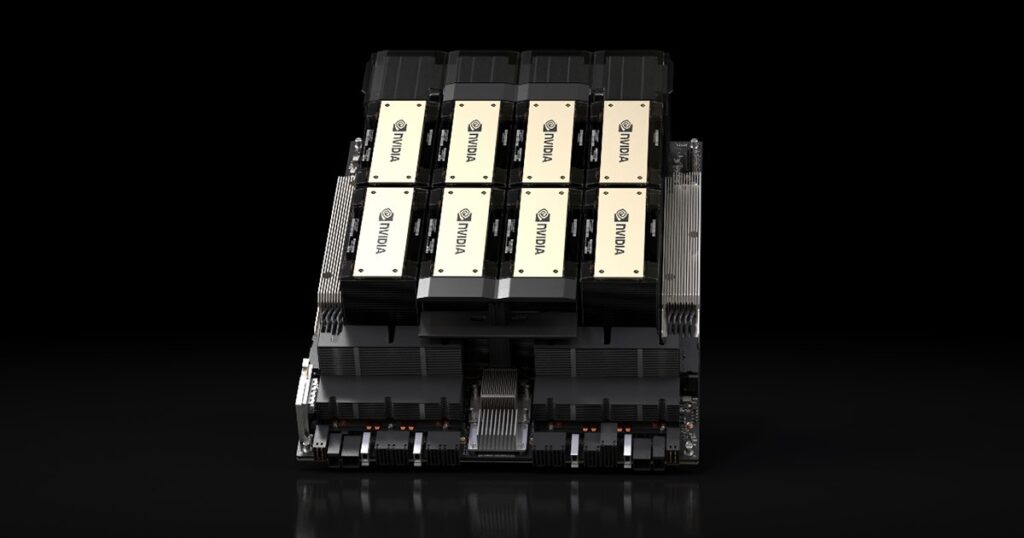
Global chip supply chains are facing fresh disruption as confusion deepens around Nvidia’s latest AI processor. According to reports, parts suppliers working on Nvidia’s H200 chips have paused production after Chinese customs officials blocked shipments of the newly approved processors from entering China.
The development adds another layer of uncertainty to an already tense US–China tech standoff — one that now involves export approvals, customs restrictions, and a newly imposed US tariff.
What triggered the production halt?
A report cited by the Financial Times claims Nvidia’s suppliers had been operating at full speed, preparing to ship as early as March, after the company reportedly expected over one million orders from Chinese customers. However, that momentum appears to have stopped abruptly.
According to sources familiar with the matter, Chinese customs authorities informed agents this week that Nvidia’s H200 chips are not permitted to enter the country. As a result, suppliers have allegedly put production on hold while awaiting clarity.
Neither Nvidia nor Chinese authorities have officially confirmed whether the move represents a full ban or a temporary administrative measure.
China warns domestic firms against buying the chips
Adding to the confusion, sources say Chinese government officials have summoned domestic technology firms and warned them against purchasing Nvidia’s H200 chips unless it is strictly necessary. No formal explanation has been provided, and companies have not been told whether the restrictions are policy-driven or provisional.
That ambiguity has left suppliers, buyers, and investors guessing about Beijing’s real intentions.
A geopolitical flashpoint in silicon form
The H200, Nvidia’s second-most powerful AI processor, has quickly become a focal point in US–China tech relations. Demand from Chinese firms remains strong, but analysts are divided on why Beijing may be tightening access.
Some believe China could be using the situation to push domestic chipmakers to accelerate development of homegrown AI processors. Others see the restrictions as a negotiation tactic, rather than a permanent ban.
US tariff complicates matters further
The situation has grown even more complex following a decision by the Trump administration. While the US reportedly allowed the US-designed, Taiwan-manufactured H200 chips to be exported to China — with Washington allegedly set to take a share of the profits — new conditions were soon added.
Instead of being shipped directly from Taiwan to China, the chips must now pass through a US laboratory for testing, triggering a 25% tariff as they enter the United States. The same tariff has also been applied to AMD’s MI325X AI processor.
Strategic debate splits experts
The controversy has reignited debate among policymakers and analysts. Supporters of continued sales argue that allowing China access to advanced US chips could slow Beijing’s push toward technological independence and keep Chinese firms reliant on American hardware.
Critics counter that processors as powerful as the H200 could eventually be used in military or weapons systems, posing long-term security risks to the US and its allies.
Final words
For now, Nvidia’s H200 finds itself caught in a geopolitical tug-of-war — approved on paper, blocked at customs, taxed en route, and frozen in production. Until China and the US clarify their positions, uncertainty will continue to ripple across the AI chip market, with suppliers, customers, and competitors all waiting to see which side blinks first.