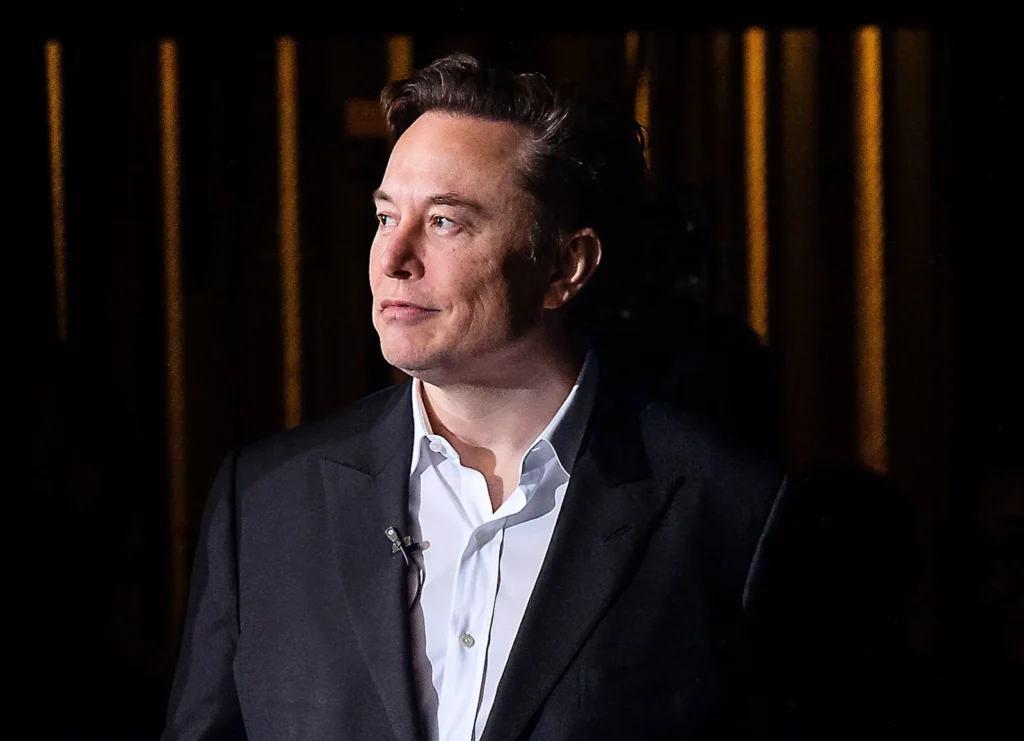
In a move that could reshape the future of artificial intelligence infrastructure, Elon Musk has announced an ambitious new initiative called Terafab — a joint venture between Tesla and SpaceX. The project aims to build what Musk describes as one of the most advanced chip manufacturing ecosystems ever created, starting with a massive facility in Austin, Texas.
At a time when global demand for AI computing power is exploding, Musk’s latest venture signals a bold attempt to reduce reliance on traditional chipmakers and take control of the entire production pipeline — from design to deployment.
A “Chip Factory of the Future” Built Under One Roof
The core idea behind Terafab is simple, but incredibly ambitious: bring the entire chip-making lifecycle into a single integrated facility.
Unlike conventional semiconductor supply chains — which are often spread across multiple countries and companies — Terafab is being designed to handle everything in-house. This includes memory production, lithography mask creation, packaging, and final testing.
According to Musk, this kind of vertical integration is essential if companies want to keep up with the accelerating demands of AI.
He described the project as the “most epic chip-building exercise in history,” emphasizing that existing infrastructure simply isn’t scaling fast enough to meet future needs.
Why Musk Is Betting Big on AI Chips Right Now
The timing of Terafab isn’t accidental.
Across industries, from autonomous vehicles to robotics and space technology, the demand for AI chips has surged dramatically. Companies are already competing for limited supply, with major players like TSMC, Samsung, and Micron Technology struggling to scale production at the pace required.
Musk openly acknowledged this bottleneck, stating that even though these companies are expanding, their growth rate isn’t enough to satisfy the demand he anticipates.
In his words, it’s not just about preference — it’s about necessity:
“If we don’t build Terafab, we simply won’t have the chips we need.”
Two Types of Chips, Two Very Different Missions
What makes Terafab particularly interesting is its dual focus.
The facility will produce two distinct classes of chips, each tailored for specific use cases across Musk’s ecosystem.
The first category will be designed for Tesla’s products — including its electric vehicles and the Optimus humanoid robot. These chips will focus on “edge inference,” meaning they will process AI tasks directly on devices rather than relying heavily on cloud infrastructure. This is critical for real-time decision-making in self-driving systems and robotics.
The second category, however, pushes into far more futuristic territory.
These chips will be engineered for space applications, built to withstand extreme conditions such as high temperatures and radiation. Unlike traditional chips that operate within controlled environments, these will need to function reliably in what Musk calls “hostile environments.”
A Massive Vision: Powering AI at Planetary and Space Scale
Musk isn’t thinking small — even by tech industry standards.
He outlined a vision where Terafab could support 100 to 200 gigawatts of AI computing power on Earth, alongside an additional terawatt-scale infrastructure in space.
To put that into perspective, this level of compute capacity would represent a massive leap beyond current global capabilities, potentially enabling everything from advanced AI models to large-scale automation systems.
It also aligns with Musk’s broader strategy of integrating AI deeply into all his ventures — from transportation to space exploration.
Taking AI Beyond Earth: A Radical Next Step
Perhaps the most striking part of Musk’s announcement is his continued push to move AI infrastructure off the planet.
He suggested that within the next two to three years, it could actually become cheaper to deploy AI systems in orbit than on Earth. This idea hinges on falling launch costs and the unique advantages of space-based computing, such as access to continuous solar energy and reduced cooling challenges.
Musk believes that once the cost barrier drops, placing AI chips in space will become an obvious choice rather than an experimental concept.
This vision builds on earlier developments, including the integration of his AI startup xAI with SpaceX — a move that hinted at the possibility of space-based data centers.
Why Austin, Texas?
The choice of Austin as the starting point for Terafab is also strategic.
Texas has rapidly become a hub for technology and manufacturing, offering a combination of infrastructure, talent, and business-friendly policies. Tesla already operates a major Gigafactory in the region, making it a natural base for expanding into semiconductor production.
By consolidating operations in one location, Musk can streamline development, reduce logistical complexity, and accelerate innovation cycles.
A Challenge to the Traditional Chip Industry
Terafab doesn’t just aim to solve a supply problem — it also represents a potential shift in how semiconductor manufacturing is approached.
For decades, the industry has relied on a distributed model, with specialised companies handling different stages of production. Musk’s approach challenges that model by attempting to centralise everything within a single ecosystem.
If successful, it could inspire other companies to rethink their own supply chains — especially as AI continues to drive demand for faster, more efficient chips.
Risks, Challenges, and the Road Ahead
Of course, building something as complex as Terafab won’t be easy.
Semiconductor manufacturing is one of the most capital-intensive and technically challenging industries in the world. Even established players face constant hurdles in scaling production, maintaining quality, and keeping up with rapid technological advancements.
For Musk, the challenge will be executing this vision at scale while competing with companies that have decades of experience in chip manufacturing.
But if there’s one thing his track record suggests, it’s that he’s willing to take on projects that others consider too ambitious.
More Than Just a Factory — A Statement of Intent
At its core, Terafab is more than just a manufacturing facility.
It’s a statement about where the future of technology is headed — one where control over computing power becomes as critical as control over energy or transportation.
By investing heavily in AI chips and exploring the possibility of space-based computing, Elon Musk is positioning himself at the centre of that future.
Whether Terafab succeeds or not, one thing is clear:
the race for AI dominance is entering a new phase — and it’s no longer confined to Earth.