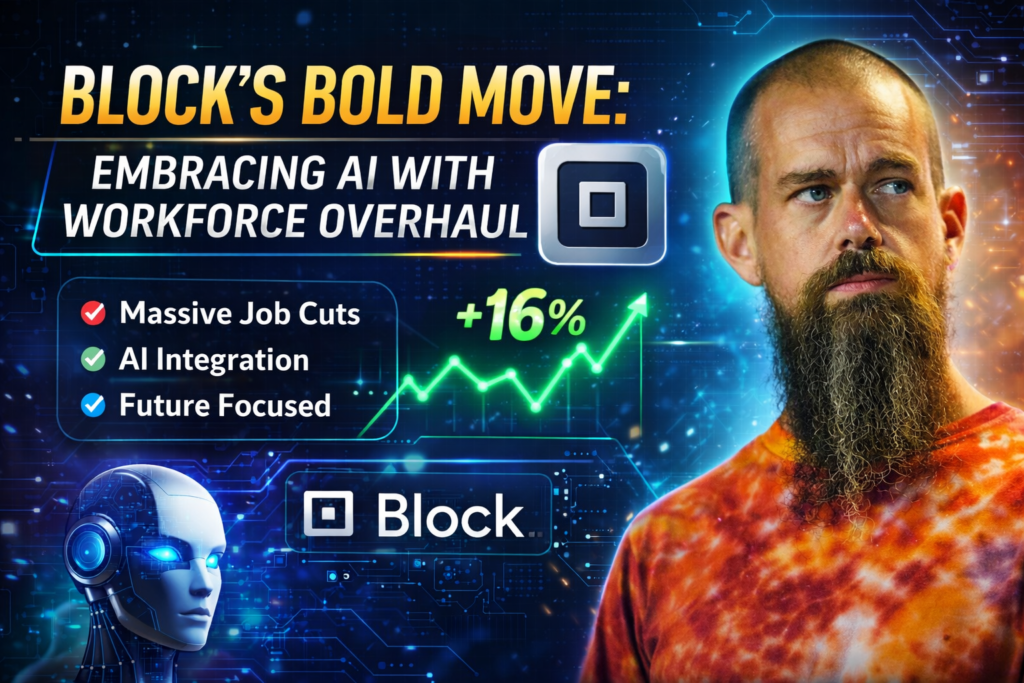
Block’s Bold Move: Embracing AI with Workforce Overhaul
In a dramatic twist that has the tech industry buzzing, Block Inc., led by the visionary Jack Dorsey, has announced a sweeping change that could redefine its future. On Friday, the fintech powerhouse revealed plans to nearly halve its workforce, a bold step that sent its shares soaring by over 16%. This strategic move is not merely a cost-cutting measure but a calculated leap towards weaving artificial intelligence into the very fabric of its operations.
The decision to downsize is a clear signal of how AI is reshaping the corporate landscape. While some view it as a grim reduction in human capital, others see it as a transformative strategy. According to industry analysts, this shift is not just about trimming the fat but is also about unlocking new growth potential and maximizing free cash flow (FCF). Analysts at Evercore ISI highlighted the dual nature of this change, which combines efficiency with opportunity.
Historically, Block has been no stranger to rapid expansion. During the pandemic, the company significantly ramped up its workforce to meet the surging demand for digital payments and online commerce solutions, ballooning from approximately 3,800 employees in 2019 to over 10,000 by 2025. However, as the competition in its key sectors intensified, it became evident that a recalibration was necessary.
Incorporating AI isn’t just a trend—it’s a necessity in today’s fast-paced technology arena. Economists at Goldman Sachs have highlighted AI’s role in reshaping labor markets, estimating a substantial impact on job growth in sectors heavily exposed to automation by 2025. For Block, embracing AI is about harnessing efficiency and driving profitability, which is reflected in its impressive gross profit per employee, outperforming even industry giants like Visa.
This workforce transformation also addresses what some analysts, like Matt Britzman from Hargreaves Lansdown, see as a mix of overdue corporate restructuring and leveraging AI-driven gains. By aligning its workforce to focus on AI capabilities, Block is not only setting the stage for sustainable growth but also positioning itself as a leader in fintech innovation.
As Block navigates this pivotal transition, the broader industry will undoubtedly watch closely. This move could serve as a blueprint for others, showcasing the delicate balance between technology integration and workforce optimization. For fans of fintech and AI enthusiasts alike, this is a fascinating chapter in the evolution of digital commerce.
In the ever-evolving world of technology, Block’s decision to embrace AI with open arms is a testament to its forward-thinking approach. As the dust settles, one can’t help but wonder what this means for the future of work and innovation in the fintech space. Whatever lies ahead, Block seems poised and ready to lead the charge.