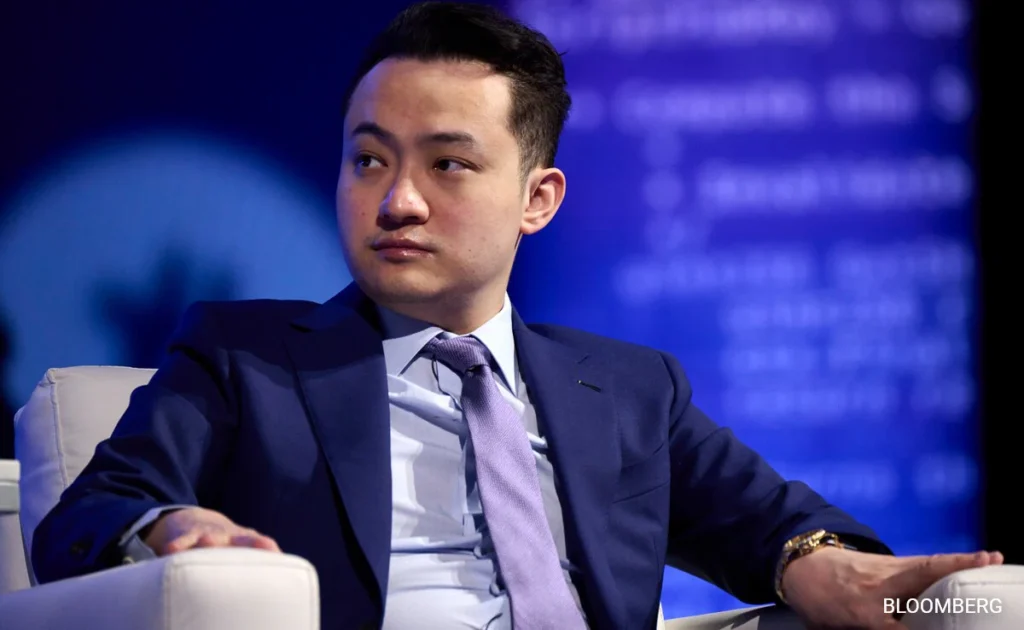
The crypto space just got another messy showdown — and this one comes with politics, power, and a lot of money involved. Justin Sun has taken legal action against World Liberty Financial, a project linked to Donald Trump, accusing it of locking him out of his own investments.
And from the looks of it, this isn’t a small disagreement. It’s a full-blown breakdown.
Sun filed the lawsuit in a California federal court, asking for immediate intervention — not just to unfreeze his tokens, but also to stop the company from destroying or restricting them altogether. According to him, the situation has reached a point where his ownership itself is under threat.
At the center of the dispute is control.
Sun claims that World Liberty froze all his tokens without any real justification. That move, he says, didn’t just block access — it stripped him of voting rights on key governance decisions. In a system that’s supposed to be decentralised, that’s a big deal.
Because technically, projects like this are built on the idea that no single entity should have that kind of control.
But Sun is arguing the opposite happened here.
In his filing, he says the company quietly modified its smart contracts to give itself powers it wasn’t supposed to have — things like blacklisting wallets, freezing assets, and even reallocating tokens without community approval. If true, that turns the whole “decentralised finance” pitch into something very different.
And then there’s the bigger accusation.
Sun alleges that the company tried to pressure him into supporting and promoting its stablecoin, USD1, on the TRON ecosystem. When he didn’t fully cooperate, he claims, things started to shift — restrictions came in, and his tokens were frozen.
He’s also raising concerns about the company’s financial health.
According to the lawsuit, World Liberty may have been borrowing against its own tokens and draining liquidity pools tied to its stablecoin. Sun’s claim is pretty blunt — he believes the venture is “on the brink of collapse,” with not enough reserves to support withdrawals if things go wrong.
That’s a serious allegation, especially in a market where trust can disappear overnight.
Things escalated further when a new governance proposal came into the picture. The plan reportedly includes locking tokens of holders who don’t accept updated terms — and even burning a portion of adviser tokens permanently.
Sun says he strongly opposed this.
But here’s the catch — he couldn’t even vote on it. Because his tokens were already frozen.
That’s where the situation starts to feel less like a disagreement and more like a power struggle.
To add context, Sun wasn’t just a small investor here. He was one of the biggest known backers of the project. Reports suggest he put in around $45 million, acquiring billions of WLFI tokens and even taking on an advisory role within the company.
Which makes this fallout even more complicated.
On the other side, World Liberty Financial hasn’t said much publicly. They’ve declined to comment on the lawsuit so far, keeping things quiet while the case unfolds.
Meanwhile, Sun’s own history isn’t exactly controversy-free either. Earlier this year, he settled a civil fraud case with the Securities and Exchange Commission for $10 million, tied to allegations about crypto asset distribution and market manipulation. That background adds another layer to how this dispute is being viewed.
Still, what’s happening now goes beyond just one investor versus one company.
It touches on a bigger question — how “decentralised” are these projects really? And when things go wrong, who actually holds the power?
For now, the fight has moved to court.
And depending on how this plays out, it could set an important tone for how crypto governance disputes are handled going forward.