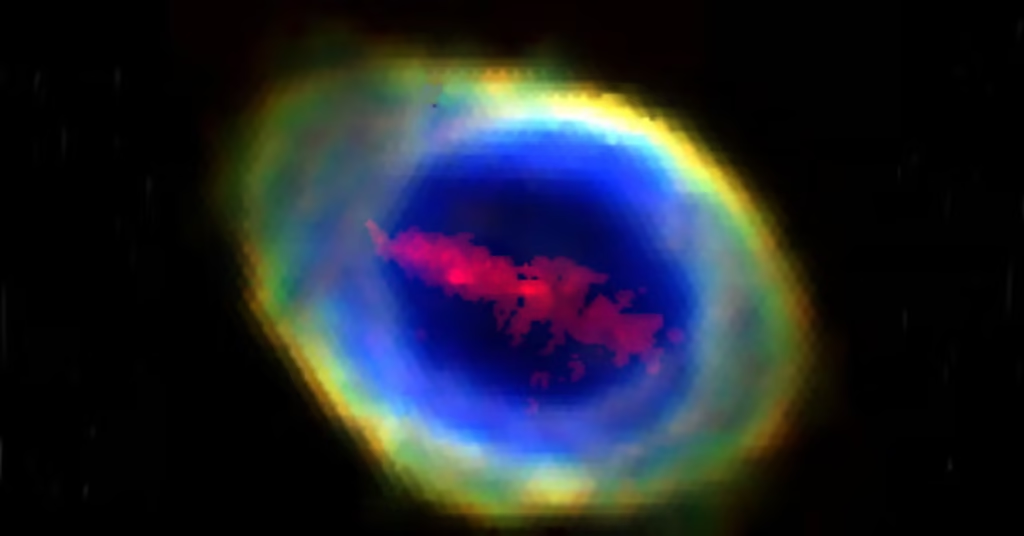
Astronomers studying the iconic Ring Nebula have stumbled upon a surprising new mystery — a massive cloud of iron atoms stretching like a dark bar across the nebula’s glowing face. The discovery has left researchers puzzled, raising the dramatic possibility that the material could be the remains of a rocky planet that was completely vaporised long ago.
Despite being one of the most studied objects in the night sky, the Ring Nebula has once again proven that space still holds many secrets.
A Strange Iron ‘Bar’ With No Clear Explanation
The newly detected iron structure spans roughly 3.7 trillion miles (6 trillion kilometres) across the nebula. What makes it especially strange is that no other chemical element appears to share this same bar-like distribution, something scientists say is highly unusual.
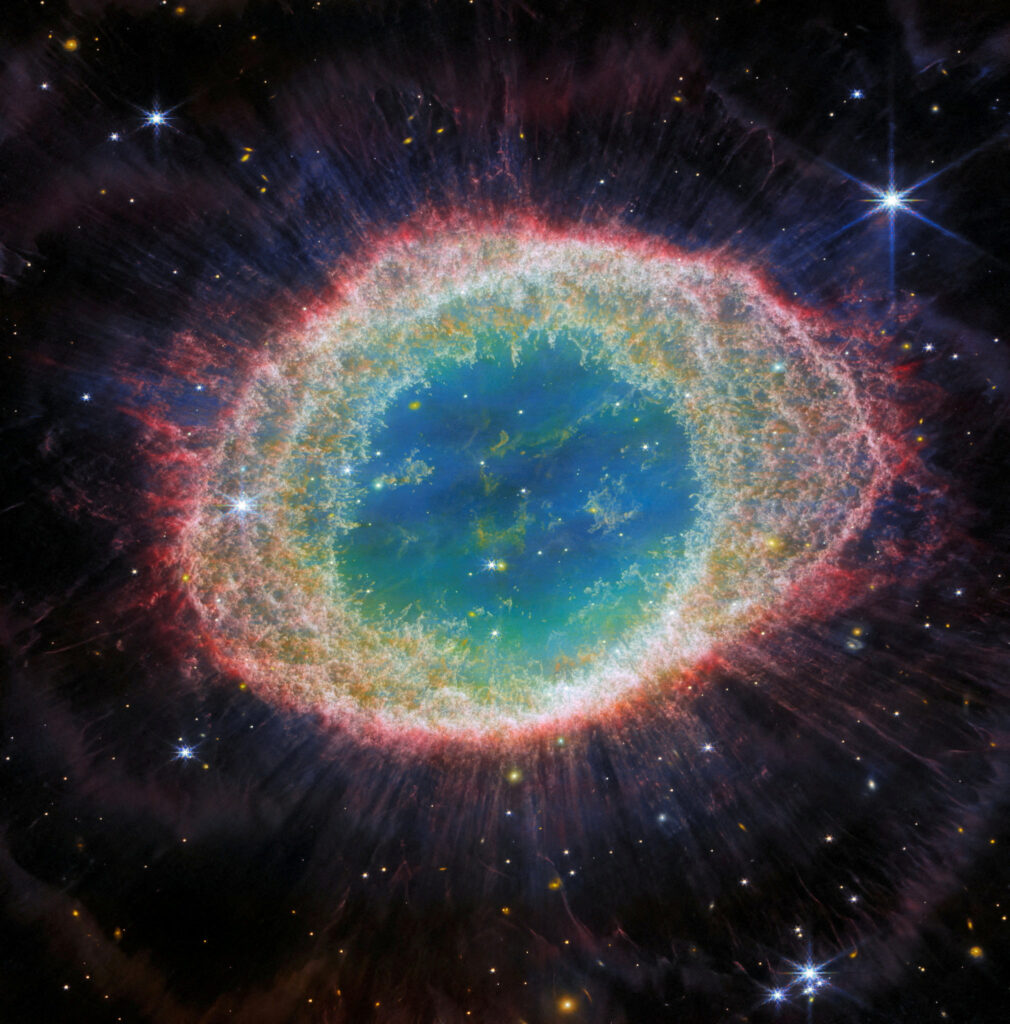
Researchers believe the total amount of iron could be comparable to the mass of Earth’s molten iron core — a staggering quantity floating through space.
One theory suggests the iron could be debris from a rocky planet that was destroyed when its parent star violently shed its outer layers. However, astronomers stress that this idea remains speculative for now.
A Glimpse of Our Own Solar System’s Distant Future?
The Ring Nebula formed when a star about twice the mass of our Sun exhausted its nuclear fuel, expanded into a red giant, and expelled its outer layers before collapsing into a white dwarf. This process is expected to happen to our own Sun billions of years from now — and inner planets like Mercury, Venus, or even Earth could face a similar fate.
If the iron bar truly comes from a destroyed planet, it may offer a haunting preview of what awaits planetary systems in the distant future.
New Technology, New Surprises
The discovery was made using William Herschel Telescope in Spain’s Canary Islands, equipped with a powerful new instrument called WEAVE (WHT Enhanced Area Velocity Explorer).
According to lead researcher Roger Wesson, the find shows how even familiar cosmic objects can reveal unexpected features when viewed with new tools.
The Ring Nebula, first identified in 1779 by French astronomer Charles Messier, has long been a favourite among professional and amateur astronomers alike. Though invisible to the naked eye, it is easily seen with binoculars and small telescopes.
Why the Discovery Has Scientists Hooked
Located about 2,600 light-years from Earth in the constellation Lyra, the Ring Nebula — also known as Messier 57 — is thought to be only around 4,000 years old, extremely young by cosmic standards.
Its textbook familiarity is exactly what makes the iron bar so intriguing.
Astronomer Janet Drew, a co-author of the study, noted that scientists simply don’t have a ready explanation yet — whether planetary destruction or another unknown process is responsible.
More Questions Than Answers — For Now
While a planet-sized source of iron could explain the sheer quantity of material, scientists admit there is no solid explanation for how such debris would arrange itself into a clean, bar-shaped structure.
Out of roughly 3,000 known planetary nebulas in our galaxy, none show a similar iron feature — making this discovery even more compelling.
Final Words
The Ring Nebula has been observed for centuries, yet it continues to surprise astronomers with new puzzles. Whether the iron cloud is the ghost of a lost planet or evidence of a completely unknown cosmic process, one thing is clear — even the most familiar corners of the universe still have stories left to tell.
Researchers now plan to gather more data to trace the origin of the iron bar and unlock the mystery behind one of space’s most unexpected discoveries.