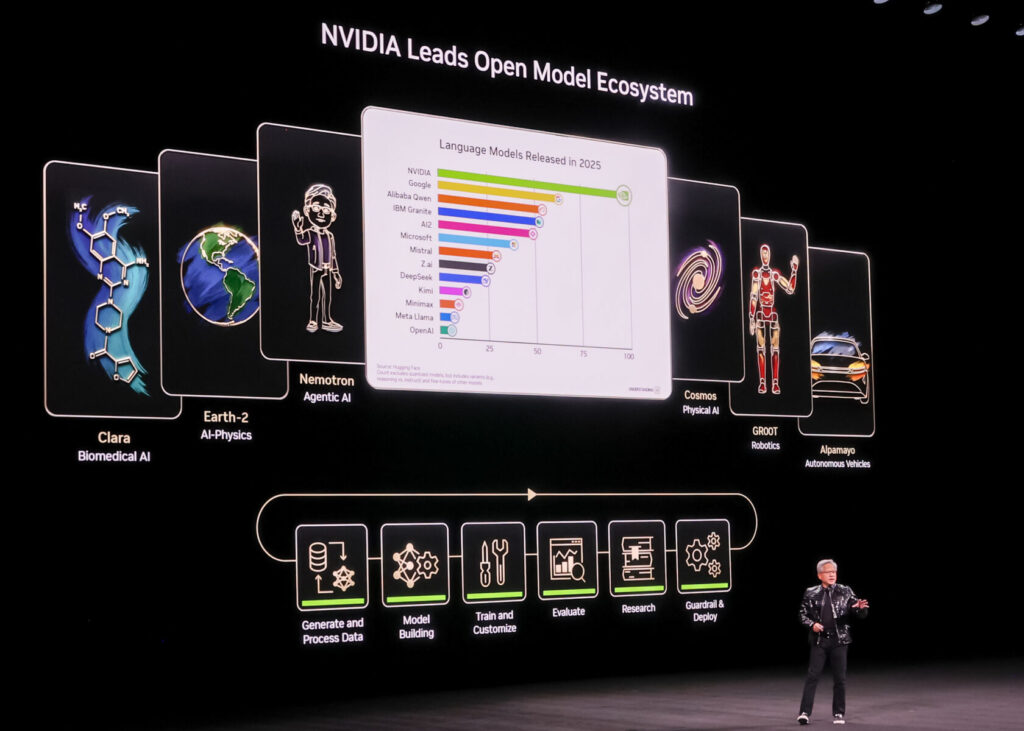
The self-driving car dream has promised a lot — and delivered very little so far. At CES 2026 in Las Vegas, Jensen Huang made it clear that Nvidia believes artificial intelligence, not bold promises, will finally move autonomous vehicles out of limbo.
Speaking during Nvidia’s keynote, Huang positioned AI and industry-wide partnerships as the tools that could cut costs, speed up deployment, and revive confidence in a sector haunted by expensive failures and missed deadlines.
Why Automakers Are Still Hesitant
Despite years of hype, many automakers remain unconvinced. Fully autonomous vehicles are costly to develop, difficult to scale, and still face questions about real consumer demand.
That uncertainty has already reshaped the industry. While Waymo and Tesla continue to pursue in-house self-driving ambitions, legacy giants like General Motors and Ford Motor Company have stepped back from fully autonomous programs after burning billions with little return.
CES 2026: Partnerships Take Center Stage
This year’s CES made one thing clear — collaboration is the new survival strategy.
- Amazon Web Services announced a deal with German supplier Aumovio to support commercial self-driving rollouts.
- Autonomous trucking firm Kodiak AI partnered with Bosch to scale hardware and sensor production.
- Nvidia unveiled its next-generation autonomous platform, now powering a robotaxi alliance involving Lucid Group, Nuro, and Uber.
Meanwhile, Mercedes-Benz confirmed it will roll out a new advanced driver-assistance system in the US later this year, allowing hands-free driving on city streets — under driver supervision.
AI as the Industry’s ‘Big Accelerant’
Executives argue that AI has matured enough to finally ease the industry’s biggest pain point: cost.
According to Amazon Web Services automotive chief Ozgur Tohumcu, AI and generative AI now allow large portions of development and validation to happen virtually, dramatically reducing the need for expensive physical testing.
That efficiency could be critical as Western automakers try to keep pace with China’s rapid push into autonomous driving, where regulators recently approved cars with Level 3 autonomy — allowing hands-off driving in specific conditions.
Reality Check: Level 5 Still Far Away
Not everyone is convinced the finish line is close. Jochen Hanebeck, CEO of German chipmaker Infineon, warned against what he called “market fantasy.”
In his view, most automakers want revenue-generating Level 2 driver-assistance systems — not risky bets on fully autonomous Level 5 vehicles that may still be years, if not decades, away.
“I don’t see a tsunami flowing toward Level 5,” he said bluntly.
Tesla, Edge Cases, and Broken Promises
The industry’s credibility problem hasn’t helped. Elon Musk famously claimed in 2019 that Tesla would have a million self-driving cars on the road within a year. The reality: a limited robotaxi trial launched only last year.
The core challenge remains “edge cases” — unpredictable scenarios like a child chasing a ball into the street. Humans anticipate danger instinctively; autonomous systems still struggle to do the same.
High-profile failures, including the shutdown of GM’s Cruise after a pedestrian accident, only deepened skepticism.
Why Nvidia Thinks This Time Is Different
According to Ali Kani, AI advancements have finally begun closing those gaps. Nvidia’s open-source Alpamayo platform is being positioned as a neutral ground for automakers — a stark contrast to Tesla’s tightly controlled, proprietary system.
Industry analysts have likened it to Android vs Apple — with Nvidia offering a shared ecosystem where Tesla rivals can build together rather than reinvent the wheel alone.
Final Words
Self-driving cars are no longer about flashy promises — they’re about patience, partnerships, and practicality. Nvidia’s bet is that AI, combined with an open platform approach, can finally turn autonomy into a sustainable business rather than a costly experiment.
Whether that vision leads to truly driverless roads or simply smarter assisted driving remains to be seen. For now, the industry appears to be choosing realism over hype — and that may be the biggest shift of all.