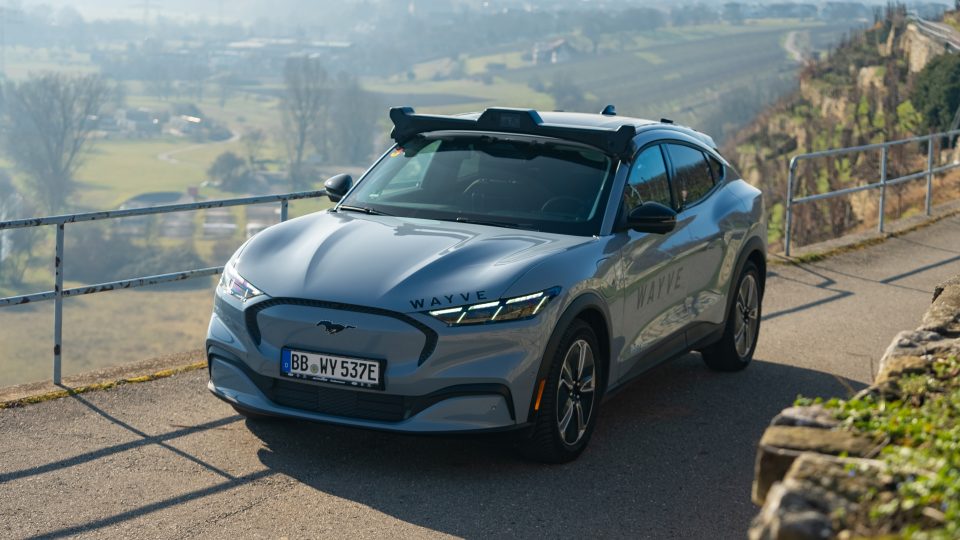
The race to bring smarter, safer autonomous vehicles to the road is heating up, and two major players in the tech world are now joining forces to push the technology forward. Semiconductor giant Qualcomm and British self-driving startup Wayve have announced a new partnership to develop an advanced AI-powered driving platform designed to help automakers roll out automated driving features faster and more efficiently.
The collaboration blends Qualcomm’s powerful automotive chips with Wayve’s AI-driven driving software, creating a unified system that car manufacturers could integrate across multiple vehicle models — from affordable cars with basic driver assistance to premium vehicles with advanced autonomous capabilities.
A Unified Platform for AI-Powered Driving
At the center of the partnership is Wayve’s “AI Driver” technology, a machine-learning based software system that enables vehicles to understand and respond to road environments. This software will now be paired with Qualcomm’s Snapdragon Ride automotive platform, a chip system specifically designed for advanced driver-assistance systems (ADAS) and automated driving features.
Together, the companies aim to deliver a complete driving platform that combines hardware processing power, safety software, and AI learning models into a single ecosystem.
For automakers, this could significantly simplify development. Traditionally, car manufacturers must integrate separate chips, safety modules, and AI software from different suppliers, which can slow down innovation and increase engineering complexity. The new joint platform aims to streamline that process by offering a more integrated solution.
From Driver Assistance to Autonomous Features
The combined system is designed to support a wide range of automated driving capabilities. In its early implementations, the platform could power hands-off driving assistance, where the vehicle handles steering, braking, and acceleration under certain conditions.
As regulations evolve in different markets, the technology could also enable “eyes-off” autonomous driving functions, where drivers no longer need to continuously monitor the road. Such capabilities are expected to roll out gradually as governments refine safety regulations for autonomous vehicles.
By creating a scalable platform, Qualcomm and Wayve hope carmakers can deploy the same underlying technology across multiple vehicle segments and global markets.
AI That Learns From Real-World Driving
Wayve has been gaining attention in the autonomous driving sector for its machine-learning approach to vehicle intelligence. Instead of relying heavily on pre-mapped roads and rule-based programming, Wayve trains its AI models using large volumes of real-world driving data.
This allows vehicles equipped with the system to learn driving behavior and adapt to different environments, road layouts, and traffic conditions.
The approach is part of a broader shift in the autonomous driving industry toward software-centric solutions, where AI models continuously improve through data and updates rather than relying solely on fixed programming.
Qualcomm Expands Its Automotive Ambitions
For Qualcomm, the partnership highlights the company’s growing ambitions beyond the smartphone market. The company has been steadily investing in automotive technologies, positioning its Snapdragon Ride platform as a high-performance and energy-efficient computing system for next-generation vehicles.
These chips are designed to process the massive amounts of data generated by cameras, sensors, and AI algorithms while still meeting strict automotive safety standards.
By collaborating with AI developers like Wayve, Qualcomm hopes to strengthen its role as a key technology provider in the rapidly evolving autonomous vehicle ecosystem.
A Booming Market for Autonomous Driving Tech
The partnership also reflects the growing demand from automakers for integrated AI solutions that can speed up vehicle development. Car companies increasingly want systems that allow software updates over time, enabling new features and improved capabilities throughout a vehicle’s lifespan.
Startups like Wayve have become an important part of this emerging ecosystem. Founded in 2017, the company has quickly gained traction among major investors and automotive partners.
Recently, Wayve raised $1.2 billion in funding, pushing its valuation to around $8.6 billion. The investment round included backing from major names in the automotive and technology industries such as Mercedes-Benz, Nvidia, Nissan, and Uber.
Final Words
As vehicles become more software-driven, partnerships between chipmakers and AI developers are becoming essential. Qualcomm and Wayve’s collaboration represents a step toward simplifying how automated driving systems are built and deployed across the automotive industry.
If the platform delivers on its promise, it could help automakers accelerate the rollout of advanced driver-assistance systems and eventually bring more sophisticated autonomous driving features to everyday vehicles. According to Reuters, the joint effort is aimed at making AI-powered driving technology easier for car manufacturers to implement as the industry moves toward increasingly automated mobility.