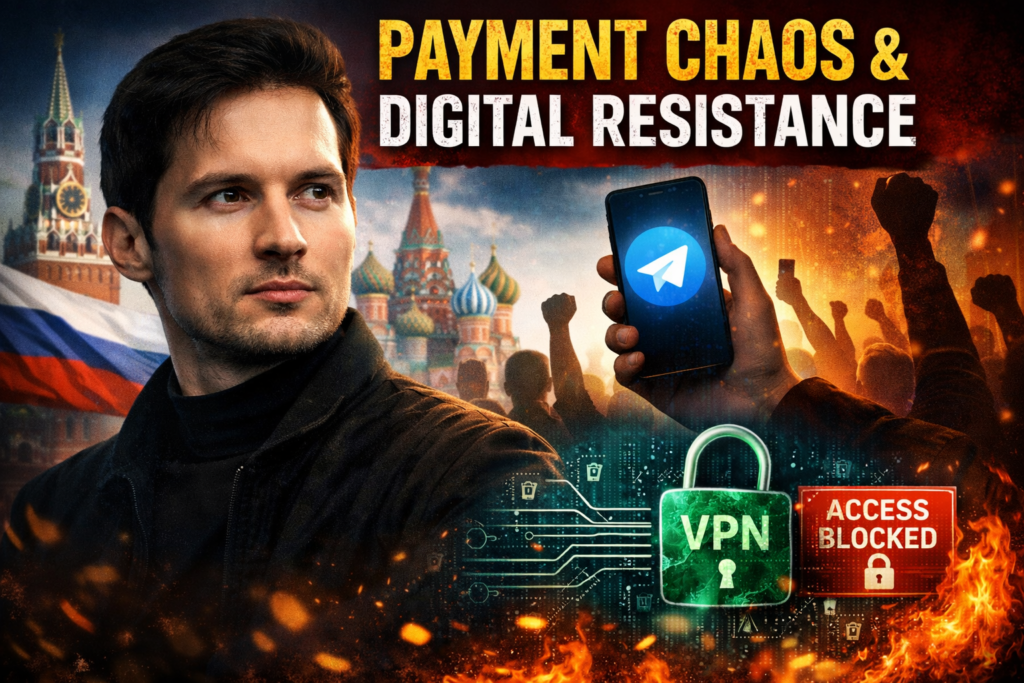
A sudden tech disruption in Russia has exposed how tightly the country’s digital systems are now intertwined — and how quickly things can spiral when one piece breaks. What started as a payment outage has now turned into a much bigger conversation about control, access, and resistance.
What Actually Happened?
On Friday, a technical failure hit parts of Russia’s domestic payment system, creating unexpected chaos in everyday life.
Metro stations in Moscow had to let passengers pass without paying, while even places like a regional zoo switched to cash-only entry. The disruption wasn’t fully explained by authorities — but the timing raised eyebrows.
According to Pavel Durov, the issue may have been triggered by attempts to block VPN services across the country.
Durov’s Big Claim: “Digital Resistance” Is Rising
Durov didn’t hold back.
Taking to Telegram, he framed the situation as part of a larger pushback from citizens, saying millions of Russians are now actively trying to bypass restrictions.
He even referred to it as a return of “digital resistance” — suggesting that people are finding ways around increasing online controls despite government efforts.
Why VPNs Are at the Center of This
Virtual Private Networks (VPNs) have become a key tool for users trying to access blocked content or communicate freely.
Russia has been tightening restrictions on these tools, along with platforms like Telegram and WhatsApp, citing national security concerns.
Officials argue these measures are necessary due to ongoing threats, including alleged cyber activities linked to Ukraine and Western intelligence agencies.
But critics — including Durov — see it differently.
The Bigger Conflict Behind the Outage
This isn’t just about a technical glitch.
Russia has been gradually building tighter control over its digital ecosystem — from slowing down platforms to promoting state-backed alternatives like the MAX messaging app.
At the same time, Telegram itself has come under scrutiny, with authorities claiming it has been exploited by foreign intelligence. The platform has strongly denied those allegations.
Why This Story Matters Right Now
The outage revealed something important — when digital control systems become aggressive, they can have real-world consequences.
From transport disruptions to payment failures, everyday life gets affected quickly.
And with millions of users now actively looking for ways around restrictions, the gap between control and resistance seems to be growing wider.
What Comes Next?
For now, the exact cause of the outage remains unclear.
But one thing is certain — this isn’t just a one-off incident. It’s part of a much larger shift in how countries manage digital space, and how users respond when those limits tighten.
And if Durov’s claim holds any truth, Russia’s “digital resistance” might just be getting started.