AI Showdown: Trump’s Directives and Pentagon’s Supply-Chain Concerns Shake Anthropic
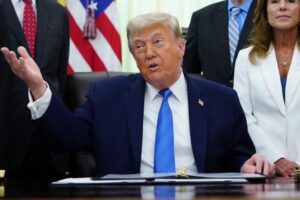
In a dramatic twist that echoes the high-stakes world of political and technological intrigue, US President Donald Trump has thrown down the gauntlet against the artificial intelligence trailblazer, Anthropic. On a brisk Friday morning, Trump announced a sweeping directive that could redefine the landscape of AI and its role in national security. With a stern warning on Truth Social, the President instructed all federal agencies to phase out their reliance on Anthropic’s technology, framing it as a significant supply-chain risk. The Pentagon, not one to be outdone, has mirrored this move with its own declaration, further complicating the narrative for this San Francisco-based startup.
Trump’s online proclamation was nothing short of a political earthquake. “We don’t need it, we don’t want it, and will not do business with them again!” he exclaimed, sending ripples through the tech industry. As he lays down an ultimatum with a six-month timeline for the Defense Department to extricate itself from Anthropic’s web, the Pentagon’s concurrent supply-chain risk designation signals a potential curtain call on Anthropic’s Pentagon partnership.
For Anthropic, a company that soared to prominence with its cutting-edge AI innovations, this standoff marks a critical juncture. The startup, which had secured a lucrative $200 million contract with the Pentagon, now faces the looming possibility of legal wrangling. The Pentagon’s decision to brand it as a supply-chain risk—a label typically reserved for adversaries—adds an icy layer of complexity to Anthropic’s dealings. This complication comes at a time when Anthropic is gearing up to make waves with an anticipated initial public offering (IPO), with its AI technology already in use by the intelligence community and armed forces.
The backdrop to this unfolding saga is a broader narrative of tension between Silicon Valley and Washington, reminiscent of the 2018 controversy where Alphabet’s Google faced internal backlash for its work with the Pentagon on drone footage analysis. This latest chapter is also set against the backdrop of a fiercely competitive AI industry, with giants like Amazon and Microsoft vying for defense contracts while the specter of “killer robots” looms large over ethical debates.
As the dust settles, the implications for both the tech world and national security are profound. Critics, including US Senator Mark Warner, have voiced concerns about the motivations behind Trump’s directive, questioning whether it reflects careful policy considerations or political maneuvering. Meanwhile, Anthropic has positioned itself as a pioneer, having been the first to integrate its AI models into classified networks through Amazon Web Services, a move that underscores its strategic significance.
The unfolding tension between Anthropic and the US government is more than just a legal or technological issue; it is a microcosm of the ongoing struggle to balance innovation with ethical and security concerns. The outcome of this conflict could redefine the rules of engagement for AI in national defense, with implications that extend far beyond the borders of the United States.
In the world of AI, where advancements and ethical concerns often collide, this dramatic chapter serves as a reminder of the delicate dance between progress and caution. As fans and industry insiders watch closely, the future of AI and its role in societal infrastructure hang in the balance. For now, the stage is set for a showdown that promises to be as riveting as any Hollywood thriller.