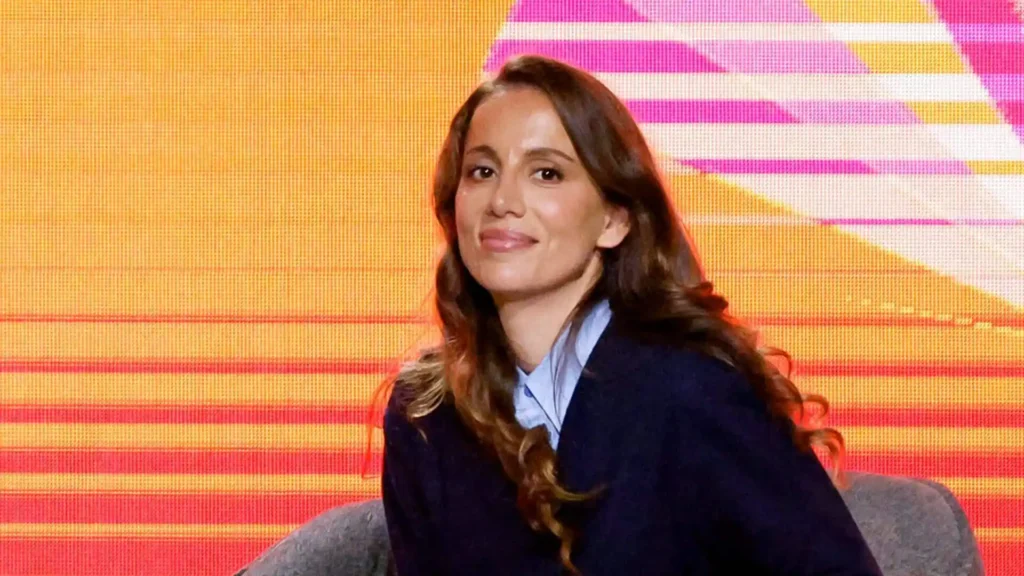
The courtroom battle between Elon Musk and OpenAI took another dramatic turn this week after former OpenAI technology chief Mira Murati delivered testimony that painted a deeply messy picture of the company’s internal leadership struggles. In testimony played inside a federal courtroom in Oakland, California, Murati accused CEO Sam Altman of creating confusion and distrust among senior executives during one of the most chaotic periods in the company’s history.
According to Murati, Altman often told different versions of the same story to different people inside the company, creating tension among leadership figures while OpenAI rapidly expanded its influence across the artificial intelligence industry. She reportedly described his management style as “creating chaos” and suggested that he was deceptive at times with both her and other executives. The comments instantly became one of the most talked-about moments from the ongoing lawsuit because Murati was not an outsider criticizing the company — she was once one of the most powerful people inside it.
The testimony also reopened memories of the shocking leadership crisis that exploded at OpenAI back in 2023 when Altman was suddenly removed as CEO by the company’s board before being reinstated days later after employee backlash and investor pressure. During that bizarre period, Murati herself briefly stepped in as interim CEO while the company scrambled to avoid total collapse. Her comments now suggest the internal dysfunction during that time may have been even worse behind closed doors than the public initially realized.
Murati admitted that despite her frustrations with Altman, she still wanted him to remain CEO because she feared OpenAI itself could disintegrate without stable leadership. She reportedly warned that the company faced a “catastrophic risk of falling apart” during the turmoil. That statement carries serious weight considering how central OpenAI has become to the global AI race after the launch of ChatGPT transformed public awareness around generative AI technology.
The lawsuit itself has become one of the most important legal fights in the tech industry right now because the outcome could reshape the future direction of OpenAI. Musk, who co-founded OpenAI in 2015 before later distancing himself from the company, argues that the organization abandoned its original nonprofit mission and shifted toward commercial ambitions in partnership with Microsoft. His lawsuit claims the company moved away from its promise to develop artificial intelligence for humanity’s broader benefit rather than for corporate profit.
Musk is reportedly seeking a staggering $150 billion in damages from both OpenAI and Microsoft, with the money intended to support OpenAI’s nonprofit arm. Industry analysts, though, also see another layer beneath the legal arguments. Since Musk now runs his own competing AI company, xAI, critics argue the lawsuit could also help slow down one of his biggest rivals in the increasingly aggressive artificial intelligence race.
The courtroom testimony has started revealing just how fractured OpenAI’s leadership structure apparently became while the company exploded into one of the world’s most influential tech organizations almost overnight. Another former OpenAI figure, ex-board member Shivon Zilis, also testified about internal concerns surrounding the release of ChatGPT. According to Zilis, members of the board expressed serious frustration that such a major product launch moved forward without proper communication or oversight.
That detail is especially interesting because ChatGPT’s launch in late 2022 completely changed OpenAI’s trajectory. What began as a research-focused AI organization suddenly transformed into a global technology powerhouse almost overnight. Schools, governments, corporations, and entire industries rapidly began integrating AI systems into everyday operations. The pressure surrounding that explosive growth reportedly intensified disagreements inside the company over safety, governance, commercialization, and leadership control.
Zilis, who now works for Musk’s Neuralink and is also the mother of four of his children, hinted that there had been previous concerns raised internally about Altman’s behavior before the 2023 leadership crisis erupted publicly. Her testimony added to the growing image of a company internally struggling to balance enormous technological ambition with organizational stability.
The trial has also produced several surprising revelations beyond the leadership accusations themselves. Testimony has reportedly shown how early disagreements between Musk and OpenAI’s founders centered around who should control the company’s future direction and whether Musk himself should become CEO during its early years. At one point, Musk apparently felt like “a fool” for continuing to financially support OpenAI before eventually separating from the organization entirely.
What makes this legal battle so significant is that it goes beyond personal rivalries. OpenAI now sits at the center of one of the biggest technological transformations in decades. The company’s AI models influence education systems, creative industries, business automation, software development, and even government discussions around regulation and national security. Any instability inside the company automatically becomes a global story because of how much influence OpenAI now carries across the tech ecosystem.
At the same time, the case is exposing something Silicon Valley rarely likes showing publicly — how chaotic leadership inside revolutionary tech companies can actually become. The public image around AI firms often focuses on futuristic innovation and billion-dollar valuations, but this trial is revealing the power struggles, conflicting egos, secrecy, and emotional instability happening behind the scenes while these companies race to dominate the future.
For now, the trial continues, and more testimony from key OpenAI figures is still expected. But after Mira Murati’s remarks, one thing has become clear: the battle over OpenAI’s future is no longer just about artificial intelligence. It has also become a story about trust, control, ambition, and the human conflicts shaping one of the world’s most powerful tech companies.