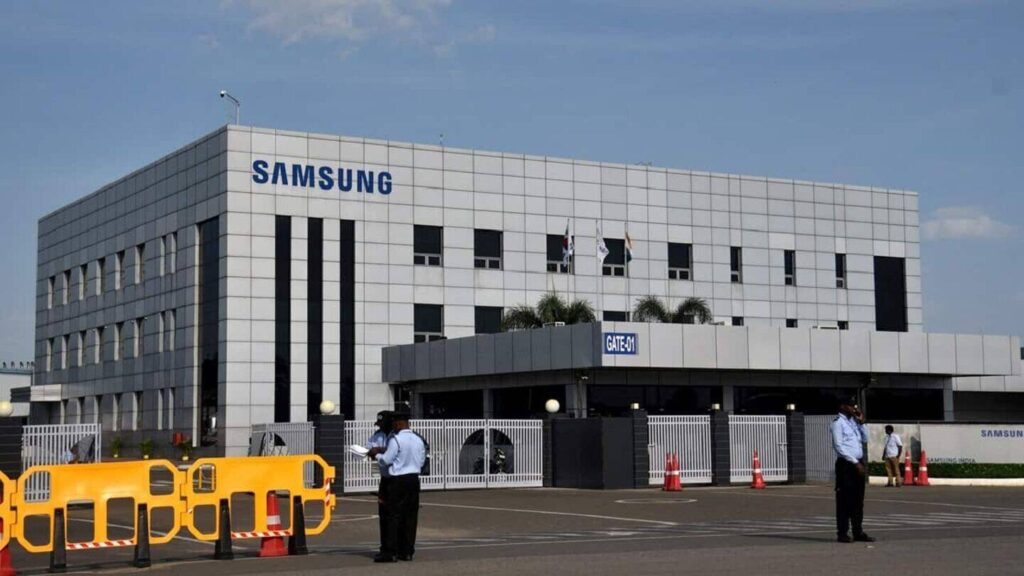
Samsung has achieved something few companies can claim: record smartphone sales alongside record overall revenue. Yet, despite those milestones, the tech giant’s mobile business has reported an unprecedented quarterly loss. The surprising result highlights how rapidly rising component costs—driven largely by the booming demand for AI hardware—are reshaping the economics of the global smartphone industry.
In its latest earnings report, Samsung revealed that its Device eXperience (DX) division, which includes its smartphone business, recorded an operating loss of 800 billion won (around $544 million) during the second fiscal quarter. While flagship Galaxy devices continued to perform strongly, soaring memory prices and increasing component costs significantly reduced profitability across the company’s mobile portfolio.
Rising AI Demand Is Driving Smartphone Costs Higher
Samsung said its Mobile eXperience (MX) business delivered solid year-over-year revenue growth thanks to strong demand for the Galaxy S26 lineup and continued momentum from its affordable Galaxy A series. However, those healthy sales figures weren’t enough to offset the industry’s rapidly increasing production costs.
Explaining the results, Samsung said, “Although MX (Mobile eXperience) saw revenue growth year-over-year driven by solid sales of flagship products centered on the Galaxy S26 series and strong sales of the A series, operating profit decreased due to increased cost burdens across the industry, such as rising component costs.”
The biggest challenge has been the sharp increase in memory and storage prices. As artificial intelligence infrastructure continues expanding worldwide, demand for high-performance memory chips has surged, making these critical smartphone components significantly more expensive. Since memory is one of the costliest parts inside a modern smartphone, manufacturers are finding it increasingly difficult to maintain healthy profit margins without raising retail prices.
Samsung indicated that premium devices such as the Galaxy S26 Ultra and Galaxy Z Fold 8 remain profitable because their higher selling prices leave more room to absorb increased production costs. Budget and mid-range smartphones, however, operate on much thinner margins, making them far more vulnerable to component price inflation.
Budget Smartphones Could Become More Expensive
The company’s latest results reinforce a trend many industry analysts have been watching for months. While flagship smartphones continue to attract premium buyers willing to pay higher prices, entry-level and mid-range devices are becoming increasingly difficult to manufacture profitably as production costs climb.
Samsung said it intends to place greater emphasis on “high-value-added products” in the coming quarters, signalling a stronger focus on premium devices that generate healthier margins. That strategy could have wider implications across the smartphone industry, especially if competing manufacturers face similar increases in memory and component costs.
For consumers, the biggest impact may be higher prices, particularly in the affordable smartphone segment. Devices priced between $200 and $500 could experience some of the largest percentage increases as brands attempt to offset rising manufacturing expenses while preserving already narrow profit margins.
Samsung’s Chip Business Delivers Record Results
Ironically, while Samsung’s smartphone business struggled, another part of the company benefited directly from the same market conditions. As one of the world’s largest manufacturers of memory and storage chips, Samsung experienced exceptional growth in its semiconductor business thanks to booming AI demand.
According to the company, “The Device Solutions (DS) Division posted a quarter-on-quarter sales increase of 56 percent, with the Memory Business setting an all-time high for quarterly revenue and operating profit.” The surge reflects the growing need for advanced memory used in AI servers, data centres and next-generation computing infrastructure.
Those strong semiconductor results helped offset weakness in the mobile division and contributed to Samsung’s strongest overall financial performance to date.
Record Revenue Despite Mobile Challenges
Despite the loss in its smartphone business, Samsung reported 171.5 trillion won (approximately $119 billion) in consolidated quarterly revenue, representing a 28 percent increase compared with the same period last year and marking the highest quarterly revenue in the company’s history.
Operating profit also reached a record 89.5 trillion won (around $62.2 billion). Samsung further noted that earnings per share for both common and preferred shareholders increased by 52 percent, reflecting one of the strongest financial performances among global technology companies.
The results illustrate Samsung’s unique position in the technology industry. While rising memory prices have squeezed smartphone profits, the company’s leadership in memory chip manufacturing has allowed it to benefit from the very AI boom creating those challenges. Whether that balance continues will largely depend on how long demand for AI infrastructure remains at its current pace and whether component costs eventually stabilise.
For now, Samsung’s earnings send a clear message to the wider smartphone market: even record device sales are no longer enough to guarantee healthy profits when the cost of building those devices continues to climb.