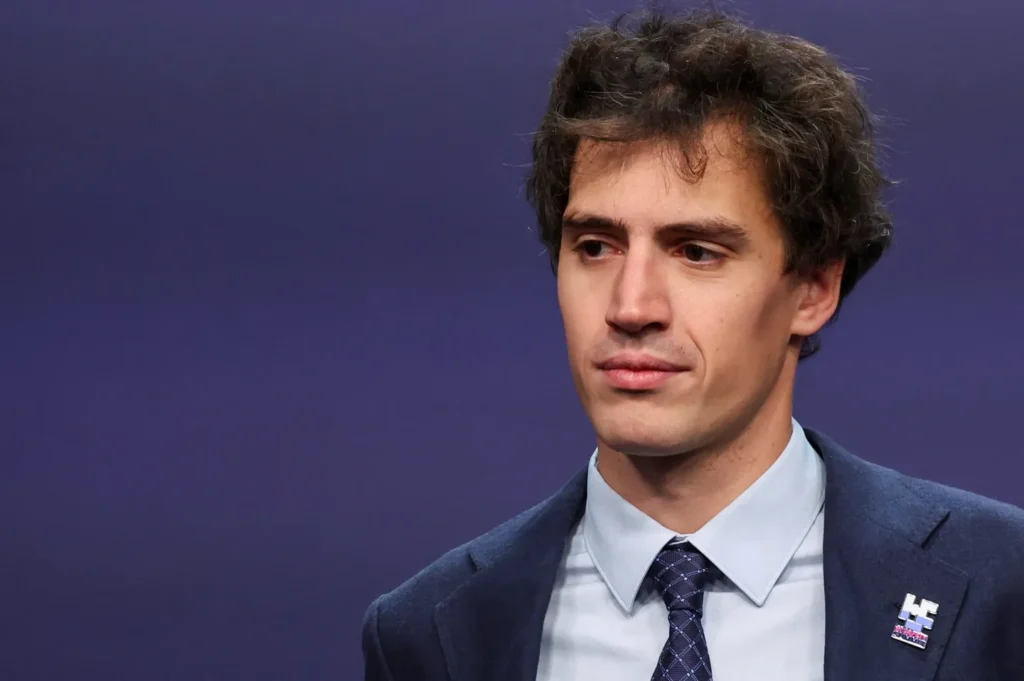
The debate around artificial intelligence and warfare is getting more intense globally, and now one of Europe’s biggest AI leaders has openly disagreed with Pope Leo’s concerns over military use of the technology. Mistral CEO Arthur Mensch said Europe cannot afford to ignore AI-powered defence systems while rival nations continue developing their own advanced capabilities. His comments came just days after Pope Leo warned that artificial intelligence could fuel misinformation, increase conflict, and become dangerous if left without international regulation.
Speaking to reporters in Paris, Mensch argued that Europe has to think realistically about the current geopolitical situation instead of pretending AI development can simply stop. According to the Mistral co-founder, countries facing global threats need their own technological strength, especially when competitors and adversaries are already heavily investing in military AI systems. While he said everyone wants peace, he also insisted Europe cannot remain vulnerable while other powers continue expanding AI-driven defence projects.
Pope Leo Warns AI Could Become Dangerous In Warfare
Earlier this week, Pope Leo released a document calling for stronger international oversight of artificial intelligence. The Vatican raised concerns that AI could spread false information more aggressively, manipulate societies, and create conditions for endless conflict if governments fail to establish strict global rules. One of the strongest points in the Pope’s warning focused specifically on the growing use of AI in military operations and warfare technologies.
Arthur Mensch, however, appears to see the issue from a much more strategic perspective. The Mistral CEO suggested that refusing to build AI capabilities while rivals continue advancing would put Europe in a weak position globally. His comments reflect a growing divide between technology leaders who view AI as necessary for security and critics who fear it could escalate future conflicts in dangerous ways.
Mistral itself has become one of Europe’s most important AI companies during the last two years. The startup, which was valued at around €11.7 billion last year, is often described as Europe’s answer to American AI giants like OpenAI and Google. French officials, including President Emmanuel Macron, have strongly backed the company as part of Europe’s wider attempt to reduce dependence on US technology infrastructure.
Mistral Expands AI Ambitions With New Data Centre Project
Alongside the controversy around Mensch’s comments, Mistral also announced a major infrastructure expansion inside France. The company confirmed plans to build a new data centre in Les Ulis with 10 megawatts of computing power, expected to open during the second half of 2026. The project forms part of a much larger €4 billion investment strategy focused on rapidly increasing Europe’s AI computing capabilities.
According to Mistral, the company hopes to reach 200 megawatts of computing power by the end of 2027 and eventually scale up to 1 gigawatt by 2030. Some of that infrastructure will support Mistral’s own AI systems, while other capacity may be rented out to outside AI labs and research groups. The expansion also connects with Europe’s broader effort to compete more aggressively against the United States in the global AI race.
Still, the rapid growth of data centres is beginning to face criticism in several countries, including France itself. Local communities have increasingly raised concerns over energy consumption, environmental pressure, and land usage linked to giant AI infrastructure projects. Despite those worries, governments across Europe continue accelerating investments because AI is now being viewed not just as a business opportunity, but also as a strategic national priority.
Mensch also addressed growing anxiety among younger generations regarding AI’s impact on jobs and society. Viral videos from recent US graduation ceremonies showed students loudly booing tech executives during speeches, reflecting frustration and fear surrounding artificial intelligence. Responding to those concerns, the Mistral CEO admitted there is understandable “anguish” around the technology, but insisted society would eventually adapt and learn how to use AI more effectively over time.