The long-running political battle between China and Taiwan has once again spilled into the global health arena. Just days before the annual World Health Organization assembly begins in Geneva, Beijing officially confirmed it will continue blocking Taiwan from participating in the event, reigniting one of the most sensitive international disputes surrounding the island’s global recognition.
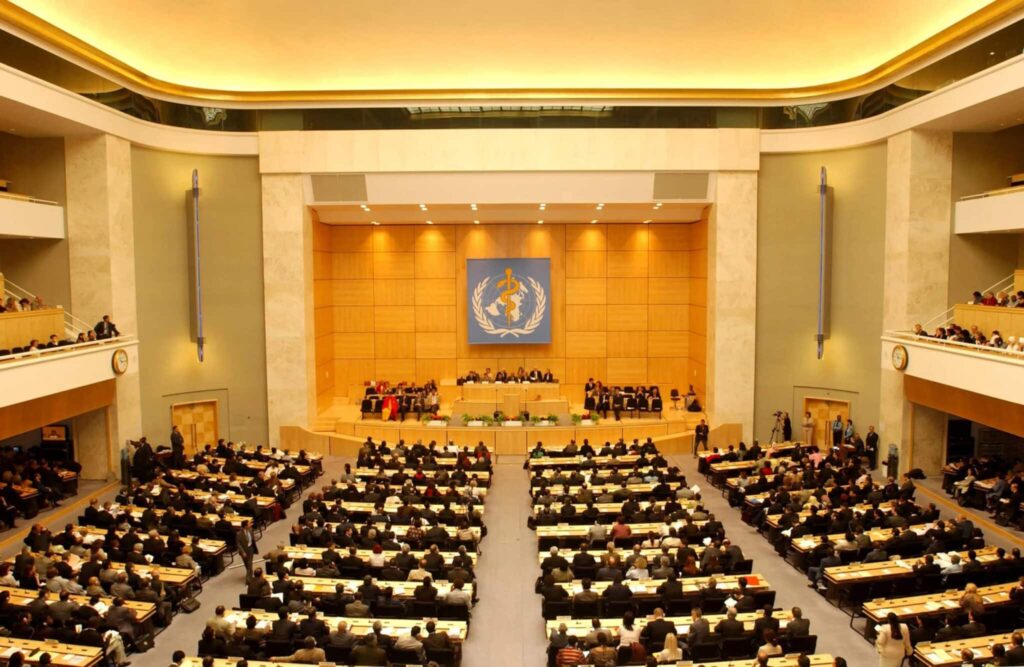
The World Health Assembly, often referred to as the WHA, is one of the most important global health gatherings each year, bringing together governments, health officials, and international experts to discuss disease response, healthcare coordination, pandemic preparedness, and medical cooperation. Taiwan has repeatedly argued that being excluded from these discussions weakens global public health cooperation, especially after its widely praised handling of earlier health crises.
Despite the restriction, Taiwan says it will still send a delegation to Geneva next week. Officials in Taipei confirmed they plan to organize separate side events, hold meetings with international health experts, and continue engaging with foreign delegations outside the formal WHO assembly structure. So even though Taiwan remains locked out officially, it clearly has no intention of disappearing quietly from the global conversation.
The political tension behind this dispute has existed for decades, but the current standoff became especially intense after Beijing began blocking Taiwan’s observer participation in 2017. Taiwan had previously attended the assembly as an observer between 2009 and 2016 during the presidency of Ma Ying-jeou, whose administration maintained warmer ties with Beijing and accepted the broader “One China” framework more openly.
That changed after Tsai Ing-wen came to power. Her refusal to endorse Beijing’s political position regarding Taiwan’s status immediately strained cross-strait relations, and China responded by increasing diplomatic pressure internationally. Current Taiwanese President Lai Ching-te has continued the same policy direction, meaning the deadlock has remained firmly in place.
On Monday, Chinese Foreign Ministry spokesperson Guo Jiankun defended Beijing’s decision by repeating China’s position that the People’s Republic of China is the sole legitimate government representing all of China, including Taiwan. According to Beijing, allowing Taiwan to participate independently at the WHA would violate the “One China” principle and undermine United Nations resolutions tied to Chinese representation.
Taiwan, unsurprisingly, completely rejects that argument. Speaking in Taipei, Taiwanese Health Minister Shih Chung-liang described the situation as a “shame,” especially during a period when the world continues facing major health challenges requiring international coordination. He argued that Taiwan’s absence from the assembly benefits nobody and insisted the island should actually be playing a more active role globally because of its healthcare expertise and experience.
Taiwanese Foreign Minister Lin Chia-lung also suggested he may personally join the Geneva delegation, signaling how politically important this issue remains for Taipei. Taiwan has increasingly tried to strengthen unofficial international partnerships and soft-power diplomacy even while formal recognition opportunities remain limited because of Beijing’s influence.
At the center of all this is a much bigger geopolitical fight than just healthcare access. China views Taiwan as part of its territory and insists foreign governments and international organizations cannot treat the island as a separate sovereign state. Taiwan, meanwhile, argues that its democratically elected government already functions independently in reality and that Beijing has no authority to speak on behalf of Taiwan’s 23 million people.
The WHO issue has become particularly symbolic because health cooperation feels less political on the surface than military or diplomatic recognition battles. Taiwan often points out that disease outbreaks and pandemics do not recognize borders, meaning excluding certain populations from global health discussions could ultimately hurt everyone. Supporters of Taiwan’s participation frequently argue the WHA should prioritize practical medical collaboration over geopolitical disputes.
Still, Beijing’s influence inside international organizations remains extremely powerful. Because China is one of the world’s largest economies and a permanent member of the United Nations Security Council, many international institutions remain cautious about directly challenging its position on Taiwan. That reality continues limiting Taiwan’s formal participation in many global organizations despite support from some Western governments and international lawmakers.
The broader cross-strait relationship has also become increasingly tense over the last few years. Military pressure, diplomatic isolation efforts, trade tensions, and political messaging between Beijing and Taipei have all intensified. Issues like WHA participation now function as both practical policy disputes and symbolic demonstrations of international legitimacy.
For Taiwan, attending unofficial meetings in Geneva may not replace formal participation, but it still allows the island to remain visible internationally and continue building relationships in the global health community. And for China, maintaining the blockade reinforces its long-standing message that Taiwan cannot operate independently on the world stage without Beijing’s approval. As the assembly begins next week, the health discussions inside Geneva will once again unfold alongside one of the world’s most delicate geopolitical conflicts playing out just outside the official meeting rooms.