The northern lights are one of nature’s most dazzling spectacles — but behind that beauty lies a storm of invisible electric currents. Now, NASA is preparing to probe those currents with a high-tech mission launching from Alaska.
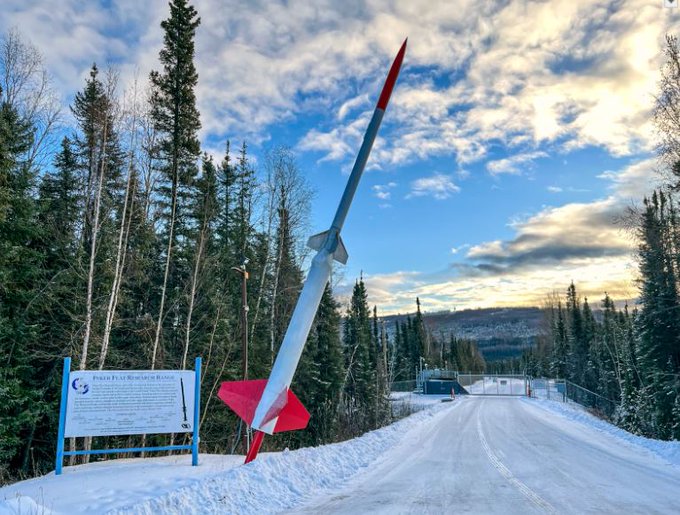
The mission, called NASA’s Geophysical Non-Equilibrium Ionospheric System Science — or GNEISS — is scheduled for an early February 2026 launch from the Poker Flat Research Range in Alaska. And yes, it’s about to study the aurora using a method that works a lot like a medical CT scan.
🌌 How GNEISS Will “Scan” the Aurora
Auroras — also known as the aurora borealis — occur when high-energy electrons from space plunge into Earth’s upper atmosphere, causing it to glow. But those electrons don’t just fall straight down. They spiral and follow complex, twisting magnetic paths.
That’s where GNEISS comes in.
The mission will deploy two sounding rockets that will fly through an auroral arc. Each rocket will release four sub-payloads, sending radio signals back to ground receivers. As plasma in the aurora interferes with the signals, scientists can analyze those distortions — similar to how a CT scanner detects tissue density inside the human body.
By examining how the radio waves bend and scatter, researchers hope to map the density and direction of the charged particles powering the light show.
⚡ Why This Matters for Space Weather
Auroras aren’t just pretty lights. They are visible signs of space weather — the interaction between solar activity and Earth’s magnetic field.
Electric currents flowing through the upper atmosphere can cause heating, turbulence, and disruptions that affect satellites, communications systems, and even power grids. Understanding how these currents behave is critical for predicting space weather impacts.
NASA plans to combine GNEISS data with measurements from its EZIE (Electrojet Zeeman Imaging Explorer) satellite, which launched in March 2025 to observe large-scale electric currents from orbit.
🌑 The Mystery of “Black Auroras”
Alongside GNEISS, NASA is also preparing another rocket mission to study so-called “black auroras.” Unlike the glowing green and red arcs people typically see, black auroras appear as dark patches within the lights. Scientists believe these areas may mark locations where electric currents reverse direction — but the phenomenon remains poorly understood.
Studying both bright and dark auroras could unlock a clearer picture of how energy flows through Earth’s magnetosphere.
🚀 A Launch from the Arctic Frontier
Launching from Poker Flat in Alaska gives NASA a prime vantage point. The high-latitude site sits directly beneath the auroral oval — the region where auroras most frequently occur — making it ideal for targeted measurements.
Unlike massive orbital missions, sounding rockets provide short, focused bursts of data collection at specific altitudes, allowing scientists to zoom in on fine-scale processes.
💬 Final Words
The northern lights may feel timeless and mystical, but the science behind them is still unfolding. With GNEISS, NASA is turning a natural wonder into a laboratory — using rockets and radio waves to peer into the invisible currents dancing above us.
In the coming months, Alaska’s skies won’t just glow. They’ll be scanned.