As artificial intelligence becomes more powerful every year, one major question continues haunting the tech industry: how do you teach machines the difference between right and wrong? That challenge is now pushing some of the world’s biggest AI companies into an unexpected place — conversations with religious leaders.
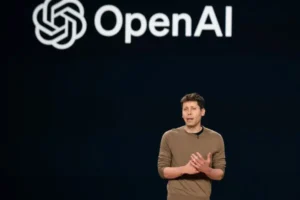
According to recent reports, executives from OpenAI and Anthropic recently met with leaders from multiple faith communities to discuss how moral values, ethics, and human principles could eventually shape the future behavior of advanced AI systems. The discussions reportedly took place during the inaugural “Faith-AI Covenant” roundtable held in New York last week. The event brought together representatives from several religious groups, including the Hindu Temple Society of North America, The Sikh Coalition, Baha’i International Community, the Greek Orthodox Archdiocese of America, and The Church of Jesus Christ of Latter-day Saints.
The gathering was organized by the Geneva-based Interfaith Alliance for Safer Communities, a group that typically works on issues like extremism, radicalization, and human trafficking. But now, it appears the organization is also becoming part of one of the biggest technological debates in the world: whether artificial intelligence can ever truly understand ethics.
And honestly, the fact that Silicon Valley companies are now consulting religious groups at all says a lot about how complicated AI development is becoming. For years, the tech industry largely avoided involving organized religion in discussions around innovation and software policy. But as AI systems become more advanced — especially with companies openly pursuing forms of artificial general intelligence, or AGI — concerns around morality, alignment, and human values are growing rapidly inside the industry itself.
Modern AI models can already write code, solve equations, generate videos, create strategies, and simulate conversations with shocking sophistication. But companies still struggle with one critical issue: AI does not naturally understand morality the way humans do. Models learn patterns from data, not conscience, empathy, spirituality, or lived ethical experience.
That’s why firms like OpenAI and Anthropic are now experimenting with broader approaches to “alignment” — the process of teaching AI systems to behave in ways humans consider safe, ethical, and socially acceptable. According to reports, the recent discussions focused on how religious and philosophical traditions could help shape future AI principles beyond what laws or regulations alone can accomplish. Former Google and Facebook executive Joanna Shields, who participated in the initiative, reportedly said many AI developers genuinely want to build these systems responsibly because they understand how powerful the technology could eventually become.
The long-term idea reportedly involves creating broader moral frameworks or guiding principles informed by multiple faith traditions and ethical systems. Organizers hope those conversations could eventually influence how AI companies design behavior rules for future models.
Of course, the idea is already triggering debate. One obvious challenge is that different religions — and even different groups within the same religion — often disagree deeply on moral questions. What one tradition sees as ethical or acceptable may conflict sharply with another’s beliefs. That raises difficult questions about whether a shared “moral compass” for AI is even realistically possible at a global level.
Still, this isn’t the first time major AI firms have explored moral philosophy while training models. Google DeepMind and Anthropic have both reportedly hired philosophers and ethics researchers specifically focused on AI alignment work. Anthropic, in particular, has publicly emphasized its “Constitutional AI” approach for years.
The company’s publicly shared “Claude Constitution” reportedly includes guidelines designed to shape how its chatbot Claude responds to users ethically. Anthropic has previously said the framework was built with input from ethics experts and religious leaders. One line from the constitution reportedly states that the company wants Claude to behave “like a deeply and skillfully ethical person would.”
Earlier this year, Anthropic also reportedly met with Christian leaders in San Francisco to discuss what executives described as the “moral and spiritual compass” of AI systems. At the same time, some religious groups have already started publishing their own guidance around artificial intelligence independently of tech companies. The The Church of Jesus Christ of Latter-day Saints has acknowledged AI as potentially useful for education and learning while also emphasizing that it cannot replace divine inspiration or personal spiritual growth. Meanwhile, the Southern Baptist Convention passed a resolution encouraging churches to proactively engage with AI development rather than reacting only after the technology becomes deeply embedded in society.
What makes this moment fascinating is that AI development is slowly forcing completely different worlds to collide — Silicon Valley engineers, philosophers, lawmakers, educators, and now religious leaders all trying to answer the same question: how do you teach morality to something that doesn’t naturally possess human consciousness?
And honestly, nobody really knows the answer yet. For now, these meetings seem more exploratory than decisive. There’s still no clear roadmap showing how interfaith ethical discussions would practically translate into AI training systems or enforceable company policies. But the fact that companies building some of the most advanced AI systems on Earth are now seeking guidance from spiritual and religious traditions shows just how seriously the alignment problem is being taken internally. Because as AI gets smarter, faster, and more autonomous, the industry is realizing something uncomfortable: technical intelligence alone may not be enough.