The tech war between the U.S. and China is entering a sharper phase. What began with restrictions is now moving toward a near-total shutdown — and the latest step could have long-term consequences for the global electronics market.
FCC Targets Existing Chinese Equipment, Not Just New Devices
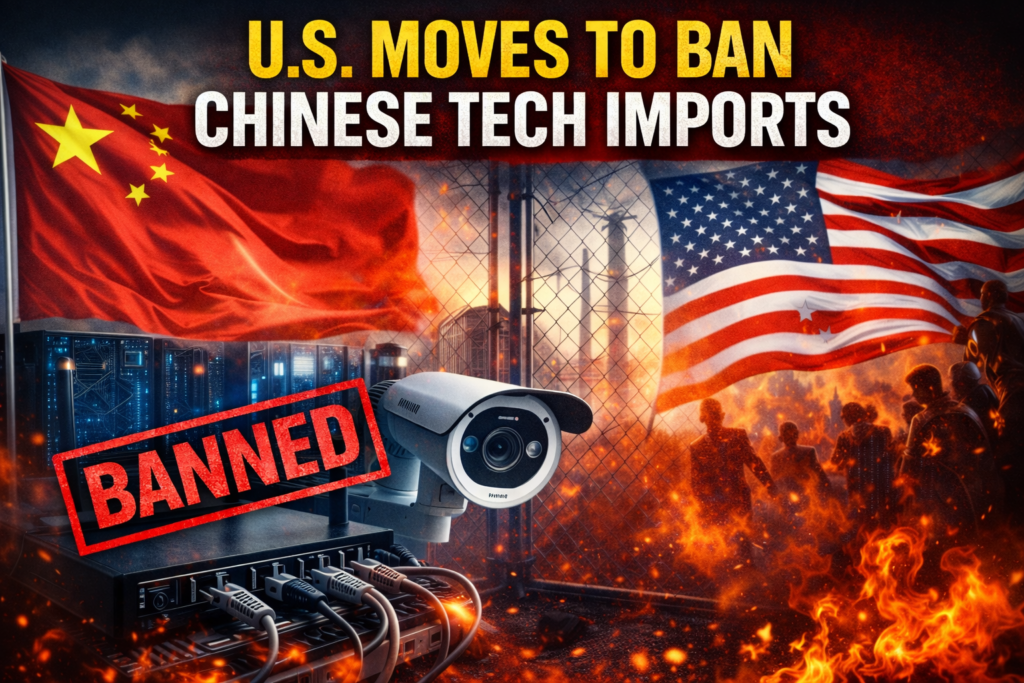
The Federal Communications Commission has proposed expanding its crackdown on Chinese tech by blocking the import of equipment that was previously allowed into the U.S. before 2022.
Until now, the focus had been on stopping new products. This move goes further — potentially cutting off even older approved devices from entering the country.
The agency says the goal is simple: reduce risks to America’s communication networks and tighten national security controls.
The Companies in the Crosshairs
The proposal directly impacts major Chinese tech players already flagged by U.S. authorities, including:
- Huawei
- ZTE
- Hikvision
- Dahua Technology
- Hytera Communications
These companies were added to the FCC’s “Covered List” back in 2021, marking them as potential national security threats.
What Changes for Users — And What Doesn’t
For now, people already using these devices won’t be affected.
The FCC has clarified that existing equipment can continue to operate. But once the new rule is finalized, importing additional units of those same products could be blocked — and quickly, to prevent companies from rushing shipments into the U.S. before the deadline.
This Isn’t an Isolated Move
This latest proposal is part of a broader pattern.
In recent months, the FCC has:
- Banned imports of new Chinese drone models
- Blocked new Chinese-made consumer routers
- Restricted approvals for devices using components from blacklisted firms
The direction is clear — Washington is steadily closing every possible gap.
Legal Pushback and Global Impact
Not everyone is on board.
Companies like Hikvision have already challenged these decisions in court, arguing that the FCC is overstepping its authority by targeting products that were previously approved.
But U.S. courts have largely backed the regulator so far, including rejecting attempts to overturn earlier bans.
The Bigger Picture
This isn’t just about routers or cameras.
It’s about control over critical infrastructure — who builds it, who supplies it, and who gets to secure it.
As the U.S. tightens its grip, the tech divide between global powers is becoming more visible — and more permanent.
And with this latest move, the message is clear: even the past approvals are no longer safe.