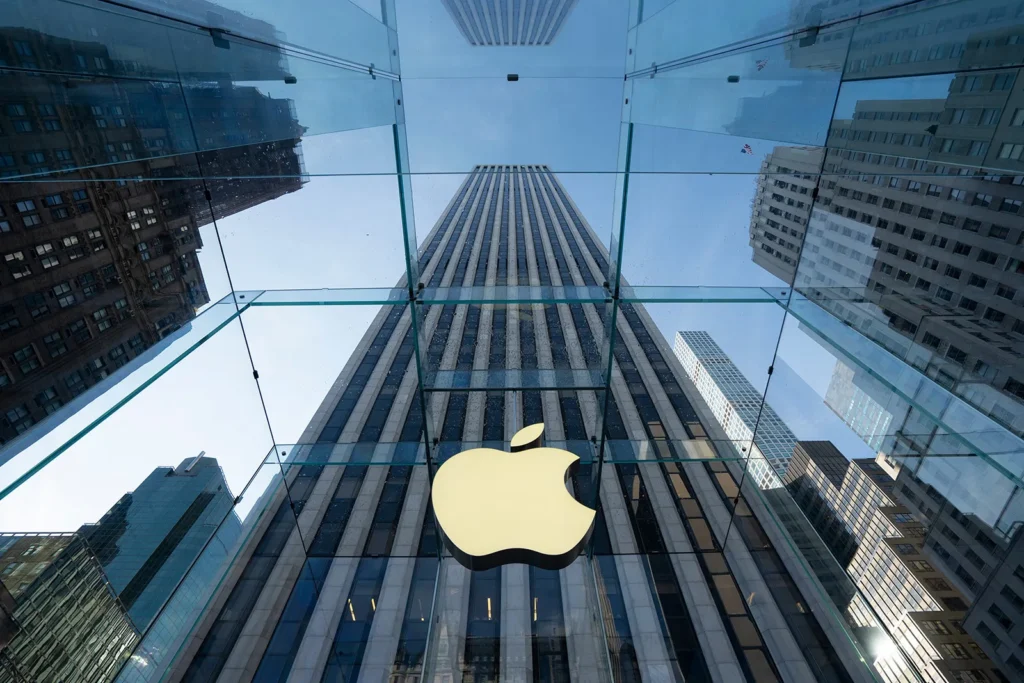
Apple is making another massive investment in its U.S. supply chain, announcing a chip agreement with Broadcom worth more than $30 billion. The long-term partnership is expected to strengthen the company’s hardware business while increasing domestic semiconductor production over the next several years. Besides securing key components for future iPhones and other Apple devices, the deal also reflects Apple’s wider strategy of relying more heavily on manufacturing inside the United States. The agreement runs through 2031 and is one of the biggest supply commitments Apple has announced in recent years.
The announcement comes only days after Broadcom confirmed it had signed a long-term supply agreement with Apple. While the chipmaker revealed the existence of the deal earlier this week, Apple has now shared more details about what the partnership will actually deliver. The collaboration focuses on advanced wireless communication technology that has quietly been under development between the two companies for several years.
Apple and Broadcom deepen long-term partnership
At the centre of the agreement are FBAR (Film Bulk Acoustic Resonator) filters, specialised radio-frequency chips that help smartphones and other connected devices maintain fast and reliable wireless communication. These components are essential for filtering radio signals, reducing interference and improving network performance across Wi-Fi and cellular connections. Apple revealed that it has been working alongside Broadcom on this technology since at least 2023, making the latest agreement a continuation of an already established engineering partnership. As Apple devices continue adding more wireless capabilities, these chips are expected to become even more important in future product generations.
Under the agreement, Broadcom will manufacture at least 15 billion FBAR filters for Apple devices over the coming years. To support that production, the semiconductor company will invest approximately $1.5 billion to expand its manufacturing facility in Fort Collins, Colorado. The expansion is expected to increase production capacity while creating additional high-skilled manufacturing jobs in the region. Although neither company disclosed a detailed production timeline, the agreement extends through 2031, giving Broadcom a major long-term customer for one of its most advanced chip technologies.
Why the deal matters for Apple
The investment also aligns with Apple’s broader effort to increase sourcing from American manufacturers. In recent years, the company has expanded partnerships with domestic suppliers as governments around the world encourage greater semiconductor production within their own borders. Apple said the Broadcom agreement forms part of its ongoing work with the administration of U.S. President Donald Trump to strengthen chip manufacturing in the United States. Reducing dependence on overseas supply chains has become a growing priority across the technology industry as companies seek greater stability and resilience.
Apple CEO Tim Cook highlighted both the technological and manufacturing significance of the partnership. He said, “The cutting-edge components built in Fort Collins are essential to delivering the incredible performance and connectivity our customers expect, and we’re proud to deepen our investments in U.S.-based suppliers that share our commitment to excellence and innovation. We’re grateful to the president and his administration for supporting important projects like this.” The statement reinforces Apple’s long-term commitment to expanding its investment in advanced American manufacturing.
For consumers, the agreement is unlikely to result in immediate product changes, but it lays the foundation for future Apple devices with stronger wireless performance and more reliable connectivity. For Broadcom, the deal provides stable long-term demand from one of the world’s largest technology companies while supporting expansion of its U.S. manufacturing operations. As competition in artificial intelligence, advanced smartphones and connected devices continues to accelerate, securing critical semiconductor supply has become just as important as developing the products themselves. Apple’s latest investment shows the company is willing to spend heavily to ensure those key components remain available for years to come.