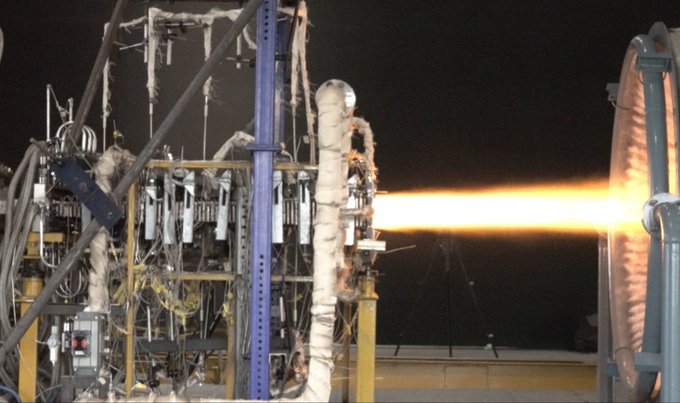
India’s race toward developing next-generation hypersonic weapons has taken another major step forward after Hyderabad-based DRDL successfully completed a second long-duration test of its actively cooled full-scale scramjet combustor. The test, conducted on May 9, 2026, is now being seen as a huge milestone for the country’s ambitious hypersonic missile programme, especially as global powers continue investing heavily in ultra-fast strike technologies.
According to officials involved in the project, the test achieved a run time of more than 1200 seconds at the advanced Scramjet Connect Pipe Test (SCPT) Facility. For defence scientists, that number matters a lot because sustaining combustion for such a long duration inside a scramjet engine is one of the hardest challenges in hypersonic propulsion development. Maintaining stability under extreme temperature and pressure conditions is something only a few nations have managed successfully.
The programme is being led by Defence Research and Development Laboratory in Hyderabad, one of the key laboratories under the Defence Research and Development Organisation. Scientists have reportedly been working on multiple stages of hypersonic propulsion research for years, but this latest achievement suggests the technology is slowly moving closer toward practical deployment capability instead of remaining just an experimental concept.
A scramjet engine works very differently from traditional missile propulsion systems. Unlike standard rocket engines that carry both fuel and oxidiser onboard, scramjets use oxygen from the atmosphere while travelling at extremely high speeds, usually above Mach 5. That makes the system lighter, faster, and potentially capable of sustaining hypersonic cruise speeds over longer distances. However, the engineering challenge is enormous because airflow inside the engine remains supersonic during combustion itself.
The “actively cooled” part of the combustor is equally important. Hypersonic flight creates unbelievable levels of heat due to atmospheric friction. Without advanced cooling systems, the engine structure can simply fail during extended operation. This is why defence experts are calling the latest 1200-second run a serious technological breakthrough rather than just another routine laboratory trial.
India has been gradually building its hypersonic research ecosystem over the last several years. Earlier milestones included the successful Hypersonic Technology Demonstrator Vehicle (HSTDV) trials, which already proved the country could achieve sustained hypersonic air-breathing flight. But this latest scramjet combustor test appears to focus more on endurance, stability, and operational viability — three things required before any real-world missile system can become combat-ready.
Globally, hypersonic weapons have become one of the biggest defence priorities among military superpowers. Countries like the United States, China, and Russia are aggressively developing systems capable of travelling at speeds exceeding five times the speed of sound while also performing unpredictable manoeuvres during flight. These weapons are considered difficult to intercept using existing missile defence shields, which is why they are changing strategic military planning worldwide.
For India, the growing focus on hypersonic capability comes amid increasing regional security concerns and rapid military modernisation across Asia. Defence analysts believe future hypersonic missiles could eventually complement India’s existing strategic missile arsenal by providing extremely fast precision-strike options capable of penetrating heavily defended targets. While officials have not publicly revealed detailed operational timelines, the latest DRDL achievement clearly signals that indigenous development is moving steadily ahead.
Another important aspect of this programme is technological self-reliance. Indigenous hypersonic propulsion development reduces dependence on foreign systems and gives India greater control over future strategic platforms. In recent years, the government has strongly pushed for domestic defence innovation under its broader self-reliance initiatives, and advanced missile propulsion has become one of the most sensitive areas of that effort.
The successful long-duration test will likely now lead to further integrated trials involving complete propulsion systems and eventually full hypersonic vehicle testing. Defence scientists are expected to continue refining thermal management, combustion efficiency, fuel optimisation, and sustained flight stability before the technology enters any deployable weapons platform.
While many details remain classified, one thing is becoming clear — India’s hypersonic ambitions are no longer limited to research papers and prototype demonstrations. With each successful scramjet test, the country appears to be moving closer toward joining the small group of nations capable of fielding advanced hypersonic missile systems in the future.