

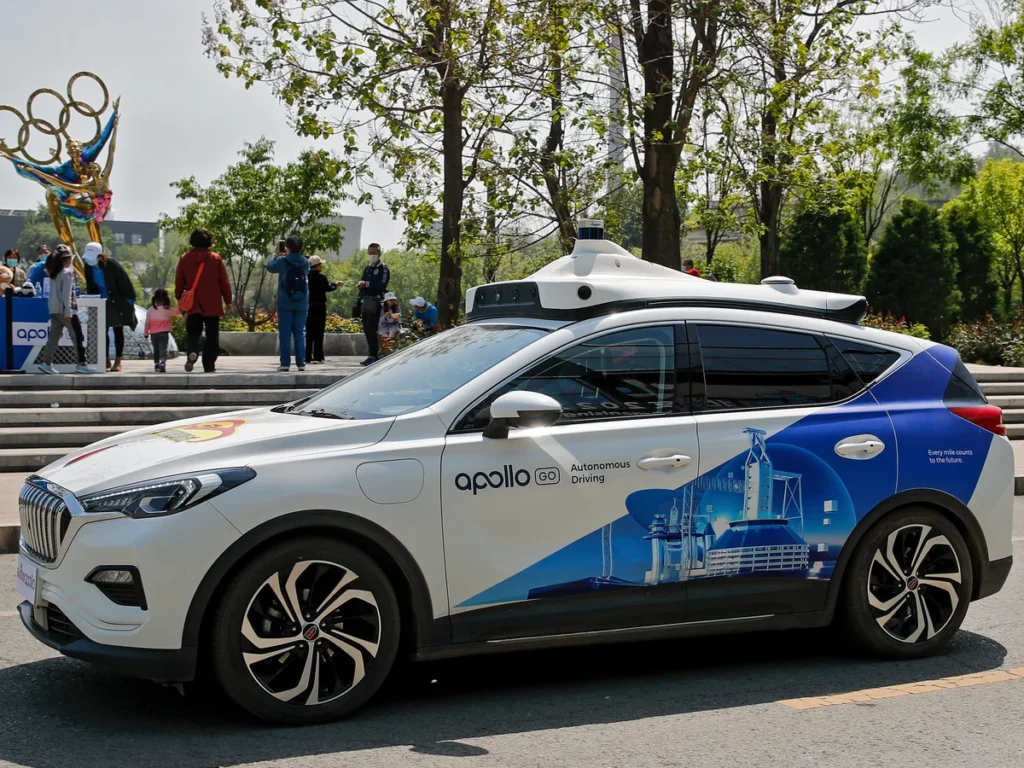
London’s streets are becoming the latest testing ground for autonomous vehicles as Baidu officially begins robotaxi trials in the UK capital. The Chinese technology giant has partnered with Lyft and Freenow to bring its self-driving Apollo Go vehicles to London, marking another significant milestone in Europe’s rapidly expanding autonomous mobility race. While the service isn’t yet available to the public, the companies say the trials are laying the groundwork for commercial robotaxi rides in the coming years.
The announcement also highlights growing competition in the self-driving transport sector, with several global technology firms now choosing London as a key market to test autonomous vehicles. As regulators continue developing rules for driverless transport, major companies are racing to establish an early presence in one of Europe’s busiest cities.
Baidu Brings Apollo Go To The UK
Baidu has started testing its Apollo Go RT6 robotaxis in London’s Brent borough, where dozens of autonomous vehicles will begin operating on public roads. During this initial phase, each vehicle will include a trained safety driver behind the wheel while engineers evaluate the technology’s performance in real-world traffic conditions.
The trials form part of a wider partnership announced by Baidu and Lyft, with Freenow playing an important role in future passenger bookings. Freenow, the European taxi platform acquired by Lyft last year, will eventually integrate the robotaxi service into its existing transportation network operating across the UK and Germany.
The companies plan to introduce public ride bookings next year before expanding availability further. If testing and regulatory approvals proceed as expected, members of the public could begin reserving autonomous journeys through the Freenow platform in 2027.
Competition Intensifies In The Robotaxi Market
Baidu is far from the only company investing in autonomous transport in London. The UK capital has quickly emerged as one of Europe’s most important testing locations for self-driving technology, attracting several of the industry’s biggest names.
Earlier this year, Waymo began testing its autonomous Jaguar I-Pace vehicles on London’s streets, also using human safety operators during the early stages of deployment. Meanwhile, Uber and British autonomous driving company Wayve have announced plans to launch their own robotaxi trials, with interested passengers already able to register for updates ahead of the service’s rollout.
The increasing number of pilot programmes reflects growing confidence in autonomous vehicle technology, although commercial deployment still depends heavily on government approval and public acceptance. Companies hope that large-scale testing will demonstrate the safety and reliability of their systems before fully driverless services become commonplace.
Public Launch Depends On UK Approval
Despite the progress, Baidu’s robotaxi service still faces several regulatory steps before passengers can travel without safety drivers. The company said future operations will be coordinated with Transport for London (TfL) and the UK government, both of which continue to develop the legal framework for autonomous vehicles.
The UK government has already launched a dedicated robotaxi pilot programme as it prepares new legislation governing self-driving transport. Those rules will determine how quickly companies such as Baidu, Waymo and Uber can expand their services beyond limited testing.
For Lyft, the partnership represents another important step in its international expansion strategy following the acquisition of Freenow. By combining Baidu’s autonomous driving technology with Freenow’s established ride-hailing network, the companies hope to create one of Europe’s largest robotaxi operations over the coming years.
While fully autonomous taxis are not yet part of everyday life in London, the latest trials indicate that the transition is moving steadily forward. If regulatory approvals continue as planned, London could become one of the first major European cities where passengers regularly book driverless rides through a mainstream ride-hailing platform.


