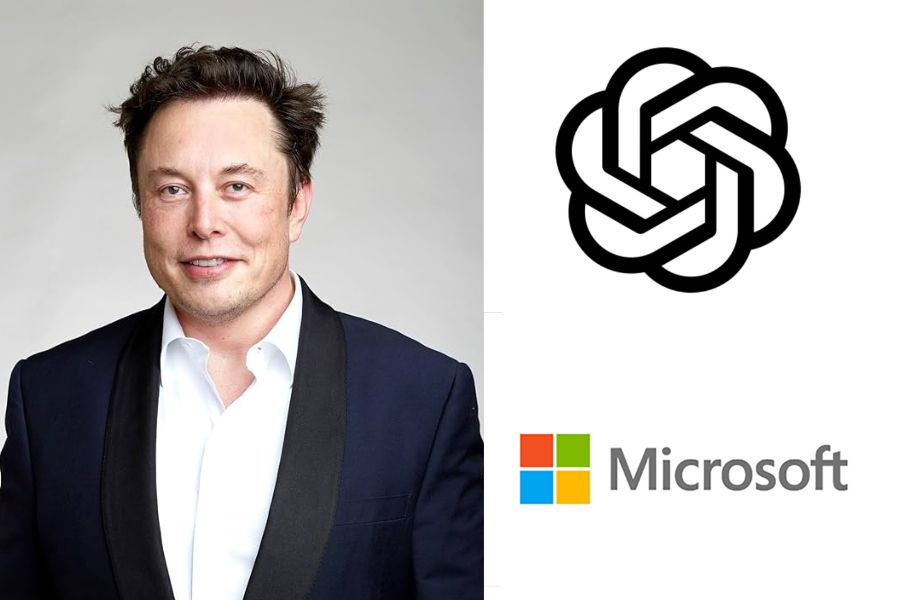
A dramatic legal showdown is unfolding in the artificial intelligence world, with Elon Musk now seeking as much as $134 billion in damages from OpenAI and Microsoft. According to a new court filing, Musk argues that both companies financially benefited — wrongfully, in his view — from his early involvement in building OpenAI.
Why Musk Is Making the Claim
In the filing submitted Friday, Musk claims that OpenAI gained between $65.5 billion and $109.4 billion due to his early financial backing and foundational support when the organization was formed in 2015. He further alleges that Microsoft gained $13.3 billion to $25.1 billion as a result of that same early momentum.
Musk says he contributed roughly $38 million, accounting for around 60% of OpenAI’s early seed funding, and played a key role beyond money — helping recruit talent, connect founders with influential contacts, and lend credibility to the AI startup at a critical stage.
He argues that just like early startup investors often see exponential returns, he is now entitled to what he describes as the companies’ “wrongful gains.”
The Core Dispute
At the heart of the lawsuit is Musk’s claim that OpenAI violated its original nonprofit mission by restructuring into a for-profit entity — a move he says contradicts the principles on which the organization was founded.
Musk left OpenAI in 2018 and has since launched xAI, which now competes directly with OpenAI through its chatbot Grok. His lawsuit alleges that OpenAI’s evolution, along with Microsoft’s involvement, fundamentally changed the nature of the company he helped create.
How OpenAI and Microsoft Are Responding
OpenAI has dismissed the lawsuit as “baseless”, calling it part of a broader harassment effort by Musk. Microsoft, meanwhile, has denied any wrongdoing, with its legal team stating there is no evidence the company “aided or abetted” OpenAI in violating its founding mission.
In a separate filing, both companies have asked the court to limit or exclude testimony from Musk’s expert witness, financial economist C. Paul Wazzan. They argue that his valuation analysis is speculative, unverifiable, and could mislead jurors by proposing an “implausible” transfer of billions from a nonprofit organization to a former donor who is now a competitor.
Trial Timeline and What’s at Stake
A federal judge in Oakland, California, has already ruled that the case will go before a jury, with the trial expected to begin in April. If the jury sides with Musk, the filing suggests he may seek punitive damages and possibly even an injunction, though no specific remedies have been outlined yet.
Beyond the money, the case carries massive implications for how AI companies structure themselves, how early contributors are compensated, and how regulators and courts view the evolving relationship between nonprofits, for-profit entities, and Big Tech partnerships.
Final Words
This isn’t just a dispute over dollars — it’s a clash over ownership, intent, and the future direction of artificial intelligence. With billions potentially on the line and some of the most powerful names in tech facing off, Musk’s lawsuit against OpenAI and Microsoft could become one of the most consequential AI-related court battles to date.