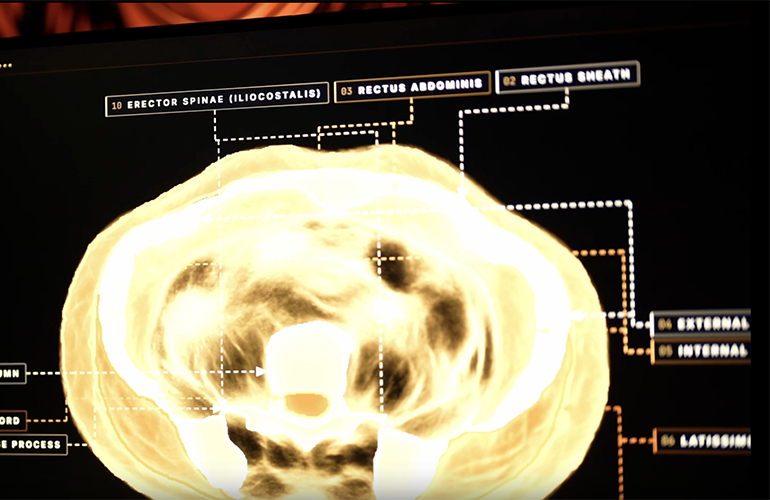
For years, Midjourney has been associated with artificial intelligence image generation, helping users create artwork from simple text prompts. That reputation makes its latest announcement feel almost unbelievable at first glance. Instead of introducing a new AI model or image-generation feature, the company has revealed plans for a full-body medical scanning system that it claims could scan a person’s entire body in under a minute.
The project, called the Midjourney Scanner, marks the company’s biggest departure yet from its core business. Even more surprising, Midjourney is not stopping at the hardware itself. The company also intends to build dedicated wellness and medical spa locations where people can walk in and undergo these scans, bringing advanced imaging technology closer to an everyday consumer experience.
Midjourney Wants To Reinvent Medical Imaging
According to the company, the Scanner is the first major product under its newly launched Midjourney Medical division. While the move may seem unexpected, Midjourney says it has been exploring larger questions about its future direction and what role it wants to play beyond AI-generated images.
In its announcement, the company described a vision of creating something with the power of modern MRI systems while making the experience as simple and accessible as visiting a spa. That ambition has led to the development of a machine designed to dramatically reduce the time required for comprehensive body imaging.
Traditional full-body MRI procedures can often take between 60 and 90 minutes, depending on the examination. Midjourney’s goal is to shrink that process to less than 60 seconds. If successful, the technology could represent a significant shift in how preventative health screenings are performed in the future.
The concept also aligns with a growing trend in healthcare technology, where companies are searching for ways to make diagnostics faster, less intimidating, and more accessible to ordinary consumers. Whether Midjourney can actually achieve that remains to be seen, but the company is clearly thinking far beyond its roots in generative AI.
How The Scanner Works
The system relies on advanced ultrasound technology rather than traditional MRI imaging. During a scan, a person stands on a platform before being slowly submerged in water. Midjourney says the body moves through the scanner at a rate of approximately two inches per second.
The most unusual part of the machine is a circular ring containing roughly half a million microscopic ultrasonic elements. Each of these tiny components can both emit ultrasound waves and record how those waves bounce back after interacting with tissues inside the body.
To explain the concept, Midjourney compares the process to dolphin echolocation. Just as dolphins use reflected sound waves to understand their surroundings, the scanner creates an incredibly detailed picture of the human body by analyzing millions of ultrasonic reflections from every direction simultaneously.
The resulting data is then processed into a highly detailed three-dimensional map of the body. According to the company, the images are intended to provide a level of detail comparable to modern MRI scans while operating at dramatically higher speeds. The ultimate objective is to offer comprehensive imaging without requiring patients to spend extended periods inside traditional scanning equipment.
Partnership With Butterfly Network Powers The Project
Midjourney is not developing the technology entirely on its own. The company is working alongside Butterfly Network, a healthcare technology firm known for developing portable ultrasound devices. The collaboration became possible after Midjourney secured exclusive rights to Butterfly’s ultrasound-on-chip technology through a licensing agreement signed in late 2025.
The project is reportedly being led by Ahmad Abbas, who heads Midjourney’s consumer hardware initiatives. Abbas joined the company after previously contributing to Apple’s Vision Pro mixed-reality headset project, bringing experience in advanced hardware development and emerging technologies.
That combination of AI expertise, imaging technology, and consumer hardware design appears to be at the center of Midjourney’s strategy. Rather than positioning the Scanner as purely a medical device, the company seems interested in creating a consumer-friendly experience that sits somewhere between healthcare and wellness.
Industry analysts note that this approach could help attract users interested in preventative health monitoring, although regulatory approval and clinical validation will ultimately determine how widely the technology can be adopted.
Why This Could Be A Big Deal For Healthcare
The broader vision extends far beyond building a single scanning machine. Over the next year, Midjourney plans to continue refining both the hardware and its image-processing algorithms through research trials and testing programs. The company is also already working on a second-generation version of the Scanner.
Its first Scanner Spa is expected to open in San Francisco next year, serving as an early testing ground for the technology and customer experience. Beyond that, Midjourney’s roadmap includes obtaining approval from the U.S. Food and Drug Administration for the Scanner’s diagnostic capabilities, a critical step before it can compete directly with established medical imaging systems.
Looking further ahead, the company plans to introduce a third-generation model in 2028 that will incorporate custom-designed silicon chips. These specialized processors are expected to improve image quality and processing performance significantly, potentially bringing the technology closer to traditional MRI standards.
The long-term goal is particularly ambitious. Midjourney hopes to deploy 50,000 Scanners globally by 2031, creating a vast network of imaging centers and wellness locations. The company believes widespread access to early diagnostic imaging could transform preventative healthcare by identifying diseases before symptoms become severe.
Midjourney has made perhaps its boldest claim when discussing the potential impact of the technology. The company stated, “We think it’s completely possible that with enough early imaging in the future, the world could avoid 30 percent of all deaths and 50 percent of all healthcare costs.”
Those projections remain highly speculative and would require extensive clinical evidence to support. However, they illustrate the scale of Midjourney’s ambitions. What began as an AI image-generation company is now attempting to enter one of the most complex and heavily regulated industries in the world.
Whether the Scanner ultimately becomes a healthcare breakthrough or remains an ambitious experiment, one thing is already clear: Midjourney is no longer content being viewed solely as an AI art company. With medical hardware, diagnostic imaging, and wellness centers now on its roadmap, the company is betting that its next chapter could be far bigger than generating pictures from text prompts.