NASA has taken a major step toward the future of deep-space exploration—one that hasn’t been attempted in over six decades. In January 2026, the space agency confirmed it successfully completed full-scale nuclear rocket reactor tests, reviving a technology that could dramatically cut travel time to Mars and beyond.
The breakthrough comes as part of NASA’s push to move faster, farther, and safer in space—especially as it eyes long-duration missions under its Moon-to-Mars roadmap.
First nuclear rocket reactor tests since the 1960s
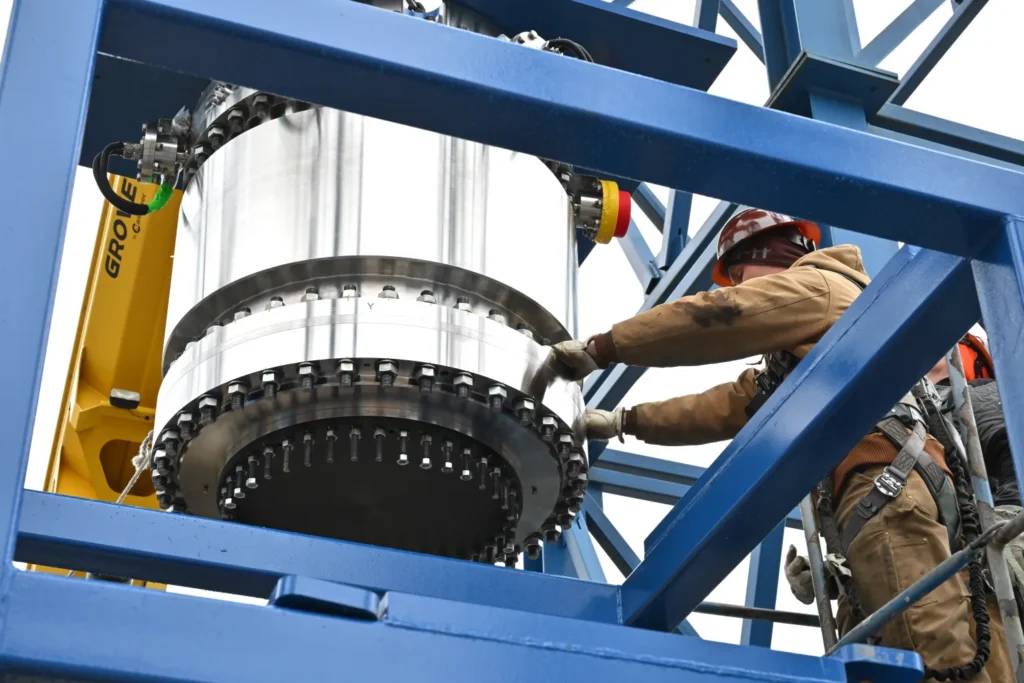
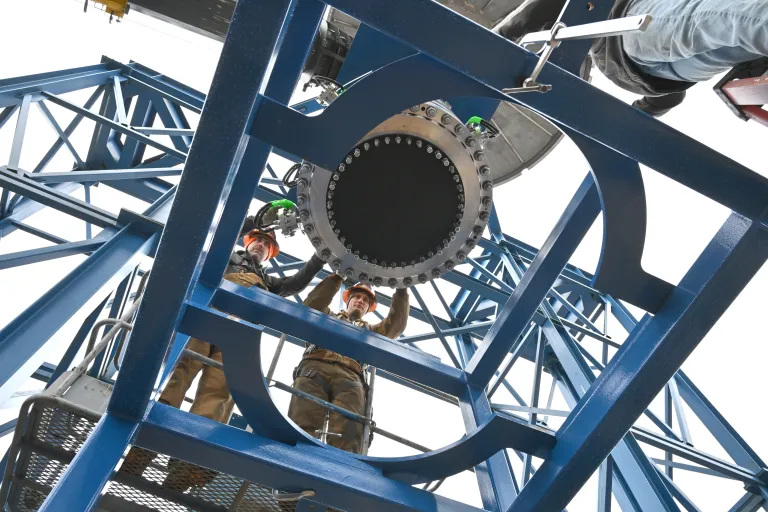
The recent milestone marks NASA’s first nuclear thermal propulsion reactor testing in more than 60 years. Engineers carried out an extensive cold-flow test campaign at Marshall Space Flight Center, using a full-scale reactor development unit designed to simulate real engine conditions—without nuclear fuel.
The reactor model measured 44 by 72 inches and was built by BWX Technologies. Over 100 separate cold-flow tests were conducted, focusing on hydrogen propellant flow, pressure stability, and control behavior.
According to NASA, the tests confirmed that hydrogen could move safely and smoothly through the reactor system without triggering dangerous oscillations or pressure spikes—one of the biggest historical challenges in nuclear rocket design.
Inside the reactor test campaign
The testing effort was led by NASA’s Space Nuclear Propulsion Office under the DRACO initiative.
Although the reactor unit was non-nuclear, it allowed engineers to validate key systems, including:
- Propellant flow behavior
- Instrumentation accuracy
- Control system response
- Structural and thermal stability
The results were encouraging enough that NASA has already implemented design upgrades to the reactor’s control and monitoring systems—changes that could carry over directly into future flight-ready engines.
Why nuclear rockets matter
Unlike traditional chemical engines, nuclear thermal rockets use a reactor to superheat hydrogen propellant, producing far greater efficiency and thrust. This means:
- Shorter travel times to Mars and deep space
- Reduced radiation exposure for astronauts
- Larger payload capacity for science equipment and life-support systems
Greg Stover, a NASA representative involved in the program, described nuclear propulsion as delivering both “speed and endurance”, a combination essential for long-range human missions.
A boost for Artemis and Moon-to-Mars plans
NASA Administrator Bill Nelson has previously emphasized that nuclear propulsion could allow astronauts to move between distant regions of space with unprecedented speed, making it a key technology for future exploration.
The work directly supports NASA’s Artemis initiative and the agency’s long-term Moon-to-Mars strategy. By reducing transit times and increasing mission flexibility, nuclear rockets could fundamentally change how deep-space missions are planned.
NASA is funding the program in collaboration with the U.S. Department of Energy, with both agencies also investing in advanced reactor fuels and in-space demonstration missions.
Final words
After decades of dormancy, nuclear rocket propulsion is no longer a concept stuck in Cold War-era research papers. With successful reactor tests now completed, NASA has reopened a technological door that could redefine human spaceflight.
If development continues on its current trajectory, nuclear rockets may soon power the next giant leap—taking astronauts to Mars faster, safer, and with capabilities never before possible.