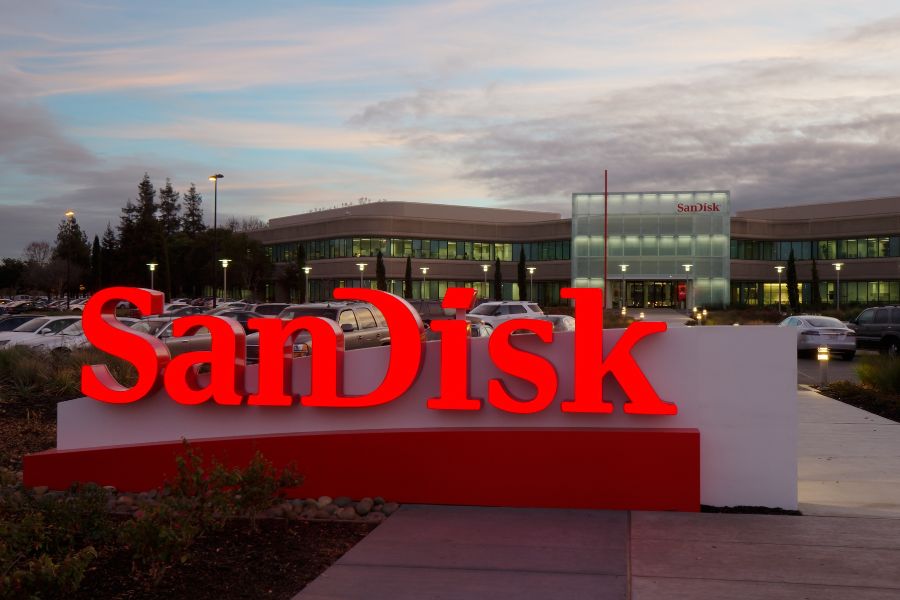
The AI wave is not just lifting software companies anymore, it’s now reshaping the core hardware ecosystem in a big way. And one of the latest names riding that surge is SanDisk, which has quietly delivered one of its strongest quarters in years. What makes this story interesting is not just the numbers, but the strategy behind them.
In its latest results, SanDisk reported a massive jump in performance. Revenue didn’t just grow, it more than tripled, reaching nearly $6 billion for the quarter. Profit numbers were even more surprising, beating expectations by a wide margin and marking a sharp turnaround from last year when the company was still dealing with losses. This sudden shift shows how quickly the AI boom is changing demand patterns in the memory industry.
The key driver here is NAND storage, which is SanDisk’s core business. As AI systems start handling massive datasets — from legal documents to large codebases — the need for high-capacity storage has gone up significantly. That demand has directly pushed companies like SanDisk into a stronger position, especially as data centres expand rapidly to support AI workloads.
But beyond the headline numbers, the more important move is what SanDisk is doing to stabilise its future. The company has signed five long-term supply agreements with customers, with three of those deals alone worth around $42 billion. These contracts stretch across multiple years and are designed to bring something the memory industry has struggled with for decades — consistency.
CEO David Goeckeler made it clear that the goal is to move away from the typical boom-and-bust cycle that has defined this sector. Memory prices have historically swung wildly based on demand, often leaving companies exposed when the market slows down. With these new agreements, SanDisk is trying to lock in predictable revenue streams and reduce that volatility.
What’s different this time is how these contracts are structured. Instead of loose agreements that can be renegotiated easily, SanDisk has built in stricter financial commitments. There are pricing boundaries, adjustment mechanisms based on market conditions, and even penalties if customers walk away. It’s a more controlled approach, aimed at avoiding the failures seen in past attempts at long-term deals in the memory space.
Looking ahead, the company is also projecting strong momentum. For the next quarter, SanDisk expects revenue to climb even higher, potentially crossing $8 billion. Profit forecasts are also well above market expectations, which suggests that the current demand cycle is not slowing down anytime soon.
On top of all this, SanDisk has announced a $6 billion share buyback plan. That’s usually a sign of confidence from the company, indicating that it believes its current valuation doesn’t fully reflect future growth potential. It also gives investors a reason to stay optimistic, even as the stock shows some volatility in after-hours trading.
Still, not everyone is fully convinced. Some investors remain cautious about whether these long-term contracts can truly hold up if market conditions change. The memory industry has seen similar strategies fail before, especially when demand drops and buyers try to renegotiate terms. SanDisk insists it has learned from those mistakes, but only time will tell how effective this new structure really is.
In the bigger picture, this is another example of how deeply AI is influencing global tech markets. It’s not just about chatbots or software innovation anymore, it’s about the entire supply chain — from chips to storage — being reshaped to support that growth.
For now, SanDisk looks like one of the clear winners in this shift. But whether it can maintain this momentum, and truly escape the industry’s unpredictable cycles, is the question that will define its next phase.