Apple is pushing deeper into AI-powered accessibility features ahead of its upcoming Worldwide Developers Conference 2026, and this time the company seems heavily focused on making its devices more useful for people with visual, physical, and speech-related disabilities. In a new announcement released Tuesday, Apple revealed a long list of upgrades coming across iPhone, iPad, Mac, Apple TV, and Apple Vision Pro devices. While some additions look small on paper, a few of them could genuinely change how users interact with Apple products every day.
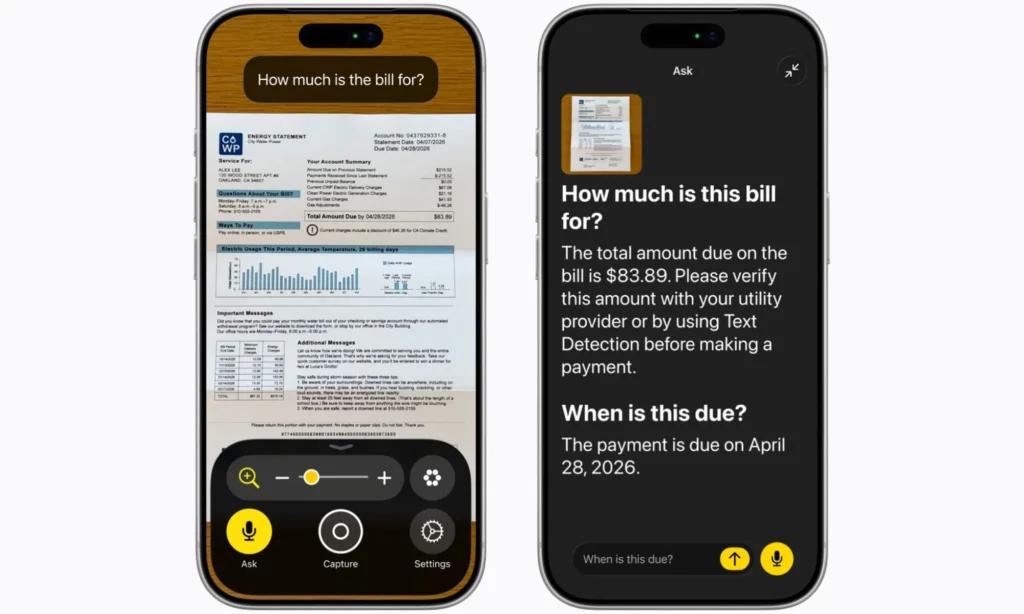
One of the biggest updates comes through Apple Intelligence integration with VoiceOver. Apple says the feature is getting a new “Image Explorer” mode capable of describing photos, scanned documents, bills, and other visual content in much more detail than before. Users can reportedly point their camera toward something and ask questions about what appears on screen, with the device giving spoken contextual responses back in real time. Apple is also tying this into the Action Button on supported iPhone models, making the feature easier to trigger quickly without navigating menus.
The company is also expanding the capabilities of Magnifier with AI-generated spoken descriptions and voice-controlled navigation. Users will reportedly be able to issue commands like “zoom in” or “turn on flashlight” naturally while using the feature. At the same time, Apple says Voice Control is becoming more conversational as well. Instead of memorising exact command labels, users with mobility limitations can reportedly interact with apps more naturally just by describing interface elements in plain language.
Another major upgrade is coming to Accessibility Reader, which now supports complicated layouts including scientific papers, tables, and multi-column documents. That might not sound flashy compared to AI image tools, but it could become extremely useful for students, researchers, and users who struggle reading dense formatted content on screens.
Vision Pro Gets Eye-Tracking Wheelchair Controls
One of the most talked-about announcements from Apple’s accessibility reveal involves Vision Pro and wheelchair support. Apple says users will now be able to control compatible power wheelchairs using the headset’s eye-tracking system. The feature will initially work with Tolt and LUCI wheelchair systems in the United States through Bluetooth or wired connections. Essentially, the headset can translate eye movement into directional control inputs for supported mobility devices.
The idea honestly feels very futuristic even by Apple standards. Vision Pro already uses advanced eye-tracking for navigation inside mixed reality environments, but extending that system toward mobility assistance opens a completely different category for the headset. Apple has been criticised before for Vision Pro’s expensive pricing and niche audience, but accessibility-driven use cases like this could give the device more meaningful real-world applications beyond entertainment and productivity.
Apple also announced AI-generated subtitles for videos that do not already contain captions. The company says spoken dialogue from online videos, livestreams, or shared clips can now be automatically transcribed across iPhone, iPad, Mac, Apple TV, and Vision Pro using on-device speech recognition. Users will additionally be able to customise subtitle appearance through playback settings.
Apple Quietly Expanding Accessibility Across Its Entire Ecosystem
Beyond the headline AI features, Apple is adding several smaller upgrades throughout its ecosystem too. Vision Pro is receiving improved Dwell Control eye-selection tools along with support for face gestures. tvOS is getting larger text support, while Apple is also improving hearing aid connectivity and adding broader language support for Name Recognition features.
The company additionally confirmed support for Sony Access Controller across iPhone, iPad, and Mac devices. That move could especially matter for gamers with disabilities looking for more flexible control options across Apple platforms.
Outside software, Apple also revealed that the Hikawa Grip & Stand accessory for iPhone is now available globally through the Apple Store in new colour options. The accessory was developed by designer Bailey Hikawa alongside users with mobility and grip-strength challenges, showing Apple is still continuing accessibility efforts through hardware as well.
With WWDC 2026 just around the corner, these announcements also feel like a preview of Apple’s broader AI direction moving forward. Unlike many tech companies currently pushing AI mostly around chatbots and automation, Apple seems to be positioning a large part of its AI story around practical everyday assistance and accessibility. Whether that approach becomes enough to stand out in the larger AI race remains to be seen, but these updates definitely show Apple is trying to make the technology feel more personal and useful instead of just experimental.