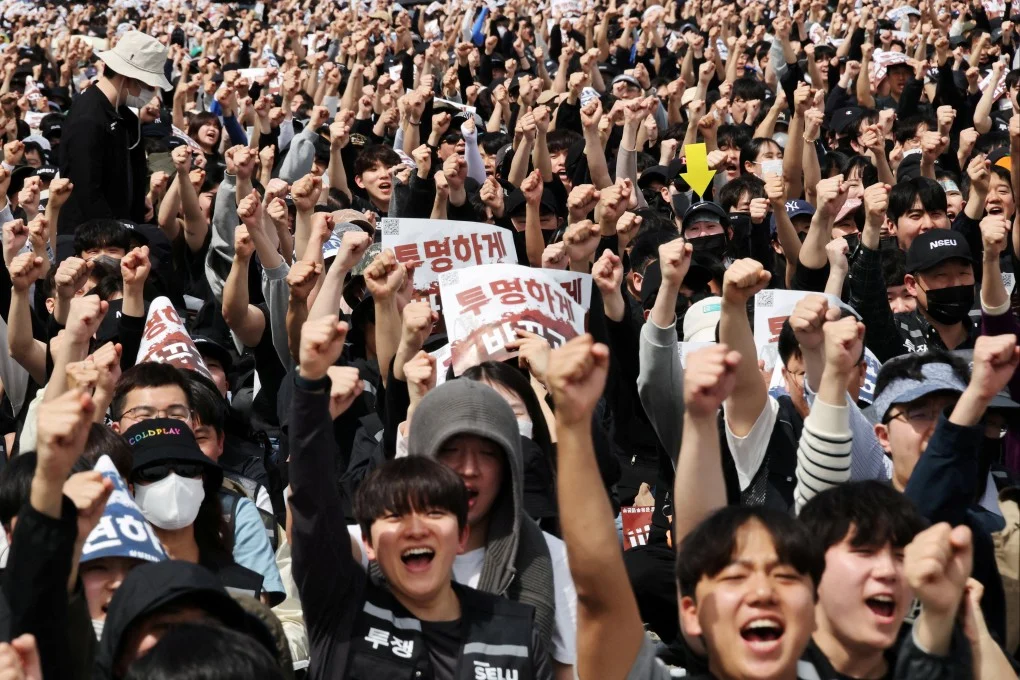
Samsung Electronics is heading toward one of the biggest labor battles in its modern history, and the timing honestly could not be worse for the global tech industry. As artificial intelligence demand keeps exploding worldwide, nearly 48,000 Samsung workers are preparing for a massive 18-day strike that could seriously disrupt chip production and shake South Korea’s economy.
Negotiations between Samsung management and the company’s labor union reportedly continued late into Tuesday night with government mediators trying desperately to stop the walkout before it begins on Thursday. While both sides have apparently made some compromises during discussions, reports say they remain stuck on two major issues tied to worker bonuses and long-term pay structures.
The situation has become so serious that South Korea’s government is openly considering emergency arbitration measures to delay the strike entirely. Officials fear the economic fallout could spread far beyond Samsung itself because the company plays such a huge role in the country’s exports and global semiconductor supply chains.
The AI Boom Is Making This Fight Even Bigger
What makes this labor dispute unusually important is Samsung’s position in the AI hardware race. The company is currently the world’s largest maker of DRAM memory chips, which are heavily used in artificial intelligence systems, servers, and advanced computing hardware. If production slows down significantly, analysts believe the impact could hit global chip supplies almost immediately.
Some market estimates suggest an 18-day strike could reduce worldwide DRAM supply by around 3 to 4 percent while NAND memory production could fall by roughly 2 to 3 percent. In a market already dealing with heavy AI demand, even small disruptions could push memory prices even higher over the coming months.
South Korea’s economy is also deeply connected to Samsung’s success. The company reportedly accounts for nearly a quarter of the country’s exports, which explains why government officials are now publicly warning about the risks of a prolonged strike. One central bank official even suggested the disruption could shave around 0.5 percentage points off the country’s expected economic growth this year if production losses become severe enough.
Workers Say Samsung Is Falling Behind SK Hynix
At the center of the conflict is growing anger over worker compensation, especially compared to rival SK Hynix. Samsung employees reportedly feel they are falling behind financially despite working at one of the most powerful technology companies in the world.
The frustration became much worse after SK Hynix surged ahead in supplying high-bandwidth memory chips for NVIDIA AI systems. As SK Hynix benefited from the AI boom, workers there reportedly received bonuses far larger than Samsung employees. Samsung’s union claims SK Hynix workers earned bonuses more than three times higher last year, which has apparently triggered employee departures and rising union membership inside Samsung.
The union now wants Samsung to remove a bonus cap currently set at 50 percent of annual salary. Workers are also demanding that 15 percent of the company’s annual operating profit be allocated toward bonuses and formally protected inside contracts. Samsung, however, appears reluctant to permanently increase labor costs at that scale.
Instead, the company has reportedly proposed one-time bonuses for memory chip workers that could temporarily exceed SK Hynix payouts while keeping the long-term cap in place. Investors are watching this part very closely because many fear Samsung agreeing to permanent bonus changes could raise labor costs for years.
Samsung’s Union Battle Marks A Huge Shift For The Company
The entire situation also reflects how much Samsung’s corporate culture has changed in recent years. For decades, the company was widely criticized over anti-union practices before chairman Jay Y. Lee pledged in 2020 to move away from those tactics.
Now Samsung is facing its largest labor confrontation since that promise was made. Courts have already stepped in partially, ruling that essential staffing levels must still be maintained at some facilities even during a strike. Reports say over 7,000 workers may still be required to report to work regardless of industrial action.
For now, negotiations are still continuing, but pressure is clearly building from every direction. Governments, investors, business groups, and global tech companies all know the same thing — if Samsung’s chip production slows down during the middle of the AI boom, the effects could spread across the entire semiconductor industry very quickly.