The foldable smartphone race could soon get a major shake-up, and this time, it’s Apple preparing to enter the space. Fresh leaks suggest that the company is quietly working on its first foldable iPhone—one that could focus heavily on durability, performance, and a refined user experience rather than just design novelty.
While Apple has remained silent officially, supply chain reports and tipster insights are beginning to paint a clearer picture of what could become one of the most anticipated devices in recent years.
At the center of these leaks is a major concern that has plagued foldable phones since their debut: durability.
According to recent information, Apple may adopt a dual-layer glass design aimed at reducing one of the biggest drawbacks of foldable displays—the visible crease. The device is said to use a combination of ultra-thin glass layers placed strategically to prevent direct stress on the display when folded.
This approach could make a noticeable difference.
Instead of the screen bending directly along the hinge, the structure would distribute pressure more evenly, potentially improving long-term reliability. If implemented successfully, it could address one of the key reasons many users have hesitated to adopt foldable devices so far.
Adding to this, the leaks also mention something even more futuristic—self-healing glass.
While details remain unclear, this technology is expected to minimize small scratches and wear over time, helping the device maintain its appearance and functionality. Combined with a redesigned hinge mechanism, Apple seems to be focusing on making the folding experience smoother and more durable than current offerings in the market.
And that’s where Apple’s strategy stands out.
Instead of rushing into the foldable segment, the company appears to be taking a slower, more calculated approach—waiting until it can solve existing problems before launching its own version.
From a hardware perspective, the rumored specifications are equally ambitious.
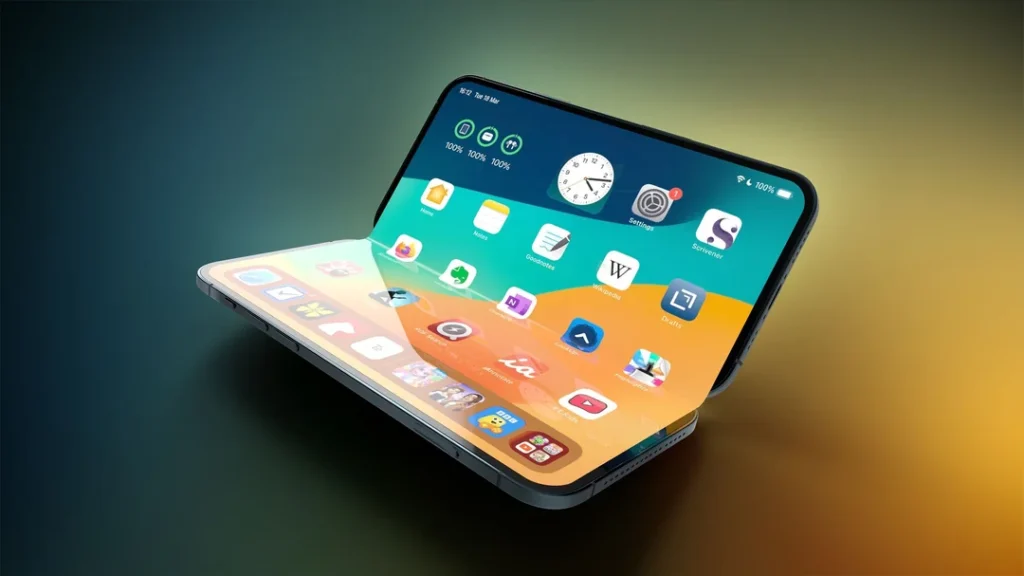
The foldable iPhone is expected to feature a 7.8-inch inner display paired with a 5.5-inch outer screen, positioning it somewhere between a smartphone and a compact tablet. This aligns with Apple’s broader ecosystem strategy, where devices seamlessly transition between different use cases.
In terms of performance, the device could be powered by a next-generation 2nm A20 Pro chip—one of the most advanced mobile processors expected in the coming years. If true, this would not only improve performance but also enhance power efficiency, which is crucial for a device with dual displays.
There are also indications that the phone may include Apple’s in-house C2 modem, further strengthening its control over hardware and connectivity.
But perhaps the most interesting aspect lies in the software experience.
Reports suggest that the foldable iPhone could feature an iPad-like interface, complete with split-screen multitasking and app sidebars. This would allow users to run multiple apps simultaneously, making the device more productive and versatile than traditional smartphones.
In many ways, this hints at Apple blurring the lines between its iPhone and iPad ecosystems.
Rather than simply creating a foldable phone, the company may be aiming to build a hybrid device that combines the portability of a phone with the functionality of a tablet. This approach could set it apart from competitors, many of whom focus primarily on hardware innovation.
There’s also growing speculation around the device’s name.
While “iPhone Fold” seems like the obvious choice, some reports suggest Apple could brand it as the “iPhone Ultra,” positioning it as a premium, top-tier offering within its lineup. This would align with Apple’s recent naming strategy, where “Ultra” signifies the highest-end version of a product.
Pricing, unsurprisingly, is expected to be on the higher side.
Early estimates suggest that the device could cost around $1,999 in the US, with prices in other markets reflecting similar premium positioning. This would place it firmly in the luxury segment, targeting early adopters and tech enthusiasts rather than the mass market—at least initially.
Another key development is Apple’s reported increase in foldable display panel orders.
The company is said to be working closely with Samsung Display, potentially ordering up to 20 million panels—significantly higher than earlier estimates. This suggests that Apple is not just experimenting, but preparing for a large-scale launch once the product is ready.
From an industry perspective, this move could have a ripple effect.
Apple’s entry into any product category often accelerates adoption and sets new standards. The foldable smartphone market, currently led by companies like Samsung, could see increased competition and innovation once Apple joins the race.
At the same time, the company’s cautious approach reflects a broader philosophy.
Apple has historically avoided being first to market, instead focusing on refining existing technologies and delivering a more polished experience. Whether it was smartphones, smartwatches, or tablets, the company has often entered established categories and redefined them through design and usability.
The foldable iPhone seems to be following that same pattern.
Looking ahead, the device is expected to debut sometime in late 2026, possibly alongside updates to iOS that further optimize the interface for foldable screens. Reports suggest that future software updates may focus on UI refinements to support this new form factor, ensuring that the hardware and software work seamlessly together.
Of course, it’s important to note that all of this remains based on leaks and industry speculation.
Apple has not confirmed any of these details, and plans could evolve before the final product is unveiled. However, the consistency of recent reports indicates that the company is actively working on bringing a foldable device to market.
If these leaks turn out to be accurate, Apple’s first foldable iPhone could be less about following a trend—and more about redefining it.
And in a market still searching for the perfect foldable formula, that could make all the difference.