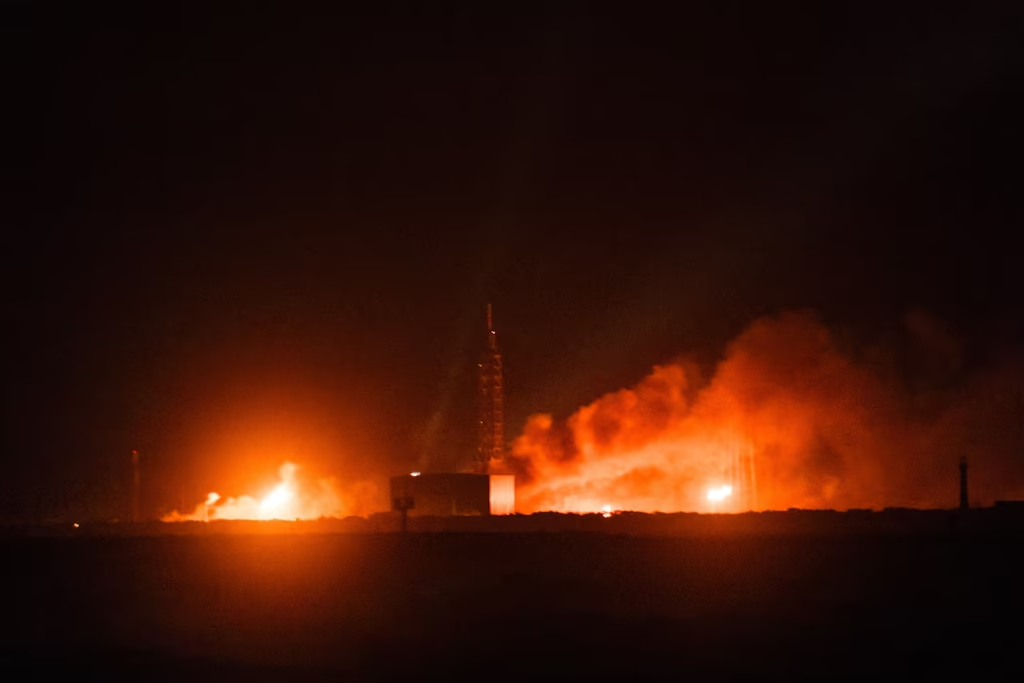
Blue Origin has suffered one of its biggest setbacks yet after its powerful New Glenn rocket was destroyed in a dramatic explosion during pre-launch testing at Cape Canaveral Space Force Station. The incident happened while the company was carrying out a hotfire test ahead of an upcoming mission, turning what was supposed to be a routine milestone into a serious blow for Jeff Bezos’ space venture.
The explosion quickly grabbed attention across the aerospace industry, especially because New Glenn is central to several of Blue Origin’s future plans. While no injuries were reported and all personnel were safely accounted for, the damage appears extensive. Footage circulating online shows a massive fireball engulfing the rocket and surrounding infrastructure, leaving little of the test vehicle intact.
Launch Pad Damage Raises Questions About Upcoming Missions
In a statement shared after the incident, Blue Origin confirmed that it had experienced an “anomaly” during testing and said a full investigation is already underway. Company founder Jeff Bezos later addressed the situation publicly, acknowledging the scale of the setback while emphasizing that the team would rebuild and move forward.
What makes the incident particularly significant is the reported damage to Launch Complex 36, Blue Origin’s primary launch site for New Glenn missions. Industry observers believe repairs could take months, creating uncertainty around the company’s launch schedule. Since the facility plays a critical role in New Glenn operations, any prolonged downtime could ripple across multiple projects already in development.
The timing is especially unfortunate because Blue Origin had been working to ramp up activity following recent regulatory clearance. The company had been preparing the rocket for future missions and hoping to demonstrate that New Glenn could become a reliable heavy-lift vehicle in an increasingly competitive commercial space market.
NASA Programs Could Feel the Impact
Beyond Blue Origin’s own ambitions, the explosion may have consequences for several high-profile NASA projects. New Glenn is expected to play an important role in upcoming lunar initiatives, including missions connected to Artemis and future Moon Base operations.
NASA officials have already acknowledged the incident and stated that they will work closely with Blue Origin as investigators determine exactly what went wrong. Agency leadership noted that developing heavy-lift launch systems remains one of the most challenging tasks in aerospace and that setbacks are often part of the process.
The explosion also arrives shortly after New Glenn was cleared to fly again by the Federal Aviation Administration. Earlier this year, the rocket faced scrutiny following a mission failure linked to a cryogenic leak that reportedly affected engine performance during flight. After completing reviews and corrective measures, Blue Origin appeared ready to return to regular operations. Instead, the company now finds itself dealing with an entirely new challenge before the rocket can leave the ground again.
For now, investigators are focused on identifying the cause of the explosion. Until those answers emerge, questions will continue surrounding Blue Origin’s launch timeline, the future of New Glenn, and whether upcoming lunar missions could face delays. One thing is clear though — the road back to the launch pad just became much longer for one of the space industry’s most ambitious programs.