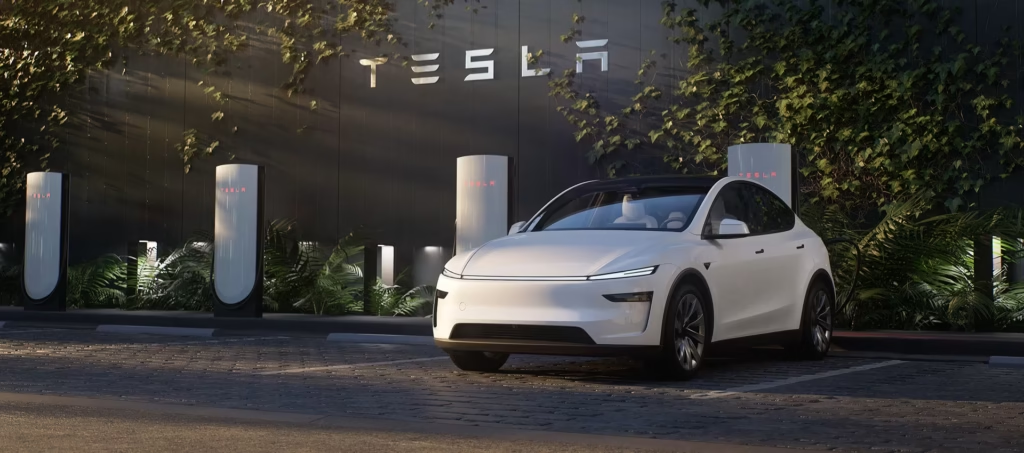
Tesla has expanded its bestselling electric SUV lineup by introducing a new all-wheel-drive (AWD) version of the Model Y in the United States. The newly launched variant is priced at $41,990, placing it between Tesla’s entry-level rear-wheel-drive version and its higher-end performance models.
The launch highlights Tesla’s ongoing strategy to make electric vehicles more accessible while maintaining performance upgrades to attract a broader customer base.
🚗 New Variant Strengthens Model Y Lineup
The new AWD Model Y sits above the “Standard” rear-wheel-drive variant, offering improved traction and performance for buyers seeking enhanced driving capability. Tesla has been aggressively expanding lower-priced trims in recent months, aiming to widen its market reach.
The AWD launch follows Tesla’s introduction of budget-friendly “Standard” versions of the Model Y and Tesla Model 3, which debuted in late 2025. These models were priced roughly $5,000 lower than earlier base versions, forming a core part of Tesla’s 2026 sales strategy.
By lowering entry prices, Tesla is attempting to attract cost-conscious customers rather than waiting for the development of a completely new mass-market vehicle.
📉 EV Market Pressure and Policy Changes
Tesla’s pricing adjustments come amid a cooling electric vehicle market in the United States. Demand slowed significantly after federal tax credits of $7,500 for EV purchases were discontinued in late 2025, raising effective purchase costs for buyers.
In global markets, Tesla has introduced similar price reductions of around $5,000 for select trims, aiming to remain competitive against rising EV manufacturers across Asia, Europe, and North America.
💰 Profit Margin Concerns and Software Revenue Focus
Industry analysts have cautioned that Tesla’s shift toward lower-priced vehicles could impact profit margins. However, the company is expected to offset potential revenue pressure through improved manufacturing efficiency and expansion of software-based services such as autonomous driving features and connected vehicle subscriptions.
These digital services are becoming increasingly important for Tesla’s long-term profitability as competition in hardware pricing intensifies.
🤖 Tesla’s Future Manufacturing Shift
Separately, Tesla CEO Elon Musk recently revealed a major production shift within the company. Tesla plans to discontinue manufacturing of the Tesla Model S and Tesla Model X, two of its earliest premium electric models.
The production space at Tesla’s California factory will instead be repurposed to focus on emerging technologies, including the development of humanoid robots and next-generation automation systems — reflecting Musk’s broader vision for Tesla as a robotics and AI company beyond electric vehicles.
🌍 Rising Global EV Competition
Tesla continues to face growing competition from both traditional automakers and emerging electric vehicle brands worldwide. As rivals introduce more affordable EV models, Tesla’s strategy of expanding mid-range variants like the new AWD Model Y is seen as a critical move to maintain its leadership position.
⭐ Final Words
The launch of the new AWD Model Y reinforces Tesla’s strategy of balancing affordability with performance enhancements in an increasingly competitive EV market. While pricing adjustments aim to boost sales volume, Tesla’s future growth may depend heavily on software innovation and advanced robotics initiatives. As the company reshapes its production priorities and expands its technology ecosystem, Tesla appears to be positioning itself not just as an EV manufacturer but as a broader mobility and AI-driven technology powerhouse.